
Alma White, the Holy Jumpers, and the Racial Politics Behind Early Holiness Rituals
The Pillar of Fire gained increasing public scrutiny in 1926 when newspapers labeled the “Holy Jumpers” a cult after 22-year-old Ruth Marshall joined the sect and refused to return to her family. Reporters emphasized her intense devotion, noting that her “eyes burn[ed] with a religious zeal,” which reinforced concerns about the group’s influence and controversial practices.
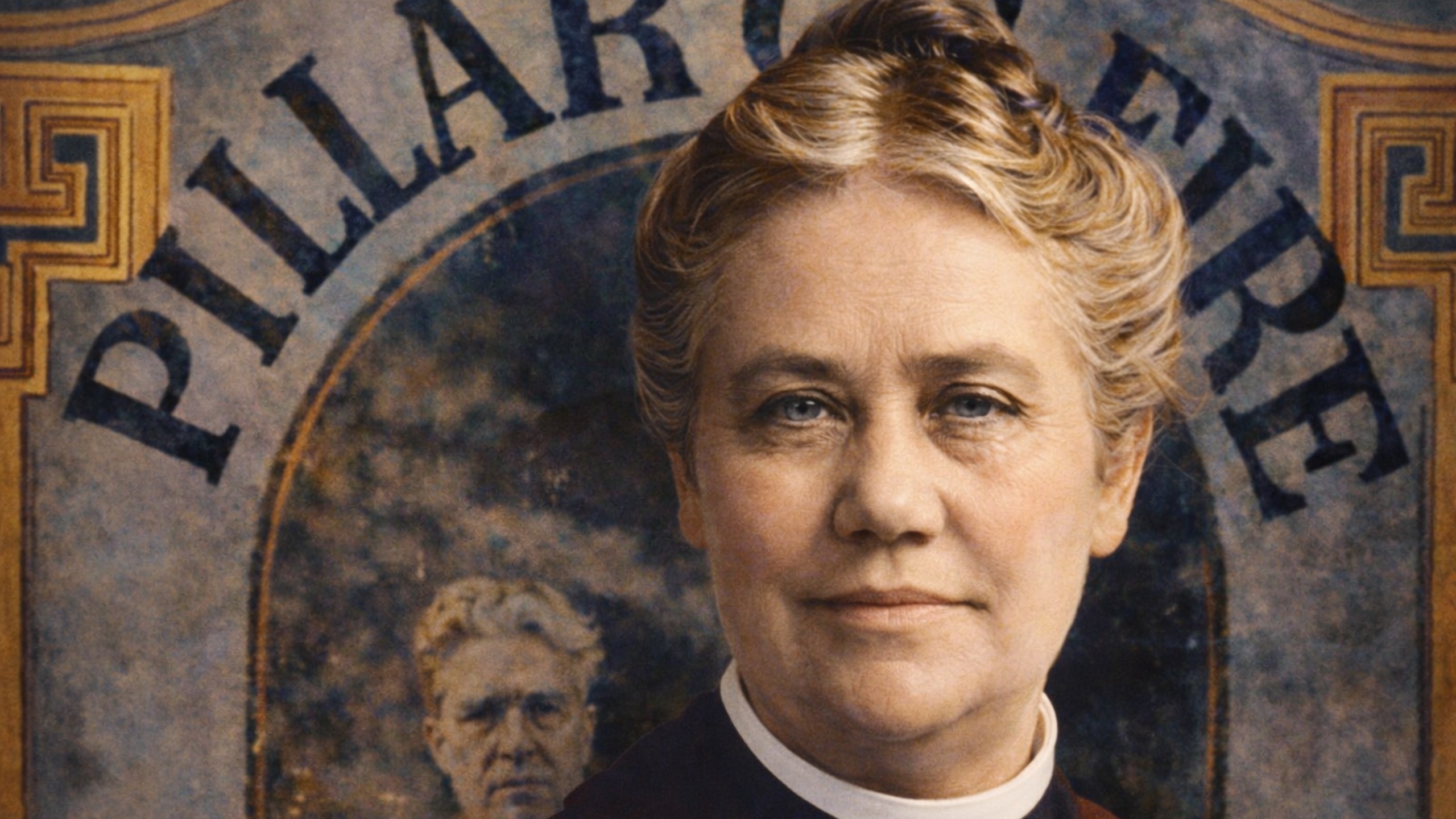
Alma Bridwell White (1862-1946), founder of the Pillar of Fire Church, emerged as a controversial figure within the broader Holiness landscape of the late nineteenth and early twentieth centuries. Her movement--commonly labeled the "Holy Jumpers"--became widely known for its distinctive ritual of synchronized jumping, which adherents described as a visible manifestation of being "moved by the Spirit." [1] Although organized in Denver, Colorado, the Pillar of Fire Church appears to have been profoundly shaped by, or in some cases consciously modeled after, John Alexander Dowie's Christian Catholic Church in Zion. Contemporary observers frequently accused White of replicating Dowie's organizational patterns and rigid internal discipline, even as she herself often disregarded the standards she imposed upon her followers. [2]
By the early twentieth century, White's sect had become associated with a range of unconventional practices intended to embody holiness through visible bodily expression. Among these, the "holy dance" or communal jumping ritual emerged as a defining characteristic of the group's worship. This practice distinguished the Pillar of Fire from earlier Holiness bodies in which physical demonstrations of spiritual fervor were typically individual, spontaneous, and unsystematized. White's innovation lay in transforming these episodic manifestations into a coordinated, congregation-wide ritual intended to symbolize collective purity, spiritual obedience, and ecstatic praise. The theological rationale for this practice was formalized within the movement's own publications, which portrayed it as a divine restoration of a lost expression of biblical worship.
The following institutional explanation, published by members of the Pillar of Fire Church, illustrates how the group framed this ritual both as a divine mandate and as a sign of spiritual renewal within their community:
Why They Jump:
After they had organized into a church, entirely independent of everything that was backslidden and out on the line God wanted, He began to give light on many important doctrines which we preach and practice today. One that has meant more to our people in many ways than anything else, was the holy dance. In the old holiness movements, there was occasionally a man that would jump up and down when he was "moved by the Spirit," as they said, but for a whole church to jump at the same time in unison was something that had never been heard of in any religious organization. The Lord showed Sister White that He was waiting to revive the holy dance, and that it would be pleasing to Him for the whole church — men and women — everybody that was saved — to go to praising Him in the dance"[3]
- Holy Jumpers Live by Leaps and Prayers
White became one of the most visible religious advocates of twentieth-century white supremacy, and her Pillar of Fire organization was among the very few churches to openly align itself with the Ku Klux Klan. [4] Throughout the 1920s, the Pillar of Fire hosted Klan gatherings, published Klan literature, and offered a theological defense of white nationalism and nativist ideology. White frequently delivered lectures on the White Knights and their principles, integrating Klan themes into her broader vision of national and religious renewal. [5] Her publishing house produced several explicitly pro-Klan volumes--including Klan in Prophecy, Klansmen: Guardians of Liberty, and Heroes of the Fiery Cross--which framed the Klan as a divinely sanctioned force for preserving American civilization. White's sermons, including "America -- the White Man's Heritage," reflect her longstanding opposition to racial equality and her belief that racial segregation was mandated by Scripture.
William J. Seymour's encounter with White's sect occurred shortly before the outbreak of the Azusa Street Revival. During his journey to Los Angeles, Seymour visited a number of unconventional Holiness and revivalist groups, seeking both spiritual insight and opportunities for ministry; the "Holy Jumpers" of the Pillar of Fire were among the communities he observed. [6] His reception, however, was hostile. Owing to his race, Seymour was not welcomed by White or her followers, who adhered to a strict and theologically rationalized racial hierarchy. White later described Seymour as a "very untidy person" who was attempting to gather a personal following, and in her polemical work Demons and Tongues she asserted that she had "met all kinds of religious fakers and tramps, but felt he excelled them all." [7] The racial animus she expressed toward Seymour was consistent with the broader racial ideology she championed and leaves little doubt that his Black identity played a central role in her disdain.
Where people seek for social equality between the black and white races, they violate the edicts of the Holy Writ and every social and moral code ...Social and political equality would plunge the world into an Inferno as black as the regions of night and as far from the teachings of the New Testament as heaven is from hell. The presumption of the colored people under such conditions would know no bounds ...This is white man's country by every law of God and man, and was so determined from the beginning of Creation. Let us not therefore surrender our heritage to the sons of Ham. Perhaps it would be well for white people to take the advice of a great American patriot, Dr. Hiram Wesley Evans and repeal the Fifteenth Amendment. The editor of The Good Citizen would be with him in this.[8]
- Alma White
lthough Seymour rejected Alma White's racial ideology and doctrinal rigidity, his visit to the Pillar of Fire appears to have exposed him to the group's distinctive ecstatic practices. Observers at the time noted parallels between the synchronized "jumping" characteristic of White's followers and certain bodily expressions of worship that emerged during the early days of the Azusa Street Revival. While the origins of physical exuberance in Pentecostal worship cannot be attributed to any single source--such manifestations were already present in earlier Holiness, Shouting Methodist, and Black revivalist traditions--the Pillar of Fire's ritualized "holy dance" likely contributed to Seymour's awareness of such practices as a legitimate form of embodied praise.
Local newspapers reported that, when congregants at Azusa Street broke out into shouting, jumping, and other forms of ecstatic movement, the resulting noise drew repeated complaints from neighbors. Police officers attempting to quiet the services identified the participants as "jumpers" and placed responsibility for the disruption on Seymour himself, referring to him as "the one-eyed negro" who was "the leader of the jumpers." These reports, which were often sensationalized, nevertheless attest to the physical expressiveness that became a hallmark of the revival and situate Seymour within a broader milieu of embodied Holiness practices, including those he had encountered in Denver.
After a week's rest the "holy jumpers," who have become notorious on Azusa street, renewed their services last night and succeeded in making more noise and causing more complaints than on any previous night of worship. Patrolman Berchtold and Mojonier for two hours tried to quell the motley crowd of negroes and whites who engaged in the strenuous services. The one-eyed negro who is the leader of the "jumpers" decided last Monday to rest the services for one week. The nights were long for the negro, however, and several times during the week he and a few of the chosen members congregated in the church, formerly a livery stable, and held service, while the police department has listened to innumerable complaints regarding the noises of insane people on Azusa street.[9]
- 'Holy Jumpers' Are Again Noisy: Sect on Azusa Street Renews Devotions
By the mid-1920s, public perceptions of Alma White's movement had shifted dramatically, and the Pillar of Fire's unconventional practices increasingly drew scrutiny from journalists and civic authorities. In 1926, several newspapers referred to the "Holy Jumpers" as a cult after the highly publicized case of Ruth Marshall, a 22-year-old woman who had joined the sect and refused to return to her family. Reporters emphasized the intensity of her commitment, describing her as having "eyes burn[ing] with a religious zeal" that appeared to signal an undue psychological or spiritual influence exerted by the group. [10] The Marshall incident contributed to growing public concern over the sect's recruitment methods, behavioral expectations, and the degree of autonomy expected from its followers, further reinforcing its reputation as a marginal and controversial religious community.