C. I. Scofield: From Forgery Charges to the Scofield Reference Bible
C. I. Scofield, best known for the influential Scofield Reference Bible, rose to prominence after a career marked by political corruption, financial fraud, and criminal convictions for forgery. His later theological authority, heavily indebted to John Nelson Darby’s dispensationalism, profoundly shaped Fundamentalist, Pentecostal, and Latter Rain movements, including ideas used to legitimize modern prophetic and angelic claims.
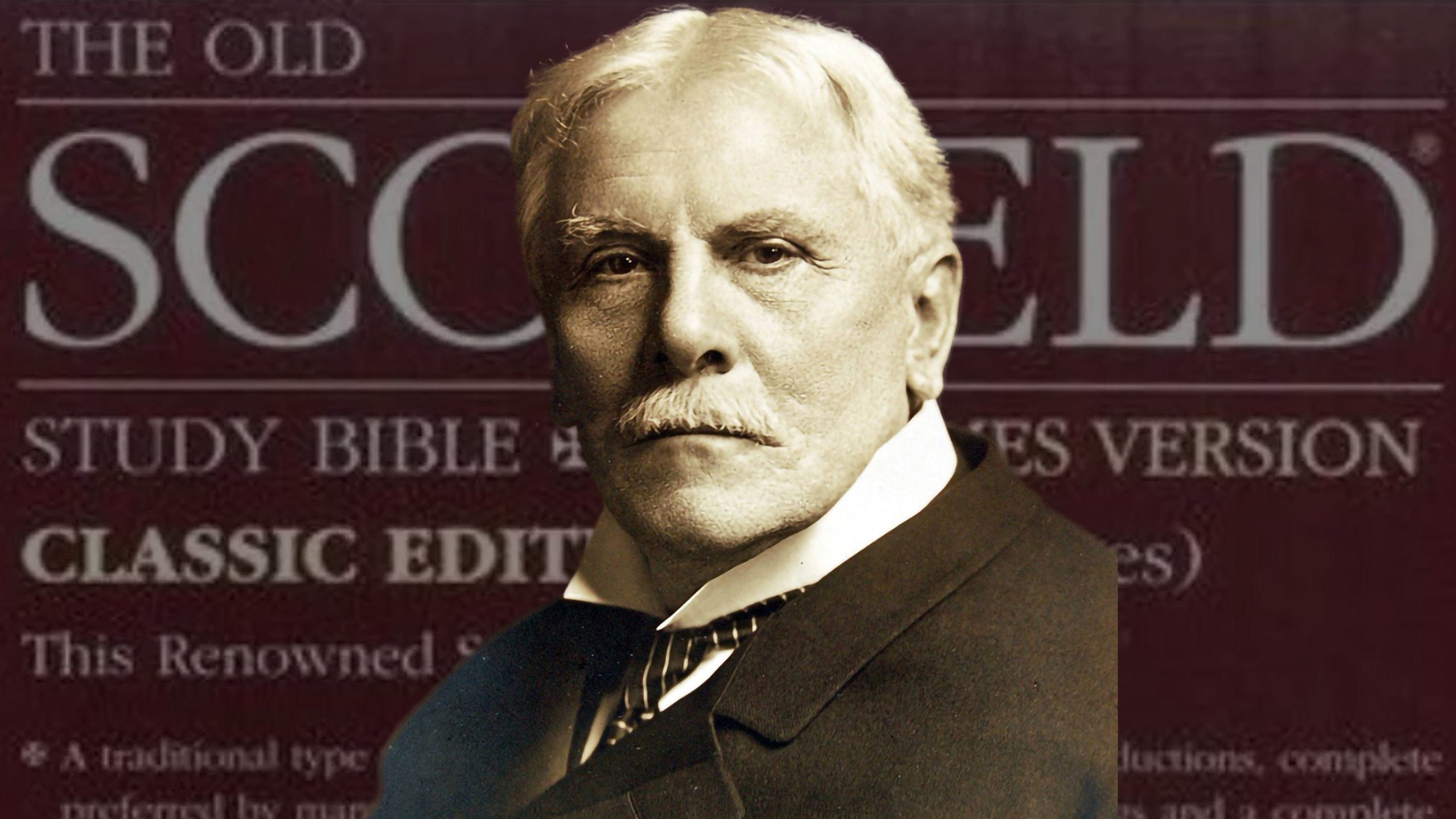
Cyrus Ingerson (C. I.) Scofield was the author of the Scofield Reference Bible, which was widely used and promoted among Christian Fundamentalist, Pentecostal,[1] and Latter Rain sects. Scofield's reference notes emphasized dispensationalist theology and were frequently quoted in sermons and literature, particularly by groups that promoted claims of angelic visitations associated with a present "dispensation."[2] Scofield taught that angels could appear in human form, a concept later used to legitimize the claims of William Branham and other post-World War II healing revivalists who asserted that they had been visited by "angels."
On page 1291 of the Scofield Bible, Dr. C. I. Scofield, D.D., in his footnote on angels says, "Though angels are spirits (Psa. 104:4; Heb. 1:14), power is given to them to become visible in the semblance of human form {...} And in Gen. 24:40 we read, 'The Lord ... will send His Angel with thee, and prosper thy way.' " This is exactly what God has done for Brother Branham.[3]
- F. F. Bosworth, The Voice of Healing
Scofield was a probate attorney in Kansas[4] and served under the Republican ticket as a representative of the 8th District during the presidency of Ulysses S. Grant,[5] later becoming United States Attorney for Kansas.[6] Scofield's wife was among the heirs of Frenchman Regis Loisel, whose estate entitled his heirs to select 38,000 acres of land in Kansas. Through this inheritance, Scofield became a significant landholder in the state.[7] After relocating to Kansas, Scofield was appointed to the legislature and played a role in helping elect United States Senator John J. Ingalls, who jointly produced the constitution under which Kansas continues to operate.[8] Ingalls was both Mrs. Scofield's attorney and a direct heir of Loisel.[9]
Together with Ingalls,[10] Scofield devised a railroad investment scheme that received little public attention. Several prominent Republicans invested large sums of money, men whose political careers would likely have suffered had their involvement become public. One victim later admitted, "The way Scofield got our money — and he plucked $2,000 of mine — was by intimating that it was needed by Senator Ingalls, who would see that it was paid. We knew that Ingalls was good, and we supposed that on account of his official position, he did not care to be known in a money-borrowing transaction and was doing the business through a friend."[11] As a result of these activities, Scofield's political career was brief. He was forced to resign from federal office and fled from Kansas to St. Louis,[12] where he continued defrauding individuals and was eventually compelled to leave Illinois as well.
In October 1878, Scofield was apprehended on charges of forging the name of his sister, Emeline E. Papin,[13] as an indorser on a promissory note for $900. Scofield had collected that amount from Dr. J. H. McLean, prompting the issuance of a warrant for his arrest.[14] Officials stated that this was not the only forgery charge pending against him; he was also wanted in Illinois for forging the name of William Shepherd on a note for $325.[15] Scofield was eventually located in Horicon, Wisconsin,[16] arrested, and jailed for these crimes.[17]
Scofield disappeared from St. Louis, and private detectives were employed to hunt him up, but they failed to find him till last Monday, when he was arrested in Horicon, Wis. Scofield was one of the slickest fellows we ever knew. His election to the Legislature from Seneca was the shrewdest political dodge we ever saw. He was highly educated, well-read, and had much natural ability; but his propensity for "dead-beating" every friend he had overpowered everything. It is a wonder he was not in the penitentiary long ago.[18]
- Courier-Tribune
While incarcerated for forgery, Scofield began claiming to have been "born again" and converted to the Congregational Church. Female Congregational missionaries began visiting him in jail,[19] one of whom became his mistress. Scofield abandoned his first wife and two daughters for this woman, later abandoned her, and subsequently married another.[20] Despite these circumstances, the conversion narrative was preserved as Scofield entered the Congregational ministry and assumed the pastorate of a church in Dallas. The congregation grew rapidly and became one of the wealthiest and most socially prominent churches in Texas.[21]
After achieving financial success in religious work, Scofield was increasingly presented as a recognized Bible expositor. When creditors from Kansas sought repayment of outstanding debts, however, Scofield continued to claim poverty and an inability to pay.[22] During this period, he produced numerous religious publications, including tracts, sermon materials, and Bible studies. His growing visibility attracted the attention of evangelist Dwight L. Moody, leading to Scofield's appointment to the board of Moody's Northfield Bible School and his installation as pastor of the Northfield Congregational Church.[23]
Many of Scofield's study notes, later incorporated into the Scofield Reference Bible, were directly copied or paraphrased from the writings of dispensationalist John Nelson Darby. Darby made seven trips to the United States and Canada to promote his theology, several of which included visits to St. Louis that coincided with Scofield's residence there.[24] Whether through direct exposure or secondary influence, Scofield's theology closely mirrored Darby's views despite Scofield's lack of formal theological training or recognized scholarly credentials. Darby's influence may also have been mediated through Rev. James H. Brooks of the Walnut Street Presbyterian Church in St. Louis, a student and personal associate of Darby during his visits to the city.[25]