Cal Pierce, Bethel Church, and the Revival of John G. Lake’s Healing Rooms
Cal Pierce, a former businessman and leader within Bethel Church and the Full Gospel Business Men International, played a central role in reviving John G. Lake’s Healing Rooms and transforming them into a global faith-healing network aligned with the New Apostolic Reformation. By restoring and promoting Lake’s legacy—despite Lake’s documented fraud and controversial practices—Pierce helped reinforce NAR theology emphasizing supernatural healing, transferred anointing, and revivalist continuity.
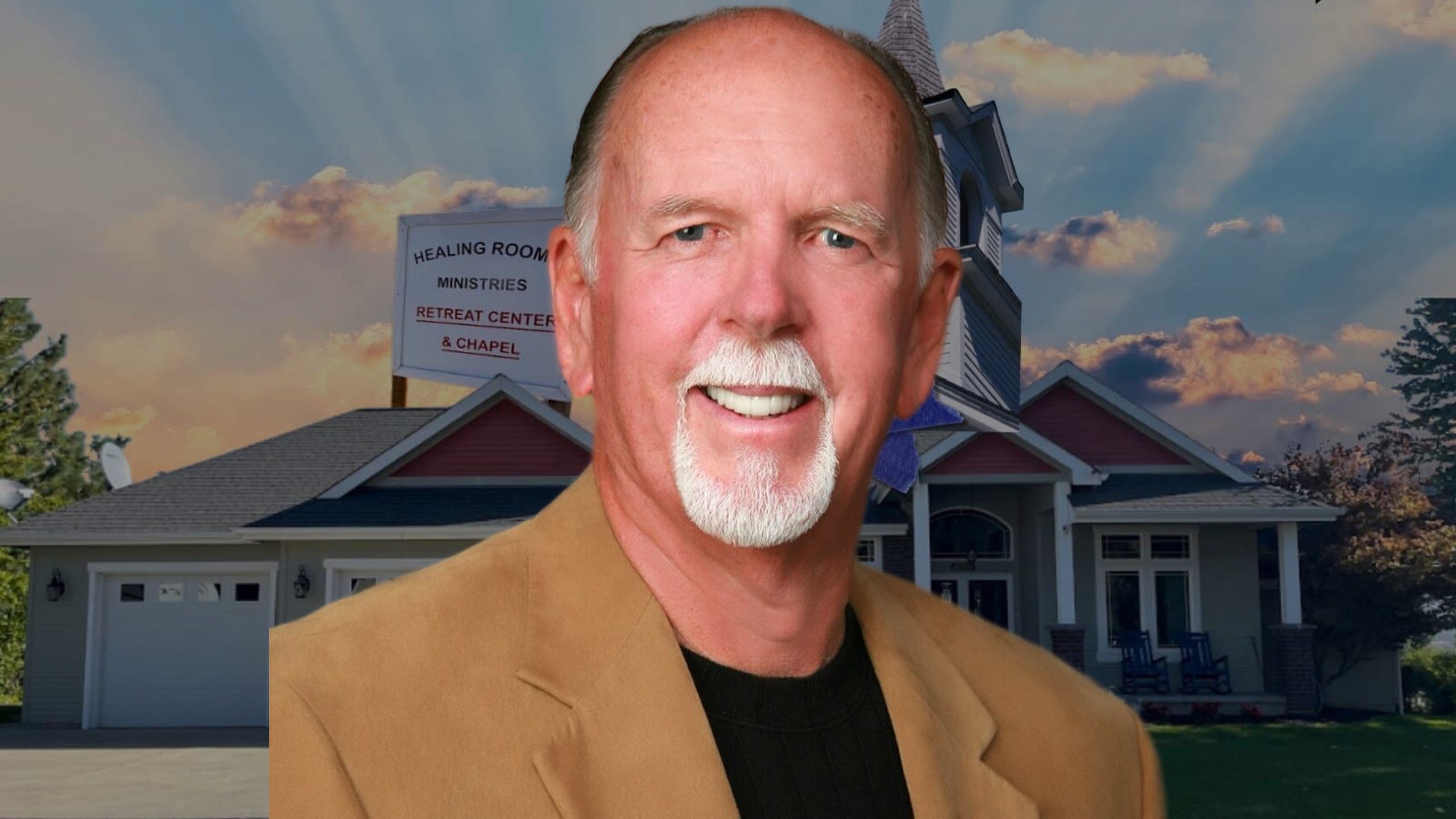
Cal Pierce was the president of the Bethel chapter of the Full Gospel Business Men International (FGBMI),[1] and worked with Bethel Church to resurrect the Healing Rooms of religious con artist[2] John G. Lake. Pierce began his career in Redding, California, primarily working as a businessman in various fields, including real estate development and solar energy. He was involved in large projects, such as developing shopping centers in Palo Cedro,[3] Central Valley condominiums,[4] and other ventures. Pierce also operated a solar energy business that focused on providing energy-efficient homes.[5]
Business and Charismatic Networks
Pierce was actively involved in the business wing of Charismatic Christianity through the FGBMI. Pierce became instrumental in organizing the Bethel Church chapter of the FGBMI in Redding, which hosted large regional conventions.[6] These events featured prominent Pentecostal and Charismatic Christian speakers. Many of them, such as FGBMI founder Demos Shakarian, had close ties to William Branham and the Latter Rain revivals. FGBMI was one of the last organizations to sponsor Branham's meetings after Branham was sanctioned for his "Serpent's Seed" Christian Identity doctrine.
Shift Toward Ministry
Pierce underwent a spiritual transformation in the 1990s that shifted his focus entirely. According to Pierce, he was missing a deeper purpose. This realization, along with his connections to Bethel Church, eventually led him to pursue ministry work, culminating in his re-establishment of John G. Lake's historic Healing Rooms in Spokane, Washington. Pierce leveraged both his business connections and his ministerial connections through FGBMI to grow a global faith-healing network based on Lake's original vision of divine healing through prayer. This network became known as the Healing Rooms Movement.
Reopening of the Healing Rooms
After decades of working within Bethel Church and leading the FGBMI chapter in Redding, Cal Pierce claimed to have received a profound spiritual calling that would redirect the course of his life. In 1999, during a period of intense prayer and fasting, Pierce felt led to re-open the Healing Rooms of John G. Lake, a faith-healing ministry that had been active in Spokane, Washington, in the early 20th century. The original Healing Rooms had closed after Lake's death in 1935, but Pierce believed that the spiritual power of healing could be reactivated at the same location.[7]
This revelation allegedly came to Pierce during the process of "grave soaking," a controversial practice in which individuals pray at the graves of deceased revivalists to absorb their spiritual anointing rather than trusting the leading of the Holy Spirit. Pierce reportedly prayed regularly at John G. Lake's grave for months, believing that God would impart Lake's healing power to him through persistent faith. Pierce reopened the ministry with a mission to revive Lake's work of divine healing, creating a network of Healing Rooms across the world where volunteers would pray for the sick in a non-denominational setting.
John G. Lake and Historical Revisionism
Whether due to Pierce's promotion of John G. Lake's ministry or the resurrection of the Healing Rooms, Lake soon came to be immortalized as one of the so-called "God's Generals" in the NAR. Leaders of the movement decided to conceal the unethical and criminal issues associated with Lake's ministry, cleansing Lake's history to include only the allegedly miraculous.
While John G. Lake is often revered as a pioneer in Pentecostal healing ministries, a closer examination of his life reveals a far more problematic figure. Lake is celebrated for his divine healing revivals and the founding of the original Healing Rooms in Spokane, which were modeled after the healing homes of cult leader John Alexander Dowie in Zion, Illinois. Lake was a member of Dowie's destructive cult, and both he and his family were involved in schemes designed to convince victims that Dowie possessed the power to heal the sick.[8]
Lake's early career in ministry was marked by his involvement in questionable financial schemes. He was convicted of "Blue Sky Fraud,"[9] a term referring to fraudulent investment schemes in which Lake manipulated followers into investing in dubious ventures. One such scandal involved Lake using his church platform to promote mining stock investments, leading to significant financial losses for parishioners.
Lake's healing claims were also scrutinized for their lack of verifiable evidence. Newspaper reports from the period, including articles titled "Miracles Not Seen," suggested that many of Lake's supposed healings were exaggerated or fraudulent.[10] While Lake frequently claimed that people were healed during his meetings, little concrete evidence exists to substantiate these accounts. Many who sought healing reportedly left without improvement, raising doubts about the legitimacy of Lake's ministry.
Ethical Concerns and Legacy
Despite the critical issues associated with John G. Lake's ministry and the similar histories of those who influenced or worked closely with him, Cal Pierce engaged in the spiritualist practice of attempting to absorb the "mantle" of Lake through his deceased body. Pierce attempted to recreate Lake's religious empire and resurrected the Healing Rooms in honor of the religious con artist.
Redding's Bethel Church has also been the target of multiple financial scams, including Ponzi schemes. In 2009, a congregant was arrested for defrauding approximately two dozen Bethel converts out of hundreds of thousands of dollars, and David Souza was sentenced to an 18-year prison term. The church was targeted again in 2020 when two men were charged with operating a $35 million Ponzi scheme. One of the accused, Matthew Piercey, gained national attention after evading FBI agents by diving into the frigid waters of Lake Shasta using an underwater sea scooter. Although these crimes do not appear to implicate Pierce or Bethel leadership directly, journalists linked the incidents to prosperity theology. According to reports, "Bethel's belief system also may have made its members an easier mark for potential con men. Bethel is among the Pentecostal churches that believe God rewards faith with wealth."[11]
Influence on the New Apostolic Reformation
Cal Pierce's revival of John G. Lake's Healing Rooms ministry has had a significant impact on the New Apostolic Reformation (NAR) and the broader Charismatic movement. Under Pierce's leadership, the Healing Rooms expanded rapidly, with hundreds of locations established worldwide. By 2024, more than 3,000 Healing Rooms operated in 76 nations.[12] The movement became a central component of the NAR's apostolic network and a point of convergence for affiliated ministries seeking healing and supernatural encounters.
The success of the Healing Rooms reinforced the NAR's emphasis on supernatural experiences and the belief that spiritual anointings can be transferred between individuals, a concept aligned with the controversial practice of grave soaking. Pierce's actions at Lake's grave further fueled the NAR's focus on acquiring spiritual power through non-traditional and historically contested means.
While the Healing Rooms have offered hope and comfort to many individuals seeking healing, they also raise serious ethical questions about promoting a global ministry rooted in the legacy of a figure associated with fraud and unverified claims. Nonetheless, the Healing Rooms remain a defining feature of the NAR, ensuring that John G. Lake's influence continues despite his controversial and well-documented history.