
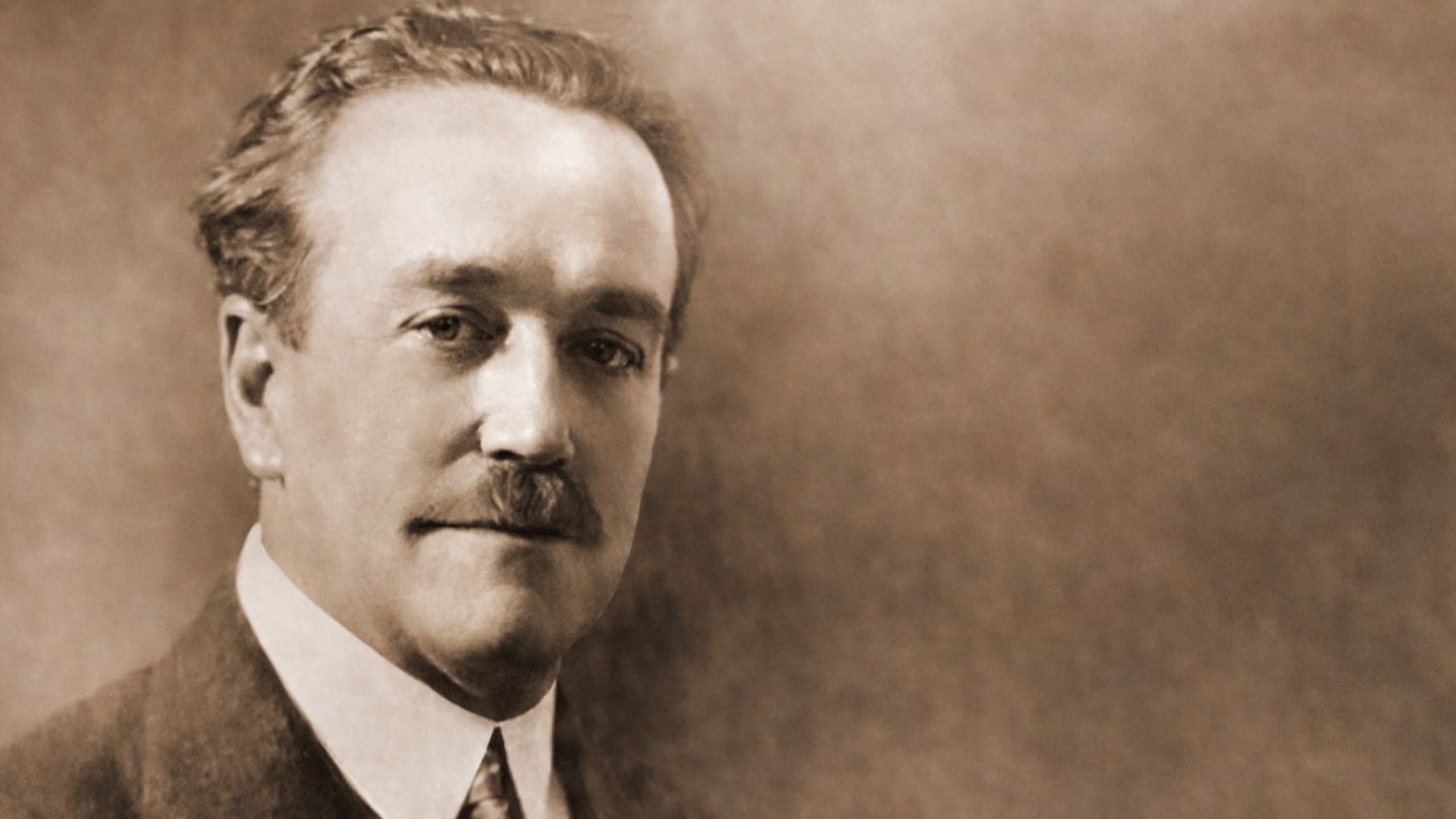
Charles Fox Parham: Fraud, Racism, and the Dark Origins of Pentecostalism
Charles Fox Parham, often credited as a founding figure of Pentecostalism, was deeply entangled with fraud schemes, racial ideology, and extremist theology that shaped both his ministry and his legacy. His promotion of British Israelism, segregation, and apocalyptic communal experiments reveals a movement rooted not only in revivalism but also in white supremacy and exploitation.
Charles Fox Parham (1873–1929) was a fundamentalist preacher and evangelist commonly credited as a foundational figure in modern Pentecostalism. Before establishing his own sect, Parham spent time observing the communal religious experiments created by Frank Sandford and John Alexander Dowie. Contemporary newspapers frequently portrayed Parham as a financial opportunist. He was implicated in a scheme that swindled money from investors through a product advertised to transform ordinary rocks into gold,[1] and evidence suggests that proceeds from this venture were used to fund his Topeka, Kansas commune. Parham was also an outspoken supporter of the Ku Klux Klan, praising what he described as "their high ideals for the betterment of mankind".[2]
British Israelism and Racial Theology
Parham was a convert to British Israelism, a doctrine he likely absorbed through his association with Frank Sandford, himself a prominent adherent.[3] Sandford had studied under British Israel author and teacher C. A. L. Totten,[4] whose writings exerted wide influence among racialist and prophetic movements. Parham later taught British Israelism to Wesley A. Swift,[5] who developed it into the Christian Identity doctrine. This theology would later be repackaged by William Branham as his “Serpent’s Seed Doctrine.”
From 1890 to 1907, Totten published nearly two dozen books and hundreds of articles on AngloIsraelism, prophecy, biblical chronology, and other related topics. His works inspired dozens of evangelists and religious writers, including Rev. John H. Allen, a founding minister of the Church of God (Holiness); Charles Parham, the founder of the Apostolic Faith Movement; Victor Morris Tyler, a wealthy industrialist and editor of the Our Race Quarterly; Rev. Reuben H. Sawyer, a clergyman of the Christian Church and recruiter for the Ku Klux Klan; and Alan A. Beauchamp, a publisher and editor of the Watchman of Israel.[6]
— Mystical Anti-Semitism and the Christian Identity Movement: A Narrative Criticism of Dan Gayman’s The Two Seeds of Genesis 3:15
Azusa Street and Criminal Accusations
Parham worked closely with William Joseph Seymour during the early development of Pentecostalism. When the Azusa Street Revival began attracting national attention, Parham traveled to Los Angeles in an attempt to assert influence but was poorly received. By that time, Parham had already been accused of sodomizing young boys and was arrested in Texas after being discovered with J. J. Jourdan.[7][8] Although the charges were eventually dropped, public opinion had largely turned against him. Parham did not deny the accusations, later claiming that the act was unintentional.[9]
Parham openly rejected the Azusa revival and its participants. Influenced by a racially exclusive form of British Israelism, he condemned the interracial nature of the meetings. In his autobiography, Parham wrote:
I have seen meetings where all crowded together around the altar, and laying across one another like hogs, blacks and whites mingling; this should be enough to bring a blush of shame to devils, let alone angels, and yet all this was charged to the Holy Spirit.[10]
White Supremacy and Segregation
According to historian Michael Barkun, Parham’s theology reflected an explicitly white supremacist version of British Israelism. In Religion and the Racist Right: The Origins of the Christian Identity Movement, Barkun noted that "Charles Parham regarded Cain’s marriage to a woman from the land of Nod as the first step in the woeful intermarriage of races for which cause the flood was sent in punishment".[11]
Parham endorsed the Pre-Adamite race theory, teaching that God created two distinct races: one possessing everlasting human life and another without it. He interpreted the “sons of God” and “daughters of men” in Genesis 6:2 as representing these separate races, a framework that later became foundational to Christian Identity theology. Parham taught that the "greatest sin of humanity was the mixing of the races".[12] His services were segregated, and Black attendees were refused participation at altar calls.[13]
The Apostolic Faith Movement had its origin in Topeka, Kansas, January 1, 1901, and is a dignified work, full of power and precision. The Pentecostal Assemblies originated in a negro [sic] mission in Los Angeles, California, and is a cross between the old-fashioned negro worship of the South, and Holy-Rollerism. Three-fourths of their socalled [sic] speaking in tongues is only a chatter and jabber and they have no Pentecostal power at all.
— Parham, Everlasting Gospel
Communal Experiments and Doomsday Claims
In 1900, reports circulated nationwide that Frank Sandford’s Holy Ghost and Us Society had raised a person from the dead. Parham took a sabbatical to observe Sandford’s methods firsthand.[14] He spent six weeks at Sandford’s Shiloh commune in Maine,[15] joined him in revival meetings in Ontario, and returned to Topeka inspired by both Sandford and Dowie’s communal models. There, Parham established the Bethel Bible School and announced his own doomsday prediction, claiming the world would end before 1925.
I had heard a great deal of the wonderful work of Mr. Sandford and of his travels through the west to secure recruits for his Bible class in Shiloh... When I reached Shiloh, I had less than $1, but shortly afterward $15 was wired to me, so that, although I had been away from home three weeks I still had about $15.[16][17]
Stone’s Folly and the Bethel Experiment
By September 1900, Parham launched his own religious utopia in Topeka, purchasing an abandoned structure known as “Stone’s Folly” for $40,000.[18] The building’s two towers were designated as “prayer towers,” with continuous 24-hour prayer shifts. In January 1901, glossolalia reportedly broke out among the residents, attracting intense media attention. Although members claimed to speak multiple foreign languages, their utterances were never recorded, and interpretation was provided exclusively by Parham’s sister-in-law, Miss Thistlewaite.[19]
Public concern soon followed. In May 1901, City Physician H. B. Hogeboom announced plans to convert the building into a pest house,[20] citing health risks associated with divine healing practices. By August, Parham lost the lease, the property was converted into a brothel, and in December it was destroyed by fire.[21]
Fraud, Flight, and Zion City
Parham later announced plans to travel to Jerusalem, claiming to know the location of the Ark of the Covenant through biblical interpretation.[22] These claims became a recurring fundraising device.[23] Around the same time, Parham was implicated in another fraudulent venture, the “Chemical Gold” company, whose president was arrested for obtaining money under false pretenses.[24] Newspapers reported that Parham could not be located during the investigation.[25]
As John Alexander Dowie’s Zion City empire faltered, Parham attempted to seize leadership, proclaiming himself Elijah III after Dowie suffered a debilitating stroke.[26][27][28][29] Though Parham briefly gained followers, he was ultimately expelled by Zion’s leadership.[30]
Violence, Arrest, and Collapse
In the aftermath, Parham’s followers were implicated in the torture and death of Mrs. Letitia Greenhalgh during a violent exorcism. A jury identified Parham as responsible for training his followers in these practices.[31]
We, the jury, further find by investigating the death of Mrs. Greenhalgh that certain practices under the leadership of one Charles F. Parham and his followers which are both disgraceful and dangerous to society; and we believe that these practices should be thoroughly investigated by the proper authorities.[33]
— Verdict by Jury
Parham subsequently went into hiding,[32] only to be arrested later in Texas on sodomy charges. Although the case was dismissed, the stigma permanently damaged his public standing. By 1908, Parham continued leading a diminished sect, raising funds for further Jerusalem schemes and mailing handkerchiefs as “souvenir blessings.”[34][35] In 1909, he claimed that all donated funds were stolen during alleged robberies in New York and Chicago.[36][37]