
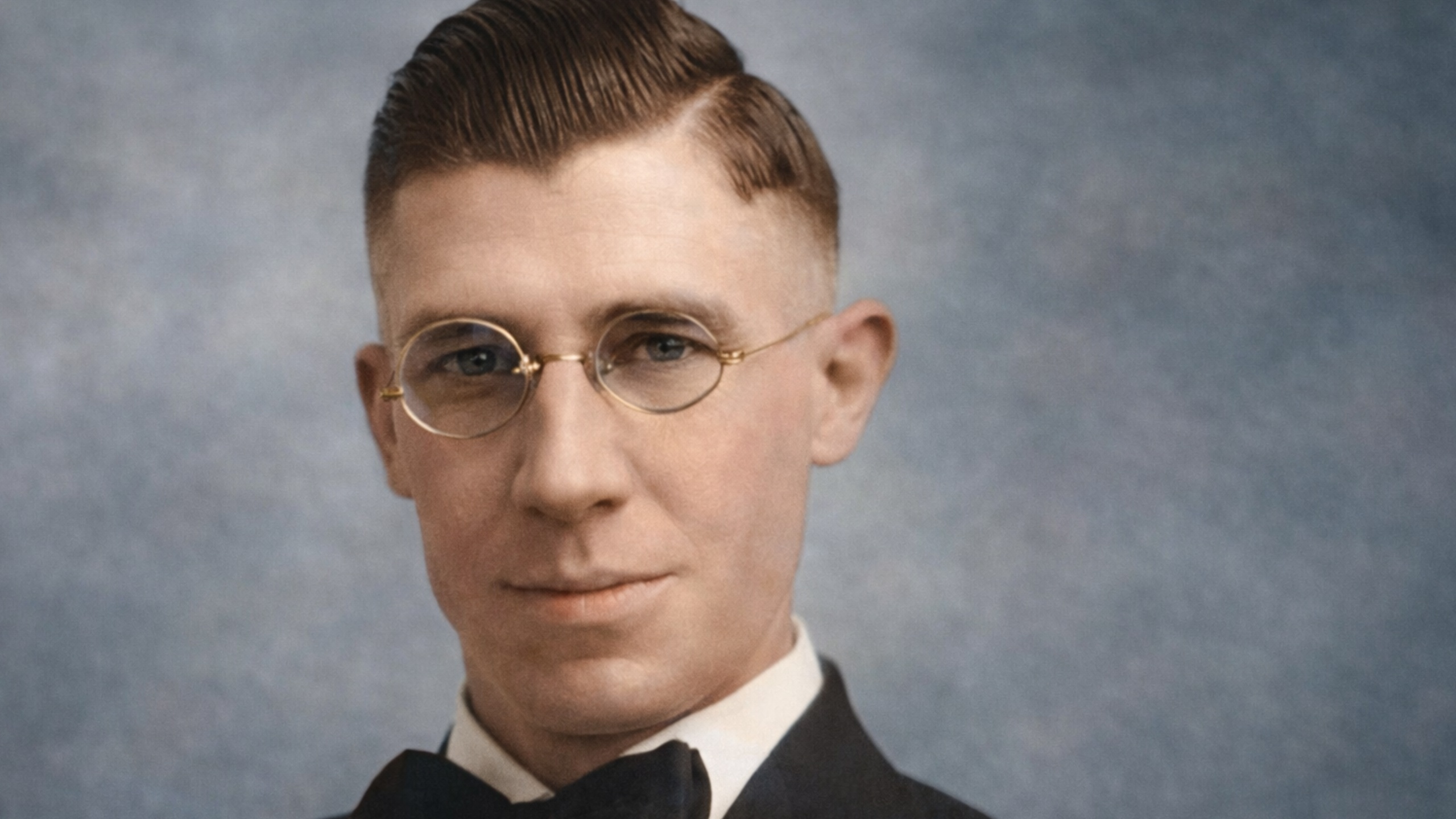
Clyde E. Green: The Minister Who Married William Branham & Hope Brumbach
Clyde E. Green was a Midwestern minister whose career moved from early Church of the Nazarene pastorates into interdenominational revival leadership and ultimately Pentecostal and Primitive Evangelistic authority. His role as the officiant in the 1934 marriage of William Branham and Hope Brumbach places Branham squarely within Roy E. Davis–aligned Pentecostal networks during his formative ministerial years.
Clyde E. Green was a Midwestern Protestant minister whose career spanned multiple evangelical and holiness traditions during the first half of the twentieth century. His ministry trajectory included early ordination within the Church of the Nazarene, pastoral leadership in Indiana, Kentucky, and Texas, participation in interdenominational revival campaigns, and later identification with Primitive Christian and Primitive Evangelistic movements. Contemporary newspaper coverage documents Green as a Nazarene pastor as early as 1917, a revival leader associated with Pentecostal and interdenominational meetings by 1919, and a recognized church leader through the 1920s and 1930s in Indiana and Kentucky. By the end of his life, Green was identified publicly as a minister of the Primitive Christian Church, reflecting a significant evolution in denominational alignment over several decades [1]. This section establishes the chronological and denominational scope of Green's ministry, providing necessary context for understanding his later associations, including his connection to Roy E. Davis-affiliated Pentecostal networks and his role in officiating the marriage of William Branham and Hope Brumbach.
Revival Leadership and Interdenominational Activity in Indiana
By 1919, Clyde E. Green’s ministry had expanded beyond settled Nazarene pastorates into highly visible revival leadership that crossed denominational boundaries. Newspaper announcements from Huntington, Indiana, report that Green organized and conducted extended revival meetings at the local Coliseum, scheduling both afternoon and evening services and planning a campaign lasting a full month [2]. These notices identify the meetings explicitly as interdenominational, signaling a shift away from strictly Nazarene congregational ministry toward a broader revivalist model common in early twentieth-century Midwestern evangelicalism.
Significantly, Green was described during this period as pastor of a Pentecostal church at Bluffton, Indiana, indicating either a temporary pastoral appointment or a functional alignment with Pentecostal networks while still operating in revival settings that welcomed multiple traditions . The same coverage notes musical accompaniment by a university quartet, reflecting the scale and organization of the meetings rather than informal storefront gatherings. This phase demonstrates Green’s increasing comfort operating across denominational lines and within revival infrastructure that emphasized mass meetings, itinerant preaching, and cooperative sponsorship.
Additional reporting from later in 1919 confirms that Green’s revival work directly influenced institutional developments. After managing the Coliseum revival, he received multiple pastoral calls, including a call to a Nazarene congregation he had helped organize locally, underscoring how revival leadership and church formation were intertwined in his ministry model [3]. These sources collectively establish Green as a transitional figure moving fluidly between Nazarene, Pentecostal, and interdenominational revival contexts prior to his later associations with Primitive Evangelistic leadership.