
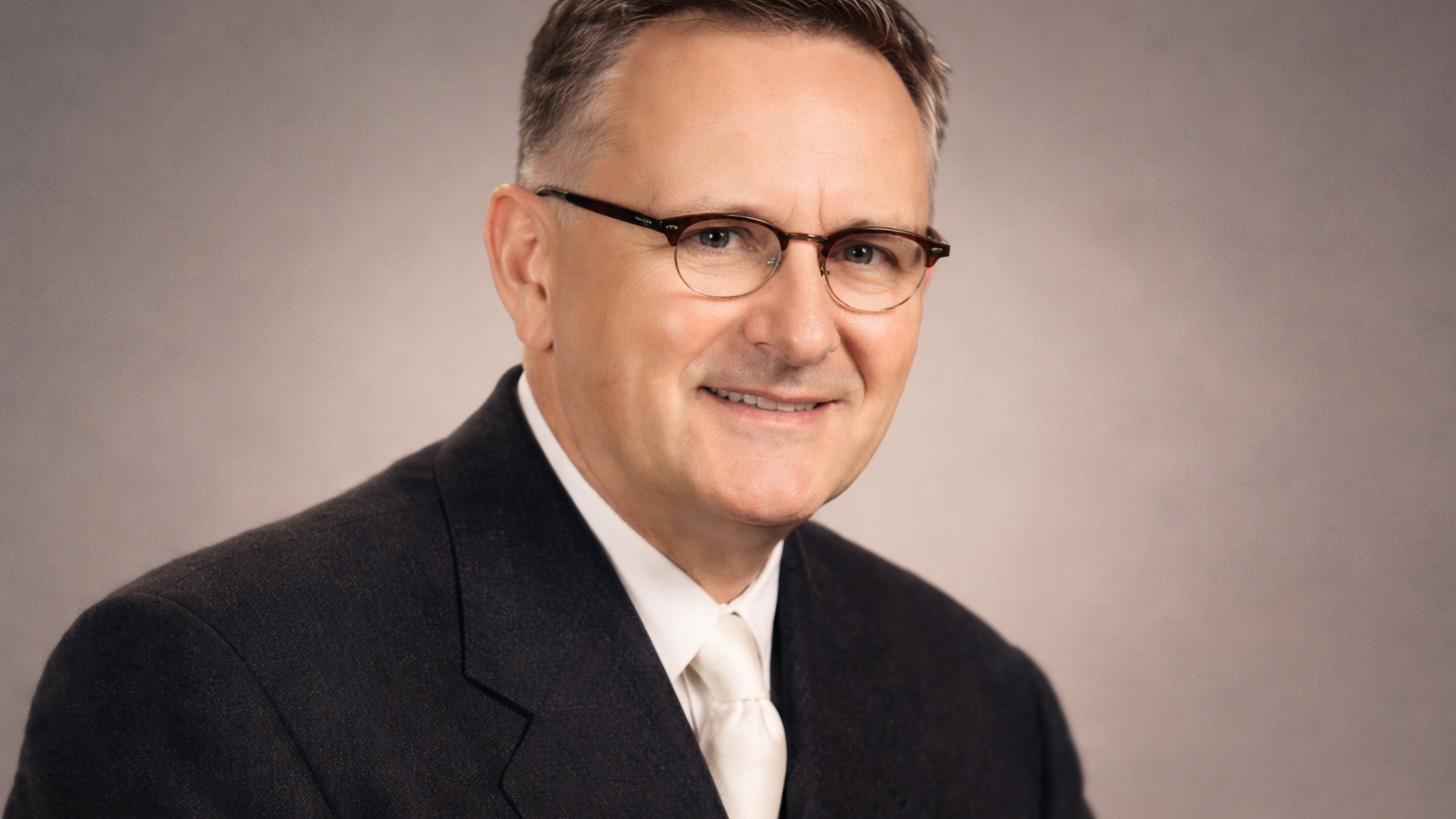
David du Plessis and the Hidden Architecture of Charismatic Power
David du Plessis, widely known as “Mr. Pentecost,” played a decisive role in transforming early Pentecostal revivalism into a trans-denominational charismatic movement built on relational authority, networks, and institutional access. Through documented collaborations with William Branham, Gordon Lindsay, healing revival leaders, ecumenical councils, and political mobilizations, his ministry helped establish the structural and cultural foundations later formalized within the New Apostolic Reformation.
David du Plessis (1905–1987), widely known as “Mr. Pentecost,” was one of the most consequential bridge figures in twentieth-century Christianity, shaping the transition of Pentecostalism from a marginal revivalist movement into a trans-denominational, ecumenical, and ultimately apostolic networked force. Emerging from classical Pentecostal roots in South Africa and later credentialed by the Assemblies of God, du Plessis became a central architect in carrying Pentecostal theology, experience, and authority beyond its original denominational boundaries. His influence extended across the healing revivals of the mid-twentieth century, intersected directly with figures such as William Branham and Gordon Lindsay, and helped normalize charismatic spirituality within mainline Protestant, Catholic, and global ecclesiastical institutions.
Du Plessis’s importance lies not merely in his preaching but in his structural impact. He functioned as a translator of Pentecostal experience into institutional language, legitimizing charismatic authority in contexts previously resistant to it. Through his work with the World Council of Churches, Catholic–Pentecostal dialogue, and international conferences, he reframed Spirit baptism and charismatic gifts as universal Christian phenomena rather than sectarian markers. This repositioning proved decisive for the Charismatic Renewal and laid essential groundwork for later developments associated with the Latter Rain legacy, including informal apostolic authority, trans-local leadership, and non-denominational networks.
At the same time, du Plessis operated within — and helped stabilize — the same revivalist ecosystem that produced authoritarian leadership models, shepherding and discipleship movements, and eventually the New Apostolic Reformation. His collaborations with healing revival leaders, appearances at leadership conventions, involvement with the Full Gospel Business Men’s Fellowship, and participation in political and civic rallies reveal how charismatic influence migrated from revival tents into organizational, media, and national arenas. The convergence of du Plessis with figures such as William Branham, Gordon Lindsay, Ern Baxter, and even Jim Jones underscores his role as a connective hub rather than an isolated theologian.
Understanding du Plessis is therefore essential for tracing how Pentecostal spirituality evolved into the modern charismatic and apostolic landscape. His career provides a through-line from early Pentecostal revivalism, through Latter Rain–inflected authority structures, into the normalization of charismatic leadership that later NAR figures would formalize. The sections that follow examine this trajectory in detail, using contemporaneous documentation to map how du Plessis’s ministry functioned as a catalyst for institutional, theological, and organizational transformations that continue to shape global charismatic Christianity.
Origins: Classical Pentecostal Formation and Early Ministry
David Johannes du Plessis was born in South Africa in 1905 into a Pentecostal environment shaped by early twentieth-century revivalism. Converted in childhood and baptized in the Holy Spirit as a teenager, he was formed within the Apostolic Faith Mission of South Africa, a body that emphasized Spirit baptism, missionary expansion, and experiential faith while still retaining formal organizational structures [1]. Unlike later charismatic leaders whose authority rested primarily on prophetic claims or healing campaigns, du Plessis emerged as an administrator, communicator, and institutional representative from the outset.
Ordained in the late 1920s, du Plessis quickly moved into leadership roles within the Apostolic Faith Mission, eventually serving in senior administrative capacities. This experience embedded him in the governance, diplomacy, and transnational coordination of Pentecostalism at a time when many revival leaders rejected institutional authority altogether [1]. His early ministry combined Pentecostal spirituality with an unusual comfort inside formal ecclesiastical and bureaucratic systems, a combination that would later define his global influence.
A decisive transition occurred in the late 1940s when du Plessis relocated to the United States and assumed leadership responsibilities connected to emerging international Pentecostal cooperation. Rather than treating historic denominations and church councils as apostate structures, he increasingly regarded them as mission fields for Pentecostal experience [1]. This posture placed him on a trajectory distinct from separatist Pentecostalism and positioned him as a bridge figure whose authority would be relational, trans-denominational, and portable across institutional boundaries.
This foundational period explains why du Plessis would later function simultaneously within healing revival networks, ecumenical councils, charismatic renewal movements, and leadership conventions. His early formation established the pattern of Pentecostal identity combined with institutional fluency that made him indispensable to the later development of charismatic and apostolic network structures.
Du Plessis and the Healing Revival Network
By the early 1950s, David du Plessis had moved beyond denominational Pentecostal administration and into the expanding orbit of the postwar healing revival. This network, which included figures such as William Branham and Gordon Lindsay, functioned as a loosely connected revival economy built around large-scale meetings, itinerant speakers, coordinated publicity, and shared platforms. Du Plessis’s role within this environment was distinct from that of the primary healing evangelists. Rather than centering his authority on healing claims, visions, or prophetic narratives, he operated as a recognized Pentecostal statesman whose presence conferred legitimacy and interdenominational access [2].
Contemporaneous newspaper advertisements and reports document du Plessis appearing in coordinated revival schedules alongside Branham, sometimes in the same city during the same week, addressing parallel audiences under a shared revival banner [3]. These arrangements demonstrate that du Plessis was not merely sympathetic to the healing revival but functioned within its organizational infrastructure. His participation normalized cooperation between classical Pentecostal leadership and revivalist figures who were increasingly controversial within denominational settings.
The association with Gordon Lindsay further situates du Plessis within the central communication and fundraising mechanisms of the healing revival. Lindsay, as editor of *Voice of Healing*, was instrumental in promoting Branham and shaping the revival’s narrative for a national and international audience. Du Plessis’s inclusion in meetings featuring Lindsay reflects his acceptance within the same revivalist ecosystem that sustained Branham’s ministry after growing institutional resistance [4]. This overlap is critical for understanding how Pentecostal authority migrated from denominational oversight into network-based validation.
Du Plessis’s involvement in these revival networks also explains his later credibility among charismatic leaders who emerged from the healing revival milieu. The revival circuit served as a transitional space in which Pentecostal experience was detached from formal denominational accountability and reattached to relational authority, shared platforms, and mutual recognition. Du Plessis’s presence in this environment positioned him as a bridge between classical Pentecostalism and the charismatic movements that followed, including structures later formalized within apostolic and neo-charismatic networks.
Joint Revivals with William Branham
The relationship between David du Plessis and William Branham extended beyond informal association and into documented cooperation within organized revival campaigns. Newspaper advertisements from the late 1950s and early 1960s show both men listed together in coordinated revival schedules, sometimes addressing different congregations within the same city under a shared revival framework [5]. These arrangements demonstrate operational collaboration rather than incidental proximity, placing du Plessis inside the same revival machinery that sustained Branham’s ministry during its peak and subsequent institutional marginalization.
Such joint scheduling reflects a strategic division of labor common to the healing revival period. Branham was promoted primarily as a healing evangelist whose authority rested on supernatural claims and prophetic narratives, while du Plessis functioned as a Pentecostal statesman whose legitimacy reassured denominational leaders and broader audiences [5]. This pairing allowed revival organizers to appeal simultaneously to miracle-seeking crowds and to Pentecostal or charismatic leaders wary of Branham’s increasingly controversial teachings.
The significance of this collaboration becomes clearer when viewed in light of Branham’s growing estrangement from major Pentecostal denominations. As Assemblies of God and other bodies distanced themselves from Branham, networks such as the Full Gospel Business Men’s Fellowship and revival-oriented platforms became critical lifelines. Du Plessis’s willingness to share revival space with Branham during this period indicates not only tolerance but endorsement within charismatic leadership culture [6]. This cooperation complicates later narratives that portray du Plessis solely as an ecumenical diplomat detached from controversial revival figures.
The joint revival record also establishes an early structural precedent for later charismatic and apostolic networks. Authority was no longer derived from denominational appointment but from platform visibility, relational endorsement, and shared revival infrastructure. By participating in these campaigns, du Plessis contributed to normalizing the network-based validation of ministry that would later characterize the Charismatic Renewal and eventually the New Apostolic Reformation.
Du Plessis, Gordon Lindsay, and the Voice of Healing Orbit
David du Plessis’s integration into the postwar healing revival was reinforced through documented association with Gordon Lindsay, editor of Voice of Healing and one of the principal organizers and narrators of the healing revival movement. Lindsay’s role extended beyond publishing; he functioned as a central coordinator who shaped revival itineraries, controlled publicity, and mediated legitimacy for evangelists whose ministries operated outside denominational oversight. Du Plessis’s appearance in meetings that explicitly featured Lindsay situates him within this organizational core rather than at its periphery [7].
Newspaper advertisements for revival meetings list du Plessis alongside Lindsay in settings designed to promote large-scale revival activity, emphasizing praise, worship, spiritual gifts, and extended teaching programs [7]. These events reveal that du Plessis was accepted within the same revivalist infrastructure that elevated William Branham and other healing evangelists during periods of institutional resistance. His presence provided Pentecostal credibility while Lindsay’s media apparatus amplified reach and influence.
This association is significant because Voice of Healing served as a primary transmission channel through which healing revival theology, testimonies, and authority claims were normalized and disseminated. By participating in Lindsay-centered events, du Plessis implicitly endorsed the revivalist ecosystem that blurred distinctions between Pentecostal orthodoxy, prophetic charisma, and network-based authority validation. The revival circuit increasingly functioned as a self-reinforcing system in which relational proximity and platform visibility replaced denominational accountability.
The du Plessis–Lindsay connection therefore represents more than cooperation between two leaders; it illustrates how Pentecostal statesmanship, revival media, and itinerant authority converged into a durable network. This convergence would later provide a template for charismatic and apostolic movements that relied on conferences, publications, and relational endorsement to establish legitimacy, a pattern that becomes explicit in later New Apostolic Reformation structures.
Full Gospel Business Men’s Fellowship as a Transitional Support Network
As denominational support for controversial revival figures declined in the late 1950s and 1960s, trans-denominational organizations increasingly functioned as alternative platforms for charismatic authority. Among the most significant of these was the Full Gospel Business Men’s Fellowship International (FGBMFI), which provided meeting venues, publicity, financial backing, and relational legitimacy for revival and charismatic leaders operating outside traditional church structures. David du Plessis maintained a visible and sustained relationship with the Fellowship, appearing as a featured speaker at multiple FGBMFI events across the United States [8].
Newspaper notices document du Plessis addressing Fellowship chapters and conferences during periods when other Pentecostal institutions either distanced themselves from or formally sanctioned charismatic leaders associated with healing revival and ecumenical engagement [8]. These meetings were typically framed around testimony, Spirit baptism, and personal transformation rather than doctrinal oversight, reinforcing an authority model grounded in experience and relational endorsement. The Fellowship’s willingness to platform du Plessis reflects its function as a stabilizing structure for charismatic leadership beyond denominational accountability.
The significance of FGBMFI becomes clearer when viewed in continuity with William Branham’s career. As most Pentecostal denominations withdrew institutional support from Branham, the Fellowship emerged as one of the last major organizations to continue hosting and promoting his ministry. Du Plessis’s involvement with the same organization demonstrates how charismatic legitimacy was preserved and transferred through parallel networks even as formal ecclesiastical approval eroded. This parallel support system allowed revival-era authority figures to remain influential despite increasing controversy.
By hosting leaders such as du Plessis, the Full Gospel Business Men’s Fellowship helped normalize a model of ministry in which authority flowed through conferences, banquets, and relational networks rather than denominational ordination. This organizational pattern proved foundational for later charismatic and apostolic movements, including structures later formalized within the New Apostolic Reformation.
Ecumenism and the World Council of Churches
David du Plessis’s growing prominence within charismatic networks coincided with his deliberate engagement of formal ecumenical institutions, most notably the World Council of Churches (WCC). Unlike most Pentecostal leaders of his generation, du Plessis did not approach ecumenical bodies as adversaries or compromised structures but as strategic arenas for the transmission of Pentecostal experience. Contemporary reporting identifies him as a recognized Pentecostal representative within World Council of Churches gatherings, a role that earned him both influence and controversy [9].
Newspaper coverage from the 1970s describes du Plessis as a central figure advocating recognition of charismatic experience across denominational boundaries, emphasizing that the activity of the Holy Spirit was not confined to Pentecostal churches alone [9]. This framing intentionally de-emphasized Pentecostal distinctives such as tongues as denominational markers and repositioned Spirit baptism as a shared Christian experience. In doing so, du Plessis translated Pentecostal spirituality into ecumenical language acceptable within mainline Protestant and global church contexts.
His association with the World Council of Churches placed du Plessis at odds with segments of classical Pentecostal leadership, particularly within the Assemblies of God, who regarded the WCC as theologically compromised. Nevertheless, du Plessis continued to operate within these institutions, reinforcing a model of charismatic authority that was relational and experiential rather than doctrinally bounded. His role demonstrated how Pentecostal influence could be exercised without formal denominational control, relying instead on recognition by councils, committees, and interchurch forums.
This engagement with the World Council of Churches marks a critical stage in the evolution of charismatic authority structures. By validating Spirit-led experience within global ecclesiastical institutions, du Plessis helped detach charismatic legitimacy from denominational accountability altogether. This shift proved foundational for later charismatic and apostolic movements, including the New Apostolic Reformation, which would inherit the assumption that spiritual authority could operate independently of historic denominational structures.
Catholic–Pentecostal Dialogue and Vatican Engagement
David du Plessis’s ecumenical work extended beyond Protestant institutions into direct and sustained engagement with the Roman Catholic Church, marking one of the most consequential shifts in twentieth-century Pentecostal history. Contemporary reporting identifies du Plessis as a principal Pentecostal figure involved in Catholic–Pentecostal dialogue and as an invited participant and observer at sessions connected to the Second Vatican Council [10]. This involvement was unprecedented for a classical Pentecostal leader and positioned du Plessis as the primary conduit through which Pentecostal spirituality entered Catholic charismatic renewal.
Newspaper coverage documents du Plessis’s role in facilitating formal dialogue between Pentecostal representatives and Catholic theologians, including discussions on baptism, sacramental theology, and the work of the Holy Spirit [10]. Rather than emphasizing doctrinal discontinuities, du Plessis framed charismatic experience as a unifying spiritual reality capable of transcending institutional and sacramental differences. This approach allowed Pentecostal concepts of Spirit baptism to be reinterpreted within Catholic categories without requiring ecclesial separation.
His Vatican involvement intensified tensions with Pentecostal denominations already uneasy about his ecumenical commitments. Reports from the period note that du Plessis’s engagement with Catholic leadership contributed directly to the revocation of his Assemblies of God credentials, as his actions were viewed as legitimizing institutions historically rejected by Pentecostalism [11]. Despite this, du Plessis continued to operate with international recognition, underscoring how charismatic authority had become detached from denominational approval.
This Catholic–Pentecostal convergence had long-term structural consequences. By validating charismatic experience within sacramental and hierarchical systems, du Plessis demonstrated that Pentecostal authority could function independently of ecclesial boundaries. This precedent later enabled charismatic and apostolic movements to operate fluidly across denominational lines, contributing to the emergence of trans-denominational apostolic networks that would eventually be systematized within the New Apostolic Reformation.
Du Plessis, Charismatic Renewal, and Mainline Denominations
By the late 1960s and early 1970s, David du Plessis had become a central facilitator of the Charismatic Renewal within mainline Protestant denominations. Contemporary reporting identifies him as a frequent speaker at interdenominational conferences and clergy gatherings where Lutheran, Methodist, Episcopal, and Presbyterian leaders were encountering Pentecostal-style experiences for the first time [12]. Du Plessis’s role was not to found new movements but to legitimize charismatic experience within existing ecclesial frameworks, reframing Spirit baptism as a renewal rather than a rupture.
Newspaper accounts from this period show du Plessis intentionally minimizing overt Pentecostal boundary markers in favor of a Christ-centered and experiential vocabulary accessible to historic churches [12]. Tongues, healing, and prophecy were presented as secondary manifestations rather than defining doctrines. This rhetorical shift proved decisive, allowing charismatic spirituality to spread rapidly through mainline denominations without requiring withdrawal from established church structures.
This phase of du Plessis’s ministry demonstrates how charismatic authority increasingly functioned independently of denominational accountability. Rather than operating under the oversight of Pentecostal institutions, du Plessis derived legitimacy from invitation, recognition, and demand across multiple church bodies. His authority was portable, relational, and experiential, anticipating later apostolic models that emphasized influence over office.
The normalization of charismatic renewal within mainline denominations had lasting consequences. By establishing charismatic experience as trans-denominational, du Plessis helped erode traditional boundaries between churches and facilitated the emergence of network-based leadership cultures. These cultures later provided fertile ground for apostolic movements that claimed spiritual authority across denominational lines, a defining characteristic of the New Apostolic Reformation.
Tensions with the Assemblies of God and Credential Revocation
David du Plessis’s expanding influence within ecumenical and charismatic circles generated increasing friction with the Assemblies of God, the denomination that held his ministerial credentials. Contemporary reporting identifies his participation in World Council of Churches assemblies and Catholic–Pentecostal dialogue as the central factors that precipitated disciplinary action against him [13]. For denominational leaders concerned with doctrinal boundaries and institutional separation, du Plessis’s activities were interpreted as legitimizing organizations viewed as theologically compromised.
Newspaper coverage from the period notes that du Plessis’s credentials were revoked on the grounds that he had become “too ecumenical,” a charge that reflected not moral failure or doctrinal deviation but structural disobedience to denominational expectations [13]. His punishment underscored a widening divide between classical Pentecostal governance and the emerging charismatic authority model in which leaders operated through invitations, conferences, and relational influence rather than denominational appointment.
Despite the revocation, du Plessis continued to function publicly as a Pentecostal representative with international recognition. Reports emphasize that his speaking schedule, institutional access, and influence were largely unaffected by the loss of credentials, revealing how charismatic authority had already become decoupled from denominational control [14]. This period demonstrates that denominational sanction no longer carried decisive power over charismatic leaders whose legitimacy rested on networks rather than offices.
The conflict with the Assemblies of God thus marks a pivotal transition. Du Plessis’s experience illustrates how charismatic leadership could survive—and even expand—outside formal ecclesiastical structures. This transition provided a working model for later charismatic and apostolic movements that treated denominational accountability as optional rather than essential, a posture that would later be formalized within New Apostolic Reformation theology.
Reinstatement and Continued Charismatic Influence
After nearly two decades of estrangement, David du Plessis was formally reinstated by the Assemblies of God in 1980, a decision widely reported in the religious press as a vindication of his long-controversial ecumenical career [15]. The reinstatement did not mark a reversal of du Plessis’s theological posture or institutional strategy; rather, it reflected a belated accommodation by denominational leadership to a charismatic reality that had already reshaped global Christianity. By the time his credentials were restored, du Plessis’s authority no longer depended on denominational recognition.
Newspaper accounts emphasize that du Plessis had continued to function throughout the period of sanction as an international Pentecostal emissary, participating in World Council of Churches activities, Catholic–Pentecostal dialogue, and charismatic conferences across denominational lines [15]. His reinstatement therefore functioned symbolically rather than structurally, acknowledging influence that had long operated beyond the Assemblies of God’s control.
The timing of the reinstatement is itself instructive. By 1980, charismatic renewal had become entrenched within mainline Protestant and Catholic contexts, and trans-denominational charismatic networks were firmly established. The Assemblies of God’s decision to restore du Plessis’s credentials reflects a recognition that exclusion no longer curtailed charismatic authority and that continued opposition risked marginalizing the denomination itself [16]. In this sense, reinstatement represented institutional adaptation rather than doctrinal reconciliation.
Du Plessis’s continued prominence following reinstatement illustrates the durability of network-based charismatic authority. His influence flowed through conferences, advisory roles, and institutional partnerships rather than denominational office. This model of authority—validated by recognition, longevity, and relational access—would later be replicated and formalized within apostolic movements, including those identified with the New Apostolic Reformation.
Du Plessis and the Shepherding / Discipleship Movement
As charismatic renewal matured in the 1970s, internal disputes emerged over authority, discipline, and spiritual oversight. One of the most controversial developments was the Shepherding, or Discipleship, Movement, which emphasized submission to personal spiritual authorities and hierarchical accountability structures. David du Plessis emerged as a vocal critic of this movement, positioning himself in direct opposition to its central claims about authority and control [17]. This conflict is especially significant given the Shepherding Movement’s leadership overlap with figures connected to William Branham’s revival network, including Ern Baxter.
Contemporary reporting identifies du Plessis as one of the most prominent opponents of shepherding theology, warning that enforced submission and centralized authority risked spiritual abuse and distortion of Christian liberty [17]. His objections did not arise from resistance to charismatic leadership per se but from concern that shepherding structures replaced relational influence with coercive oversight. This distinction highlights du Plessis’s preference for charismatic authority exercised through persuasion and recognition rather than command.
The clash between du Plessis and the Shepherding Movement reveals competing trajectories within post-revival charismatic Christianity. While both streams rejected traditional denominational governance, shepherding proponents sought to replace it with tightly controlled relational hierarchies. Du Plessis, by contrast, favored looser networks in which authority flowed horizontally through reputation, access, and longevity. This divergence anticipates later tensions within apostolic movements over accountability, submission, and governance.
This conflict also underscores du Plessis’s role as a stabilizing figure within charismatic renewal. By resisting shepherding excesses, he implicitly defended a model of charismatic leadership that preserved flexibility and institutional permeability. That model would later be adopted, refined, and expanded within apostolic network structures associated with the New Apostolic Reformation, even as debates over authority continued to resurface.