
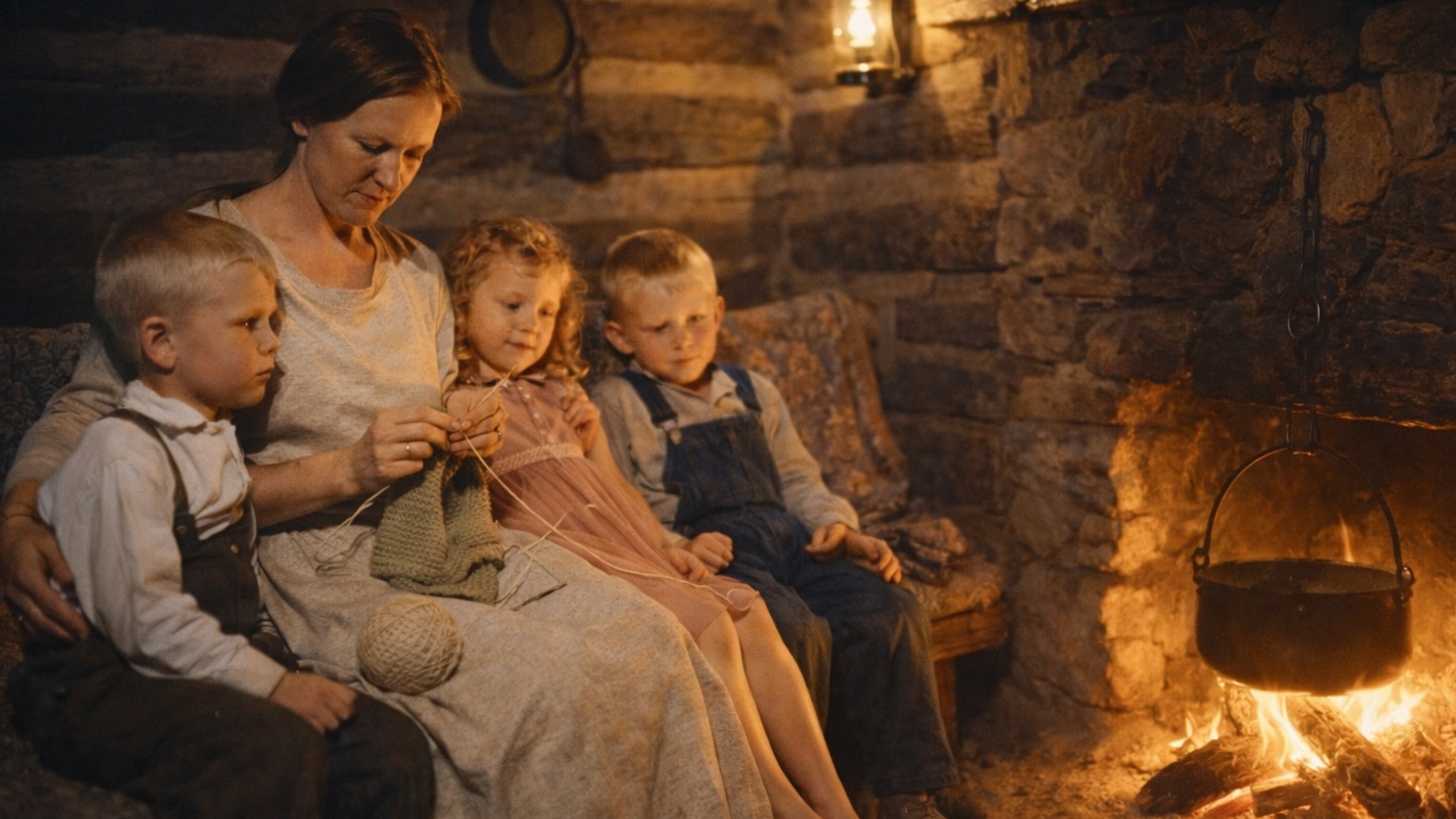
Ella Branham: From Texas to Indiana
This study reconstructs Ella Branham’s life using U.S. Census records and vital documents, establishing a clear timeline that conflicts with later revival-era narratives. The evidence shows that the widely repeated log cabin story reflects retrospective storytelling rather than the documented household realities of the Branham family.
Ella Branham (1891–1961) is consistently identified in later family narratives and secondary analyses as having roots in Texas and early family connections in Kentucky. While William Branham repeatedly referenced his mother as being “from Paris, Texas” in sermons given across the 1950s and early 1960s, the earliest contemporaneous government documentation places Ella within the Branham household in Kentucky by 1910. The 1910 United States Census enumerates Ella as the wife of Charles Branham, residing with their children in Washington County, Kentucky, establishing Kentucky as the family’s documented place of residence during William Branham’s earliest years [1].
Later reconstructions of Branham family history note that references to Texas function primarily as ancestral or formative background rather than as evidence of long-term residence during William Branham’s childhood. Analytical comparison of Branham’s autobiographical statements with census data shows that Kentucky represents a verifiable early location for the family, while Texas appears in retrospective storytelling without corresponding census confirmation for the years in question [5].
Census Evidence and the Timeline of the Branham Family’s Residences
The United States Census records provide a fixed chronological framework for tracing the Branham family’s movements and establish clear limits on later autobiographical claims. By 1920, the Branham household is enumerated in Jeffersonville Township, Clark County, Indiana, demonstrating a documented relocation from Kentucky within a decade of the 1910 census. Ella Branham appears in this Indiana household alongside her children, confirming that the family was no longer residing in Kentucky during William Branham’s school-age years [6].
This relocation is significant because it places the family in Indiana well before the period in which William Branham later claimed to have spent an extended childhood in a rural Kentucky log cabin. When read sequentially, the census data show a short, early Kentucky residence followed by settlement in Indiana, rather than a prolonged or defining upbringing in Kentucky. The timeline established by these government records limits Kentucky to the earliest phase of William Branham’s life and contradicts narratives that imply continued residence there into later childhood or adolescence.
Ella Branham’s Occupational Status and Economic Role in the Household
United States Census records provide the only contemporaneous descriptions of Ella Branham’s occupational status and economic role within the family. In the 1910 and 1920 census schedules, Ella is recorded with an occupation consistent with sewing or seamstress work, a common form of paid labor for women during this period and one that aligns with later claims that she performed government-related sewing work prior to the Ohio River flood of 1937 [7]. These entries indicate that Ella contributed economically to the household during years when the family was raising multiple children and relocating between states.
By contrast, later census records reflect a change in her occupational listing. In the 1940 United States Census, Ella is recorded without an occupation, a designation commonly used for individuals who were not formally employed at the time of enumeration [8]. This shift corresponds chronologically with William Branham’s emergence as a full-time minister and the establishment of the Billie Branham Pentecostal Tabernacle, suggesting a transition in household economics from wage-based labor to reliance on Branham’s ministerial income. The census data, therefore, document a clear progression in Ella Branham’s economic role, moving from active wage labor in earlier decades to an unoccupied status later in life.
The 1940 Household: Ella Branham as Head of Household and Its Implications
The 1940 United States Census records Ella Branham as the head of household in Jeffersonville, Clark County, Indiana, with William Branham and his young son, Billy Paul Branham, listed as members of her household. This designation is significant because census enumerators typically recorded the individual recognized as responsible for the household’s administration and stability, particularly in cases involving widows or extended-family living arrangements [9]. Ella’s status as head of household indicates her central role in maintaining the family residence during this period.
This census configuration represents the only documented point in time when William Branham, his mother, and his son were all living together in the same household. Based on the known birth years of Branham’s siblings, this 1940 arrangement also marks the sole period in which the full sibling group described in later “log cabin” narratives could theoretically have been co-resident, yet the location was unequivocally Jeffersonville, Indiana, not rural Kentucky. At this time, William Branham was already thirty-three years old and functioning as a pastor, placing this household structure firmly in his adult life rather than in the infancy or toddler years often emphasized in his autobiographical storytelling.
The Log Cabin Narrative Measured Against Census Chronology
When William Branham’s later autobiographical descriptions of a crowded Kentucky log cabin are measured against the census chronology, significant contradictions emerge. Census records establish that the Branham family resided in Kentucky only during William Branham’s earliest years and that the household relocated to Indiana by the time he reached school age. The 1910 census confirms a Kentucky residence, but subsequent enumerations in 1920, 1930, and 1940 consistently place the family in Jeffersonville, Indiana, during the years in which most of the siblings were born and raised [10].
Later portrayals of nine siblings living together in a primitive Kentucky cabin during William Branham’s toddler years are not supported by the documented birth years of the children or by household locations recorded in government records. Analytical comparison of Branham’s evolving narratives with census data shows that the only period in which all siblings could have plausibly lived under one roof occurred decades later, in Indiana, when William Branham was already an adult minister. The census chronology therefore demonstrates that the log cabin narrative functions as a retrospective construction rather than a historically sustained living arrangement.
Ella Branham’s Illness, Death, and the Absence of Faith-Healing Claims
Ella Branham’s medical history and death are documented in government vital records rather than in the faith-healing testimonies that characterized William Branham’s public ministry. The Indiana State Board of Health Medical Certificate of Death records that Ella Branham died on October 27, 1961, in Jeffersonville, Indiana. The listed cause of death is cerebral thrombosis due to arteriosclerotic cardiovascular disease, with diabetes mellitus identified as a contributing condition [11]. This official record establishes a prolonged, chronic medical condition rather than an acute or sudden illness.
Notably, there is no contemporaneous documentation indicating that Ella Branham was healed through her son’s faith-healing ministry, despite William Branham’s frequent public claims of divine healing and miraculous intervention for others. The death certificate lists William Branham himself as the informant, confirming his awareness of the medical causes of death and reinforcing the absence of any recorded healing event. The documented outcome of Ella Branham’s illness therefore stands in contrast to the expectations created by Branham’s healing claims and highlights a clear boundary between public testimony and private family experience.