
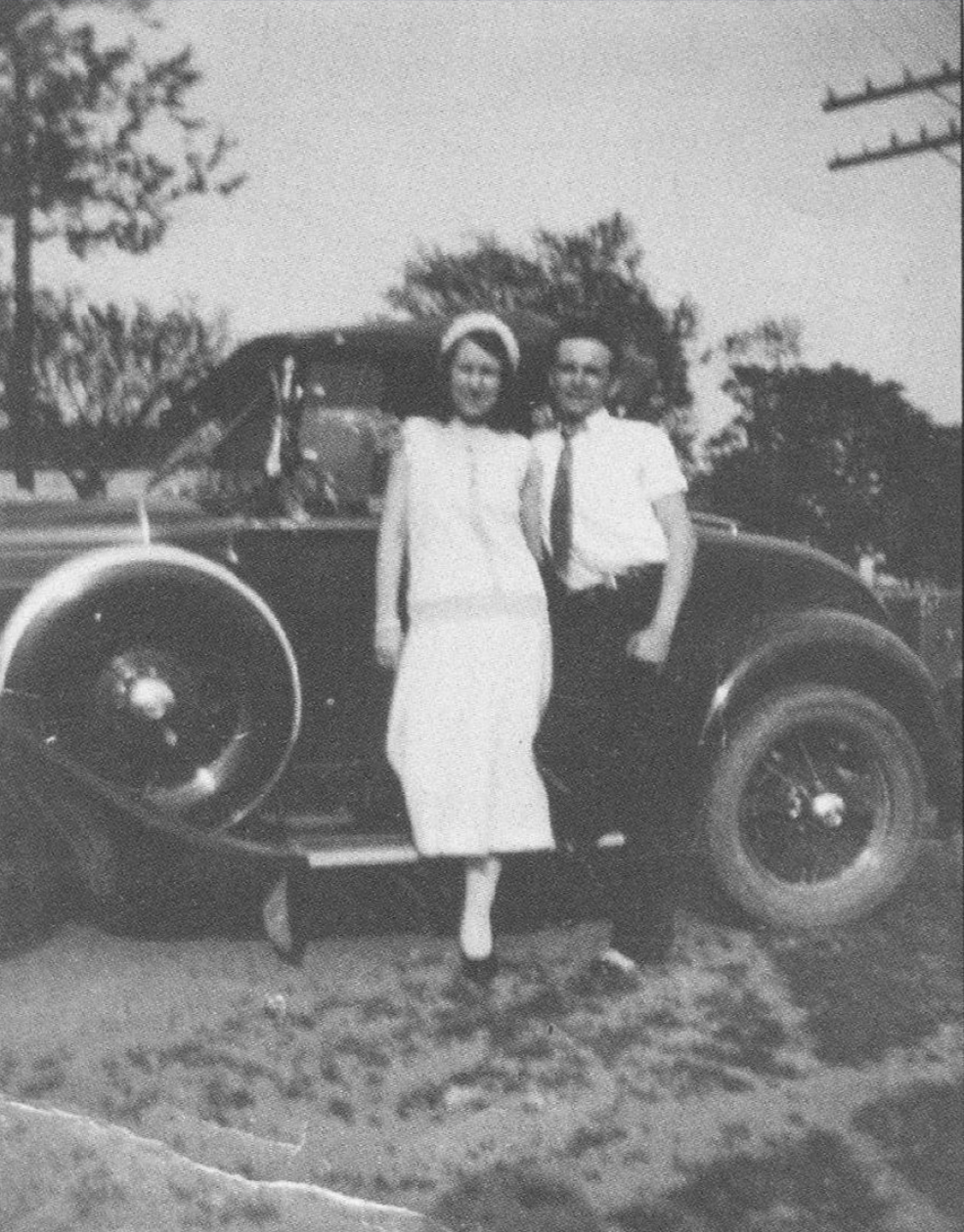
Hope Branham
William Branham's first wife, Hope Branham, was born Amelia Hope Brumbach in 1913. Her grandfather was Elza (Elsworth) Brumbach, and he lived in a small house next to the cemetery that is now her final resting place. Elza was the superintendent of the cemetery.
Hope's father, Charles Brumbach, was a locomotive fireman. He married her mother, Hazel Scott, in 1912. Shortly after, Charles and Hazel moved to Logansport, IN. Hazel became critically ill, and family was called in. After Charles' mother went to see the newlyweds, Hazel began to improve.
Later that year, when Hope was one year old, Hazel sued Charles for divorce. It became known that Charles was abusive, and had abandoned his wife and child. After a fight, Charles told her to file for divorce. He no longer cared for Hazel, and was not providing for Hope. William Branham's descriptions of his nervous meeting at the house of Hope's parents to ask for her hand in marriage appear to be nothing more than one of many fictional elements in his stage persona, as the two were divorced before William Branham wold have had this encounter.
Hope was an honor roll student during the years William Branham was in Phoenix, AZ, and became close friends with many schoolmates that would later become part of William Branham's life off-stage. Parties were held at the Brumbach house, often, and were reported in the local news. From all appearances, the Brumbach home had changed to match the "Life Story" Charles and Hazel were temporarily together and holding "beach parties". The reunion would not last, however, and before William Branham's marriage to Hope, Charles would be married to his second wife. Charles married Grace Creigh just 4 months after his divorce in 1931, three years before William Branham married Hope.
Hope became involved with many local clubs. She was often enjoying Bunco, dice games, swimming, dancing, and enjoying life. The Jeffersonville newspaper, which reported everything, captured each story. Hope was very active in the community and eventually became active in Roy E. Davis' Pentecostal Church. Newspaper articles describe her involvement with Davis during the time William Branham became an elder and before her marriage to him.
Hope's death was a fundamental part of William Branham's Life Story, in almost every version of his stage persona. According to William Branham, Hope's mother wouldn't let him take Hope around Pentecostals, forcing him to avoid his "Pentecostal Call". Also, according to Branham, he honored the wishes of her mother and father.
William Branham and Hope Brumbach married on June 22, 1934, just weeks after Roy and Dan Davis fled town and Branham's "Pentecostal Tabernacle" was first advertised. Their wedding was officiated by Clyde E. Green, a Nazarite minister. A little over a year later, in 1935, Branham's first son was born.
But their happy home would not last. Hope was deathly ill. In January of 1936, Hope was diagnosed with Tuberculosis, and it was a fight for her life that she would not win. According to her death certificate, Dr. Sam Adair listed tuberculosis as the cause of death, similar to what Branham described in his "Life Story". The date of onset, however, was January 1936 instead of 1937, contrary to Branham's claim that God smote Hope for his failure to heed the Pentecostal call.
In April, Hope threw one last party, this time for William Branham. It was a big one. She surprised her husband with a birthday party, and invited many, many people. In the article, Hope listed William Branham's age placing his birth year at 1908 instead of 1909. This contradicted the versions of Branham's stage persona in which Branham claimed to have been "born under a sign" in 1909. It did, however, match the year and age William Branham himself used in his marriage certificate to Hope.
While she was dying from tuberculosis, she and William Branham conceived a daughter. The months to come would have been very traumatic for Willam Branham. Hope was dying, suffering with tuberculosis while pregnant, and from the look of her photographs, her life was quickly fading. Like the "Life Story, he might actually have blamed God for her death, but in most versions of his stage persona, William Branham claimed that God killed her in the 1937 flood, never mentioning that she contracted tuberculosis in 1936. She died July 21, 1937, four months after the flood receded of the disease she had since January 1936. His daughter died five days later, July 26, 1937. Tuberculosis, likely contracted in the womb, was the cause of his daughter's death.
Hope's father, Charles Brumbach, was a locomotive fireman. He married her mother, Hazel Scott, in 1912. Shortly after, Charles and Hazel moved to Logansport, IN. Hazel became critically ill, and family was called in. After Charles' mother went to see the newlyweds, Hazel began to improve.
Later that year, when Hope was one year old, Hazel sued Charles for divorce. It became known that Charles was abusive, and had abandoned his wife and child. After a fight, Charles told her to file for divorce. He no longer cared for Hazel, and was not providing for Hope. William Branham's descriptions of his nervous meeting at the house of Hope's parents to ask for her hand in marriage appear to be nothing more than one of many fictional elements in his stage persona, as the two were divorced before William Branham wold have had this encounter.
Hope was an honor roll student during the years William Branham was in Phoenix, AZ, and became close friends with many schoolmates that would later become part of William Branham's life off-stage. Parties were held at the Brumbach house, often, and were reported in the local news. From all appearances, the Brumbach home had changed to match the "Life Story" Charles and Hazel were temporarily together and holding "beach parties". The reunion would not last, however, and before William Branham's marriage to Hope, Charles would be married to his second wife. Charles married Grace Creigh just 4 months after his divorce in 1931, three years before William Branham married Hope.
Hope became involved with many local clubs. She was often enjoying Bunco, dice games, swimming, dancing, and enjoying life. The Jeffersonville newspaper, which reported everything, captured each story. Hope was very active in the community and eventually became active in Roy E. Davis' Pentecostal Church. Newspaper articles describe her involvement with Davis during the time William Branham became an elder and before her marriage to him.
Hope's death was a fundamental part of William Branham's Life Story, in almost every version of his stage persona. According to William Branham, Hope's mother wouldn't let him take Hope around Pentecostals, forcing him to avoid his "Pentecostal Call". Also, according to Branham, he honored the wishes of her mother and father.
William Branham and Hope Brumbach married on June 22, 1934, just weeks after Roy and Dan Davis fled town and Branham's "Pentecostal Tabernacle" was first advertised. Their wedding was officiated by Clyde E. Green, a Nazarite minister. A little over a year later, in 1935, Branham's first son was born.
But their happy home would not last. Hope was deathly ill. In January of 1936, Hope was diagnosed with Tuberculosis, and it was a fight for her life that she would not win. According to her death certificate, Dr. Sam Adair listed tuberculosis as the cause of death, similar to what Branham described in his "Life Story". The date of onset, however, was January 1936 instead of 1937, contrary to Branham's claim that God smote Hope for his failure to heed the Pentecostal call.
In April, Hope threw one last party, this time for William Branham. It was a big one. She surprised her husband with a birthday party, and invited many, many people. In the article, Hope listed William Branham's age placing his birth year at 1908 instead of 1909. This contradicted the versions of Branham's stage persona in which Branham claimed to have been "born under a sign" in 1909. It did, however, match the year and age William Branham himself used in his marriage certificate to Hope.
While she was dying from tuberculosis, she and William Branham conceived a daughter. The months to come would have been very traumatic for Willam Branham. Hope was dying, suffering with tuberculosis while pregnant, and from the look of her photographs, her life was quickly fading. Like the "Life Story, he might actually have blamed God for her death, but in most versions of his stage persona, William Branham claimed that God killed her in the 1937 flood, never mentioning that she contracted tuberculosis in 1936. She died July 21, 1937, four months after the flood receded of the disease she had since January 1936. His daughter died five days later, July 26, 1937. Tuberculosis, likely contracted in the womb, was the cause of his daughter's death.