
Branham's 1950 European Campaign: The Hidden Cold War Agenda
William Branham’s 1950 European campaign—publicly promoted as a revival tour—combined luxury travel, sightseeing, and even a visit to Paris’s Pigalle red-light district, revealing a far more worldly trip than followers imagined. Behind the scenes, tour organizer Baron von Blomberg operated as a politically connected Cold War strategist whose activities drew FBI scrutiny, linking Branham’s revival trip to high-level diplomatic networks rather than purely religious aims.
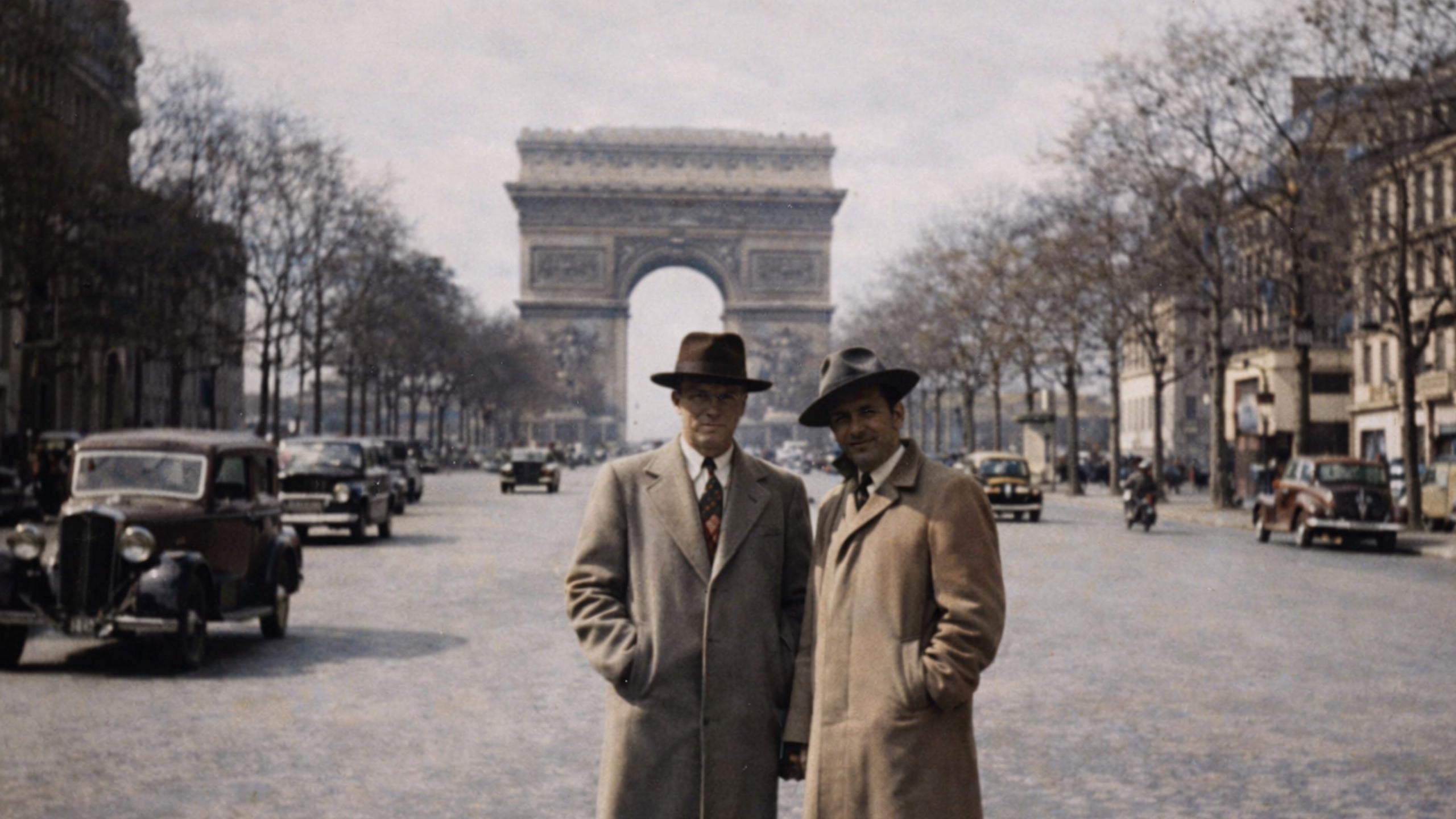
On April 6, 1950, William Branham’s campaign team left the United States for a series of revivals throughout Europe.[1] A 1950 “Special Overseas Edition” of Branham’s Voice of Healing publication detailed highlights from the tour, from their stay in the luxurious Piccadilly Hotel in London to guided sightseeing tours through Westminster Abbey, the Tower of London, St. Paul’s Cathedral, Wesley Chapel, Hyde Park, the Eiffel Tower, the Arc de Triomphe, and more.[2] The campaign tour was organized and led by Baron William T. Frary von Blomberg, a director for the Fellowship Foundation.[3] While the trip was presented as a Christian mission intended to spark revival, the actual events tell a much different story. It was on this trip that William Branham and his team visited the seedy Quartier Pigalle in Paris. According to Branham, he and Jack Moore wanted to see some prostitutes in Pigalle.[4]
When I went to Pigalle, Brother Moore and I, when I was in France, we thought we would see just those old prostitutes of Pigalle, just something drug-out, Satan is too smart for that, the most beautiful women you ever seen. See? He’s smart. Sin is enticing, sin is beautiful
- William Branham
Although Branham's followers understood the 1950 campaign as a strictly religious healing tour, von Blomberg operated in a very different world. Far from being merely a promoter or logistical coordinator, von Blomberg was a figure moving in high-level political, diplomatic, and ideological networks during the early Cold War. FBI documents him as having engaged in a semi-official mission in the Middle East [5], meeting with heads of state, the Secretary-General of the Arab League, and various European leaders while promoting the formation of a unified Western-Middle Eastern front against Communism.[6] His own public statements emphasized that he was "a man of action," identifying himself with political rather than religious objectives as he traveled between capitals[7]. Von Blomberg's influence came largely through his leadership role within the International Council for Christian Leadership (ICCL) — the organization that would later become known as The Fellowship or The Family, famous for establishing the National Prayer Breakfast. Despite its name, ICCL was not a religious ministry; it was a political fellowship composed of senators, diplomats, military officers, and aristocratic figures from multiple nations. Documentation preserved by the FBI in his file shows von Blomberg listed as a United States board member of the ICCL[8], alongside U.S. Senators Ralph Flanders and Estes Kefauver, Judge Raymond Baldwin, and State Department official John Emil Peurifoy. Articles in his FBI file record von Blomberg openly describing ICCL as an international organization designed to influence heads of government, encourage anti-Communist alignment, and promote political cooperation under the banner of "Christian leadership".
An internal memorandum from June 30, 1951, noted von Blomberg's "consistent participation" in political endeavors and made "frequent reference to his alleged immoral associations," the standard federal euphemism of the period for suspected homosexual conduct or other activity considered compromising during loyalty and security investigations[9]. The memorandum further indicates that the FBI requested a review to determine whether von Blomberg should have been registered as a foreign agent, highlighting the level of concern surrounding his international influence and activities