
Anglo-Saxonism and Its Influence on Early Pentecostal and Latter Rain Movements
Anglo-Saxonism, rooted in British Israelism and later adapted into American white supremacist theology, influenced key figures who helped shape both the Christian Identity movement and segments of mid-century Pentecostalism. Through leaders such as Wesley Swift, Gordon Lindsay, and George Hawtin, elements of this racialized ideology permeated revival networks, leaving a lasting imprint on parts of the Latter Rain and healing
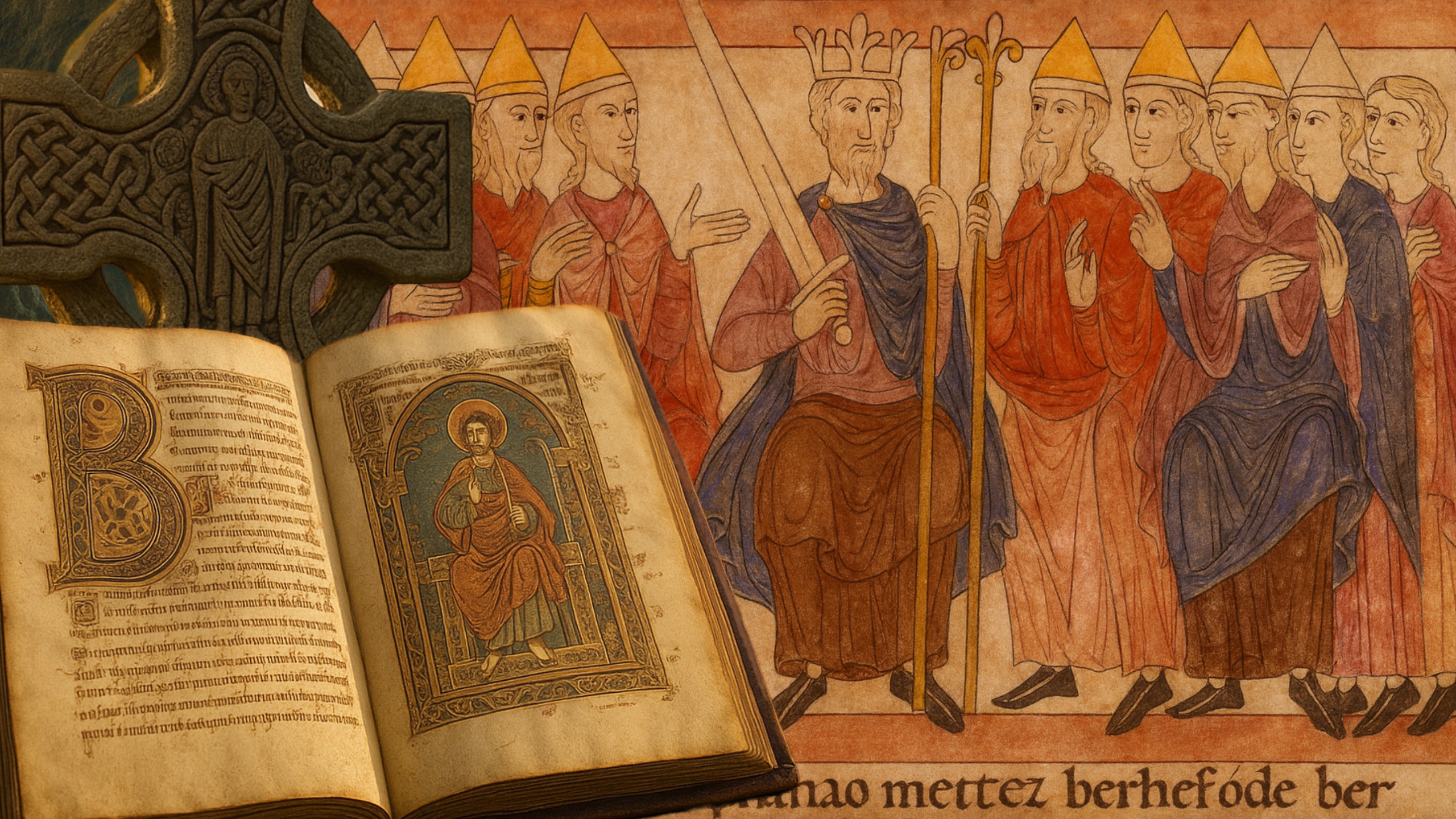
Anglo-Saxonism emerged in the nineteenth century as a racialized ideological framework that elevated the Germanic peoples of Britain--particularly those settled in England and Wales--as inherently superior to other ethnic groups.[1]Far from being a marginal theory, it gained traction among British and American intellectuals, politicians, and religious leaders, who established numerous Anglo-Saxon societies to promote notions of cultural destiny and racial hierarchy. Closely intertwined with certain strands of Protestant nationalism, proponents often contrasted their vision of an Anglo-Saxon "chosen people" against perceived religious and racial outsiders, particularly Catholics, whom they cast as adversaries of the movement.[2]
Anglo-Saxonism drew heavily from British Israelism, a pseudo-archaeological framework claiming that the inhabitants of the British Isles were direct descendants of the lost ten tribes of Israel. As this ideology migrated to the United States and intertwined with entrenched forms of American white supremacy, it provided the theological and racial scaffolding for what would become the Christian Identity movement. One of its most influential exponents, Wesley A. Swift--often described as the "father of Identity in the United States"--was both a Ku Klux Klan organizer and the founder of the Anglo-Saxon Christian Congregation Church. Swift received his ideological training under Philip E. J. Monson at Monson's "Kingdom Bible College," where he was instructed in a distinctly white supremacist variant of British Israelism.[3]
The movement is rooted in Anglo-Israelism, which developed in Great Britain during the 19th Century and equates Anglo-Saxons with the Ten Lost Tribes. A forerunner of the Identity movement, the report said, was the Massachusetts-based Anglo-Saxon Federation, which under its leader, Howard B. Land, attacked the young state of Israel in the '40s and '50s. But the acknowledged father of Identity in the United States was the late Wesley Swift, a one-time KKK organizer who served as the pastor of a Los Angeles church known as the Anglo-Saxon Christian Congregation.[4]
- Herald and Review
Anglo-Saxonism Within Pentecostal and Latter Rain Networks
William Branham's campaign manager, Gordon Lindsay, maintained active involvement in both British Israelism and Anglo-Saxonism, delivering addresses at conferences of the Anglo-Saxon Christian Movement in Canada[5] and at meetings of the Anglo-Saxon Federation in Portland.[6]Within the Latter Rain movement, influential leaders incorporated these radicalized racial doctrines into their preaching and print materials, thereby extending Anglo-Saxonist themes into emerging charismatic circles. One such figure was George Hawtin, a principal founder of the Sharon Orphanage in North Battleford, Saskatchewan--later a key center of the Latter Rain revival--who advanced openly hierarchical racial views, asserting that "Blacks were created in 'God's wisdom' to serve whites."
George Hawtin of Battleford, Sask., issued a written apology for distributing the 40-page booklet after a complaint about it to the Saskatchewan Human Rights Commission. Entitled "The Living Creature: Origin of the Negro", the booklet says God created a superior race of whites who are meant to rule. Blacks were created "in God's wisdom" to serve whites, it says.[7]
- The Province
Although Anglo-Saxonism never became a formal doctrine within Pentecostal or Latter Rain circles, its presence among influential leaders such as George Hawtin and Gordon Lindsay demonstrates how racialized theological systems could quietly permeate emerging charismatic networks. The later rise of the Christian Identity movement — drawing directly from Swift, Monson, and their Anglo-Saxonist predecessors--reveals the long-term consequences of these earlier ideological exchanges. Tracing these connections underscores how fringe racial theories were able to migrate into mainstream revival movements, influencing their social vision, eschatology, and self-understanding far more than contemporary audiences recognized.