
How Pentecostalism Helped Build Apartheid: The Hidden Latter Rain Connection
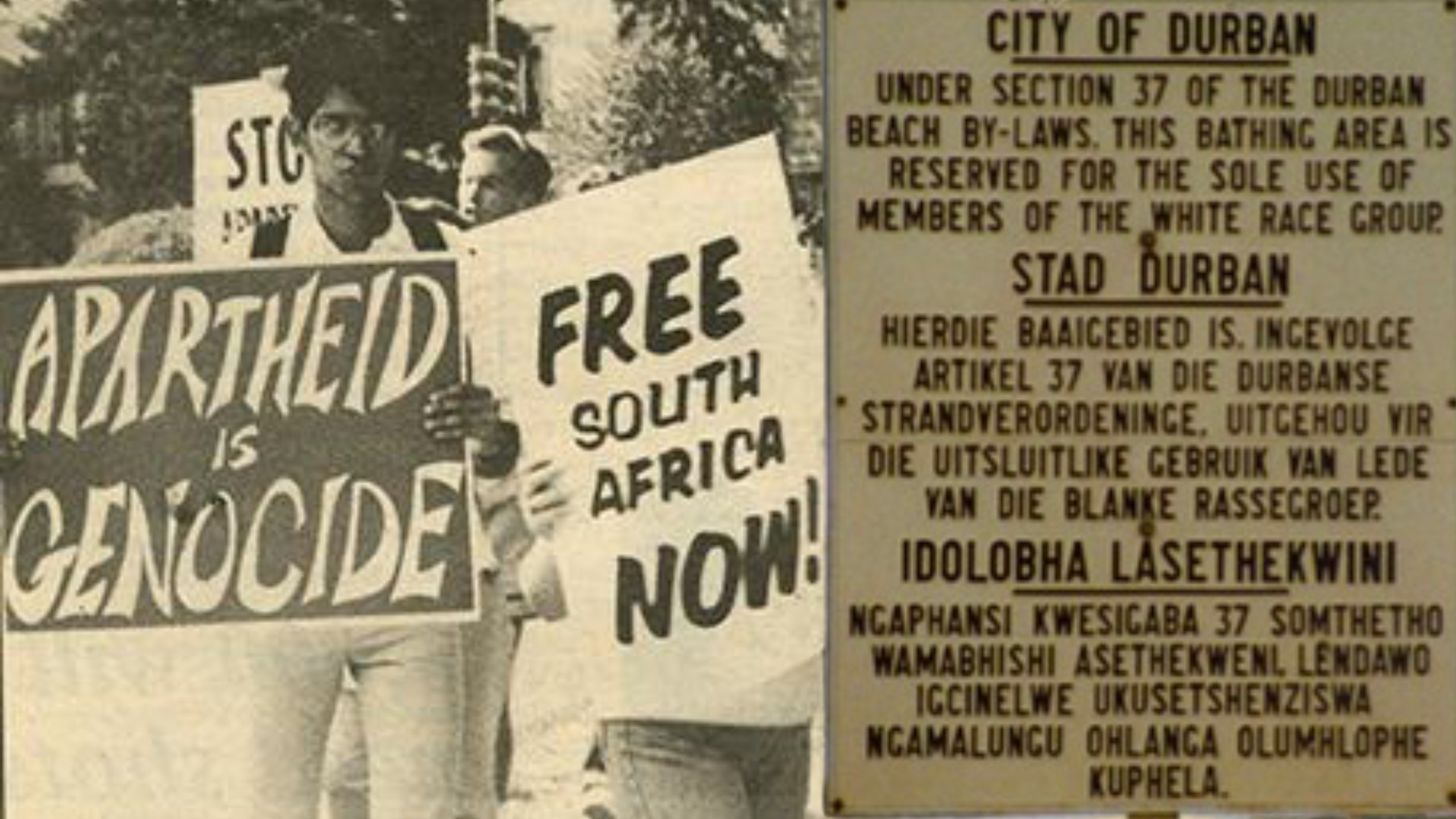
Apartheid was a religious and political system of racial segregation in South and current Nambia from 1948 to the early 1990s. The system enabled the white minority in South Africa to politically, socially, and economically dominate while discriminating against the black-skinned majority. While many factors contributed to apartheid, evidence suggests that the Latter Rain Movement played a key role in its creation.
Apartheid was a rigid system of state-sanctioned racial segregation and white minority rule imposed in South Africa and present-day Namibia from 1948 until the early 1990s. Built upon earlier colonial racial hierarchies but formalized by the National Party, apartheid classified people into racial categories and enforced separation in every sphere of life, including housing, schooling, employment, transportation, public facilities, and even intimate relationships. Its policies dispossessed Black South Africans and other non-white communities of land, mobility, political representation, and economic opportunity, while concentrating wealth and power in the hands of the white minority. Beyond the legal architecture of discrimination, apartheid inflicted deep social and psychological harm: families were forcibly relocated, communities were fragmented, dissent was brutally suppressed, and generations were denied access to equitable education, healthcare, and civil rights. Internationally condemned as a crime against humanity, apartheid functioned not only as a political order but also as a moral and theological project--justified, defended, and perpetuated by certain religious groups. It is within this context that scholars have increasingly examined the role of Pentecostal movements, including currents influenced by the Latter Rain revival, in shaping and sustaining the ideological environment that made apartheid possible.
Pentecostalism and Apartheid: Insights from Nico Horn's Research
In 2006, human rights scholar Nico Horn published a landmark study in Studia Historiae Ecclesiasticae examining the entanglement of South African Pentecostalism with the apartheid regime. Drawing on archival evidence and decades of Pentecostal development, Horn demonstrated that the rising political influence of white Pentecostals in the mid-twentieth century was not merely contemporaneous with apartheid's consolidation but integrally connected to it. As the Second Wave of Pentecostalism--and especially restorationist impulses associated with the Latter Rain--took root in South Africa, significant sectors of the movement aligned themselves with the racial ideology, anti-communist rhetoric, and nationalist ambitions of the National Party. Horn's research shows that this convergence was not accidental but structural: Pentecostal quests for societal recognition and political legitimacy increasingly mirrored, supported, and in some cases helped reinforce the apparatus of apartheid.
The Pentecostal struggle for recognition is a key to understanding white Pentecostal attitudes to political and economic power. The decades from the fifties to the eighties were marked by the implementation of apartheid. At the same time the white Pentecostal movement began an endeavour to become acceptable. Once the AFM had aligned itself with the National Party's fight against "communism" it was impossible to remain pacifist. In the succeeding years the reform agenda of the AFM always closely followed the reform patterns of the government[1]
- Nico Horn
As the British-Israel-infused Latter Rain Movement expanded into southern Africa in the late 1940s and 1950s, many South African Pentecostals absorbed the racialized theological motifs circulating through British Israelism and early Christian Identity teaching from the United States. These ideas--linking white Europeans to a divinely chosen Anglo-Israel lineage and framing global politics in apocalyptic terms--reinforced existing racial hierarchies and provided theological justification for segregationist policy. Mirroring developments in the American Latter Rain context, South African Pentecostals increasingly aligned themselves with anti-communist nationalism, interpreting resistance to "communism" as both a spiritual battle and a civic duty. Within this ideological environment, support for apartheid became intertwined with eschatological conviction and visions of national destiny. It was not until the dismantling of apartheid in 1994 that Black congregations were formally reintegrated and the Apostolic Faith Mission began the long process of reorganizing itself as a non-racial church.
Pentecostal leaders heavily influenced South African politics under the leadership of A. J. Schoeman and J. T. Du Plessis[2]--brother of "Mr. Pentecost" David Du Plessis. By the early 1950s, Schoeman and Justus Du Plessis had helped establish what became known as the New Order, an unofficial but strategically powerful circle of younger Pentecostal pastors committed to reshaping the Apostolic Faith Mission into a movement aligned with Afrikaner respectability, state interests, and anti-communist ideology. Their efforts--documented extensively by Horn--shifted the AFM away from its early pacifist, interracial, and sectarian roots and reoriented it toward political engagement, social conformity, and theological support for the emerging apartheid regime. During the 1950s, the most active years of the Latter Rain revival, Pentecostal notions of "empowerment" increasingly signified state recognition, institutional legitimacy, and participation in national structures; accordingly, Pentecostal clergy were appointed as chaplains in the South African Defence Force, symbolizing their integration into the apparatus of the apartheid state.[3]
Within this context, G. R. Wessels emerged as one of the most vocal and politically influential figures associated with the New Order. Wessels openly supported the National Party,[4] which had promised--exclusively to an all-white electorate--that it would formally implement apartheid as national policy.[5] His political preaching, government-sponsored anti-communist campaigns, and eventual Senate appointment marked a decisive fusion of Pentecostal leadership with apartheid's ideological and legal machinery. Against this backdrop of theological restorationism, nationalist identity, and growing political ambition, it should come as no surprise that Du Plessis sponsored Branham's South African revivals[6]--events whose apocalyptic rhetoric, anti-communist themes, and hierarchical spiritual framework resonated profoundly with the currents already shaping white Pentecostalism in mid-century South Africa.
And so, then, after we got back up there...What was that duPlessis' name? Not David. [A man says, 'Justus.'—Ed.] Justus. Justus duPlessis, which is one of the smartest men there is in South Africa, to my opinion, and a real Christian gentleman. He was one of the sponsors of the meeting on the internet-...on the national committee.[6]
- William Branham, Africa Trip Report