
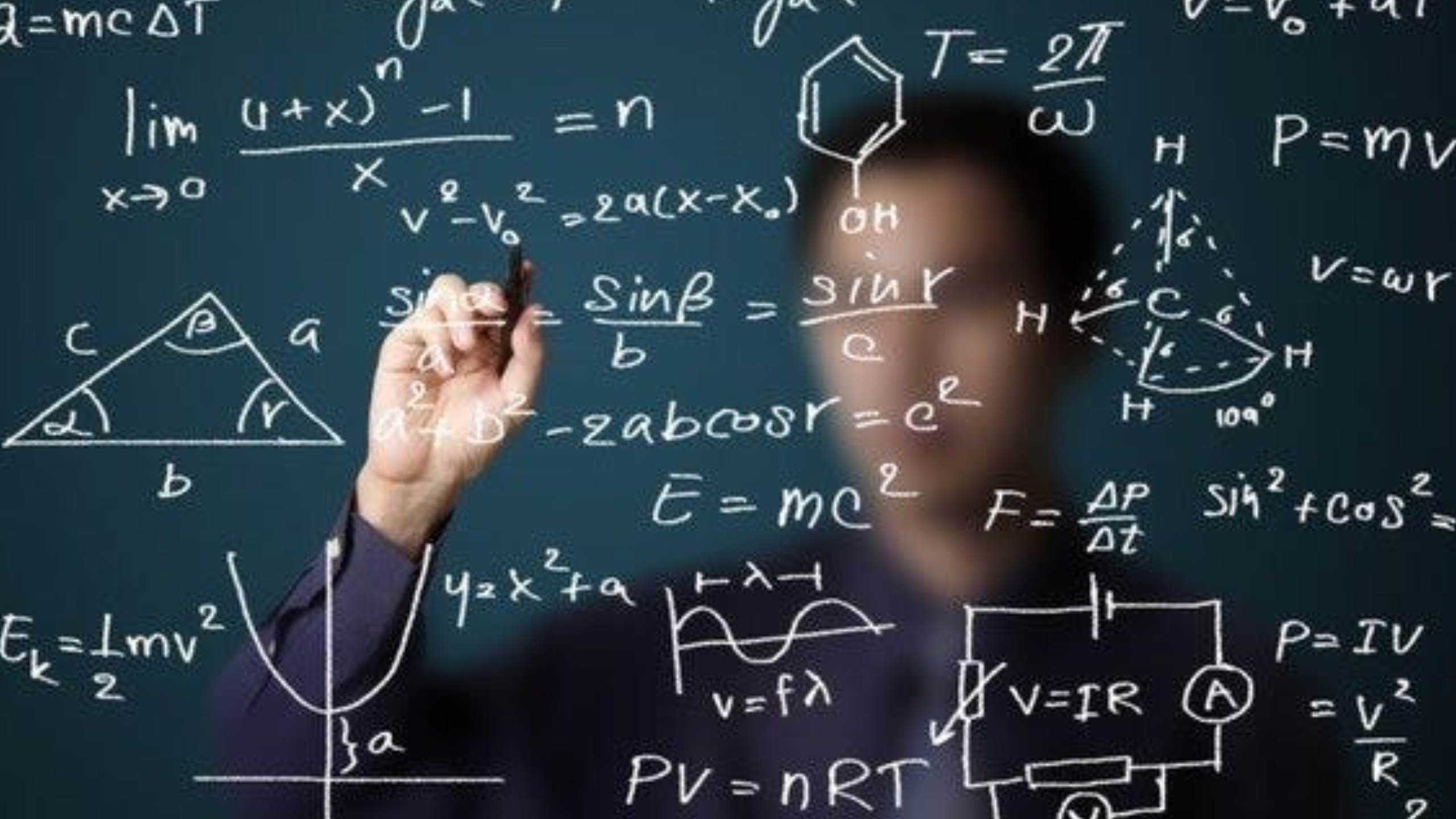
Chanting Mathematics: William Branham’s Trance Method and the Bible’s Warning
William Branham taught that chanting basic mathematical equations could draw believers into a trance and produce spiritual experiences he attributed to the Holy Spirit. Examined alongside biblical commands for sobriety, understanding, and discernment, this practice reflects trance-inducing mysticism rather than Christian prayer grounded in Scripture.
Across cultures and religious traditions, trance states have commonly been induced through rhythmic repetition, chanting, or fixation on repetitive sounds or phrases. Psychologically, this process works by narrowing attention, reducing critical awareness, and encouraging dissociation. As the mind focuses on repetition, normal cognitive boundaries soften, sometimes producing altered states of consciousness that participants may interpret as spiritual encounters, visions, or out-of-body experiences. In many non-Christian religious systems, such techniques are intentionally used to facilitate spirit contact or mystical experience.
Scripture, however, consistently warns against altered states of consciousness that bypass discernment and self-control. The Bible emphasizes sobriety, watchfulness, and conscious engagement of the mind as essential to faithful spiritual life. The apostle Paul writes, “I will pray with the spirit, and I will pray with the understanding also” (1 Corinthians 14:15), directly rejecting spiritual activity divorced from rational awareness. Likewise, believers are commanded to be “sober-minded” and “watchful” (1 Peter 5:8), and to reject practices associated with pagan divination or spirit contact (Deuteronomy 18:9–14). These passages collectively condemn trance-inducing methods that suspend understanding or invite uncontrolled spiritual influence.
William Branham’s Teaching on Repetition and Trance
In contrast to these biblical instructions, William Branham taught that Christians could submit themselves to the Holy Spirit and activate spiritual gifts through repetitive, rhythmic speech. According to Branham, mathematical repetition could draw believers into a trance-like state that culminated in an out-of-body experience. Rather than prayer grounded in understanding, Branham described a process of mental yielding through repetition that closely mirrors known trance-induction techniques.
As soon as it gets light enough to see, I’m sitting up against a tree somewhere, hands up in the air, and saying, "Lord, what can I do today? What will You give me for Your children?” Then when I strike something that seems to burn down, comes something like this. When His Presence gets near, I begin to hear something like way off in a distance, something on this order. "Two times two equal four.” Closer, "Two times two equal four. Two times two equal four. Two time two equal four.” [Brother Branham speaks each repeat a little faster—Ed.] On, on, on, like that. It’s His Presence coming in. Yield yourself, and after a while you break away from yourself.
Branham, William. 1962, October 14. The Stature Of A Perfect Man (62-1014M).
Theological and Logical Contradictions
This teaching introduces a serious internal contradiction within Branham’s theology. He repeatedly condemned formal education, asserting that education itself was of the devil. Mathematics, however, is a fundamental product of structured education and rational reasoning. If education was inherently corrupt, then the method he described—chanting multiplication tables to summon a spiritual “Presence”—cannot logically be attributed to the Holy Spirit under his own framework.
From a biblical perspective, this contradiction carries even greater weight. Scripture teaches that God does not require techniques that suspend understanding or induce dissociation. Spiritual experiences attributed to repetitive chanting and loss of self-awareness align more closely with practices the Bible explicitly condemns than with the work of the Holy Spirit. If a spiritual “Presence” is said to arrive through methods associated with trance and loss of conscious control, Scripture warns that such influence should be tested rather than embraced (1 John 4:1).
The use of mathematical repetition to induce trance states reflects mechanisms long associated with non-biblical mysticism rather than Christian discipleship. When examined in light of Scripture and Branham’s own stated opposition to education, the practice collapses under theological scrutiny. Rather than demonstrating submission to the Holy Spirit, the method described raises serious concerns about the nature of the spiritual influence being invoked.