
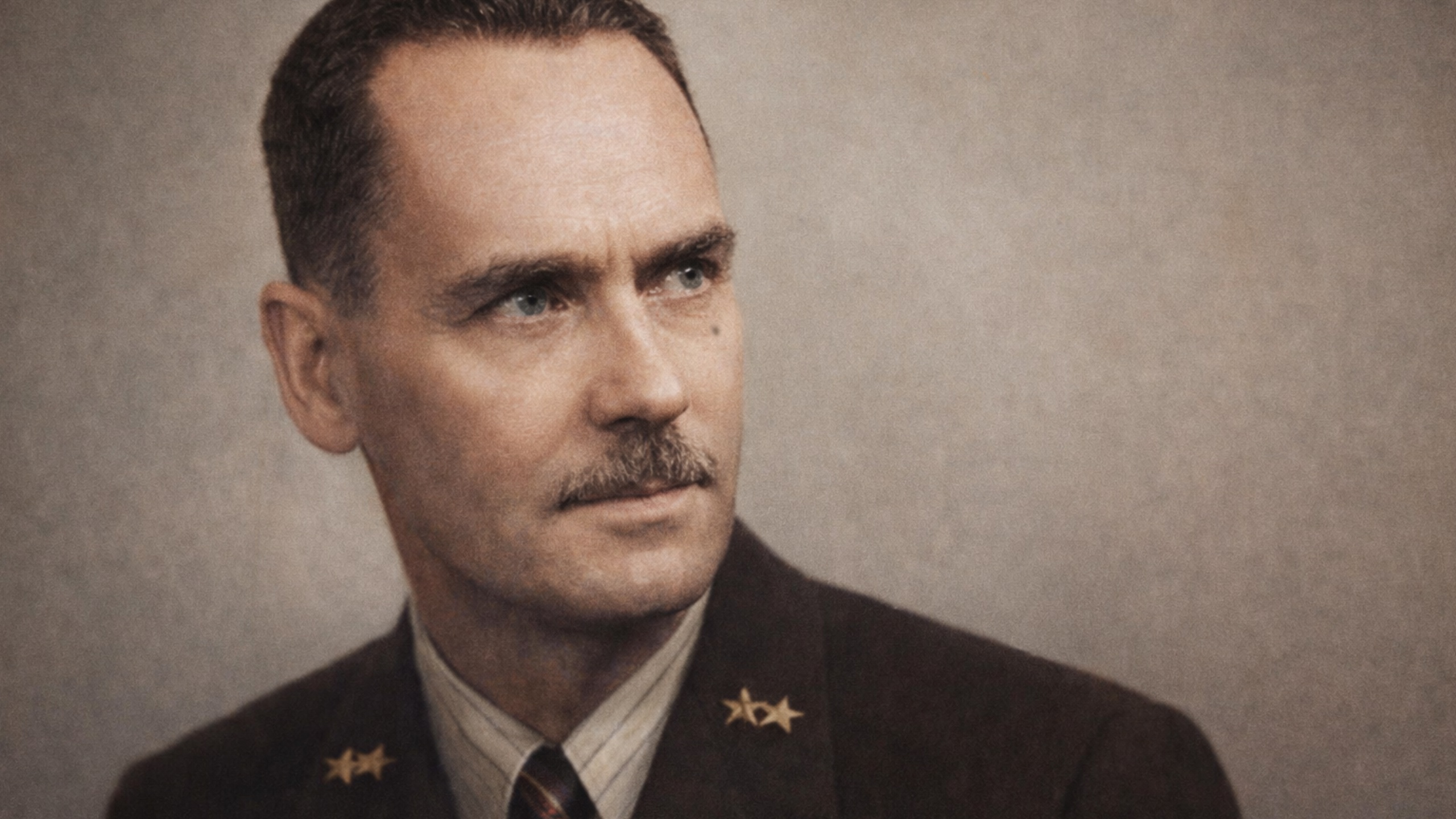
Conrad Gaard: The Forgotten Architect Behind Branham’s Pyramid and Zodiac Theology
Conrad Gaard functioned as a critical but largely unrecognized bridge between British-Israel theology, pyramidology, zodiac symbolism, and the organizational networks that later shaped William Branham’s ministry. By tracing Gaard’s lectures, institutional leadership, and ideological ties to figures such as Gordon Lindsay, Wesley Swift, and Gerald L. K. Smith, this study demonstrates that key elements of Branham’s prophetic framework were inherited rather than uniquely revealed.
Conrad Gaard occupies a pivotal but often overlooked position in the prehistory of the postwar healing revival, functioning as a convergence figure where British-Israel theology, pyramidology, prophetic chronologies, racialized identity doctrines, and revivalist networks intersected decades before these elements surfaced—often reframed and repackaged—within William Branham’s public ministry. Gaard’s long career as a lecturer, publisher, and organizer placed him at the crossroads of movements that would later shape both the theological vocabulary and the institutional pathways of the healing revivals.
Gaard’s leadership within the Anglo-Saxon Federation of America and his formal role as a commissioner for the British Israel World Federation established him as a key transmitter of British-Israel ideology in the Pacific Northwest and beyond [1][2]. These networks overlapped directly with figures who later became central to Branham’s rise, most notably Gordon Lindsay, who lectured under Anglo-Saxon Federation auspices prior to becoming Branham’s campaign manager and chief promoter [3]. Through this shared organizational ecosystem, themes once confined to British-Israel lecture circuits—such as prophetic chronologies, racialized interpretations of history, and esoteric signs embedded in creation—were normalized within revivalist discourse.
Gaard’s ideological reach extended further through documented ties to Gerald L. K. Smith and Wesley Swift, situating him within the broader California-based constellation of nationalist and Identity-oriented activism that intersected with Ku Klux Klan networks [4]. These same California networks overlapped with Roy E. Davis, Branham’s early mentor, creating an indirect but traceable line connecting Gaard’s theological framework to Branham’s formative environment. Scholarly analysis identifies Gaard as one of the earliest figures to systematize Identity thought in written form, including doctrines portraying Jews as the literal offspring of Satan, marking a transition from British-Israel speculation toward full Christian Identity theology [5].
Equally significant is Gaard’s extensive promotion of pyramidology and celestial symbolism as divine revelation. Newspaper coverage documents Gaard constructing a scaled replica of the Great Pyramid of Giza and using it as a teaching tool to correlate biblical prophecy, world events, and chronological measurements [6]. His lectures consistently framed the Great Pyramid as a “Bible in stone,” a parallel witness to Scripture that encoded God’s prophetic timetable. This interpretive model later surfaced explicitly in Branham’s sermons, where he described God as authoring three Bibles: one in the skies (the Zodiac), one in the pyramids, and one in written Scripture [7][8].
In Branham’s own words, the Zodiac was presented as God’s first written revelation, beginning with Virgo to signify the first coming of Christ and ending with Leo to signify the second coming, while the Great Pyramid functioned as a second prophetic witness attributed to Enoch [7][8]. These assertions closely mirror the pyramidological and astrological frameworks long promoted by Gaard, demonstrating that such ideas did not emerge spontaneously within the healing revival but were inherited from earlier British-Israel and Identity-influenced teaching streams. Gaard’s role, therefore, is not peripheral but foundational, providing both the conceptual architecture and the relational pathways through which these doctrines migrated into Branham’s ministry and the wider revival movement.
Conrad Gaard’s Early Pyramidology and British-Israel Foundations
Conrad Gaard’s earliest public influence emerged from his immersion in British-Israel theology and its associated interpretive methods, particularly the conviction that God embedded prophetic revelation not only in Scripture but also in history, architecture, and the created order itself. By the early 1930s, Gaard was already recognized publicly as a specialist in pyramidology, a discipline within British-Israel circles that treated the Great Pyramid of Giza as a divinely inspired chronological and prophetic witness [8]. Contemporary newspaper accounts describe Gaard as “one of the best informed men” on pyramid symbolism and record his construction of a precise scale replica of the Great Pyramid to replace charts during his lectures, allowing audiences to visualize prophetic measurements and internal passages directly [8].
Gaard’s pyramidology did not exist in isolation but functioned as a core explanatory framework within British-Israel ideology. His lectures consistently linked pyramid measurements to biblical timelines, national destinies, and looming global crises, presenting world events as the inevitable unfolding of a divine schedule embedded in stone long before the Bible was written [9]. This approach reinforced a central British-Israel claim: that God had revealed His purposes progressively through multiple witnesses—creation, architecture, and Scripture—accessible only to those with the proper interpretive keys.
By the mid-1930s, Gaard’s lectures expanded beyond pyramid measurements into broader prophetic syntheses combining celestial symbolism, chronology, and geopolitics. Advertisements from this period show Gaard lecturing on “Structural Symbolism,” “The Great Pyramid and Its Divine Message,” and the prophetic march of nations toward Armageddon, often under the sponsorship of the Anglo-Saxon Federation of America [9][10]. These venues framed pyramidology as a solution to contemporary social, political, and economic instability, positioning British-Israel teaching as both an ancient revelation and a modern explanatory system.
Gaard’s formal roles further anchored these teachings institutionally. He served as Washington State commissioner for the British Israel World Federation, confirming that his message was not a fringe curiosity but an authorized expression of an international movement [11]. In this capacity, Gaard helped normalize pyramidology and prophetic chronology within organized British-Israel networks across the Pacific Northwest and western Canada, establishing interpretive patterns that would later surface—often without attribution—within revivalist preaching contexts.
The significance of this foundation becomes clearer when compared with later healing revival rhetoric. The same conceptual triad advanced by Gaard—divine revelation in the skies, divine revelation in the pyramid, and divine revelation in Scripture—reappears verbatim in William Branham’s sermons decades later [6][7]. Gaard’s early pyramidological framework thus provided a ready-made theological architecture that could be absorbed into revival preaching while being reframed as supernatural insight rather than inherited ideology.
Gaard as a Lecturer, Organizer, and Institutional Builder
Beyond his role as a theorist of prophecy and pyramidology, Conrad Gaard functioned as an institutional builder whose sustained lecture activity, publishing work, and organizational leadership created durable platforms for the transmission of British-Israel ideology. Newspaper notices from the late 1930s through the 1950s consistently portray Gaard not merely as a visiting speaker but as a recurring authority figure whose lectures were treated as educational events addressing national destiny, world affairs, and divine chronology [12][13]. His talks were frequently framed as “free public lectures,” indicating an evangelistic strategy aimed at broad civic audiences rather than closed sectarian meetings.
Gaard’s influence was amplified through his long-term role as editor and publisher of Interpreter magazine, which served as a vehicle for disseminating British-Israel, prophetic, and later Identity-oriented interpretations in written form [14]. This publishing activity distinguished Gaard from many contemporaries whose influence was limited to oral preaching. By combining print, radio commentary, and in-person lecturing, Gaard helped stabilize a body of ideas that could be reproduced, referenced, and transmitted across geographic regions.
Institutionally, Gaard operated within and across multiple overlapping organizations. He led Christian Chapel Church in Tacoma for an extended period, providing him with a fixed ecclesiastical base from which to launch regional and national lecture tours [15]. At the same time, his leadership within the Anglo-Saxon Federation of America positioned him as both a theological spokesman and an organizational authority, enabling him to sponsor other lecturers and to shape the federation’s educational agenda [16]. This dual role—pastor and federation president—allowed Gaard to blur the boundary between church ministry and ideological instruction.
The breadth of Gaard’s lecture circuit further illustrates his organizational reach. Reports place him lecturing across Washington, Oregon, the Midwest, western Canada, and the southern United States, often hosted by Anglo-Saxon Federation chapters or affiliated British-Israel groups [12][17]. These appearances reinforced a shared interpretive framework among geographically dispersed audiences, normalizing pyramidology, celestial symbolism, and prophetic geopolitics as legitimate components of Christian teaching.
This infrastructure proved consequential for later movements. The same lecture platforms and organizational networks that Gaard helped consolidate would later host figures such as Gordon Lindsay, demonstrating that the pathways linking British-Israel ideology to postwar revival leadership were institutional rather than incidental [3]. Gaard’s role as an organizer and gatekeeper thus helped ensure that his theological themes outlived his own prominence, remaining embedded within the revivalist ecosystem that would later elevate William Branham.
The Anglo-Saxon Federation of America and Gaard’s Leadership Role
The Anglo-Saxon Federation of America functioned as one of the most important institutional vehicles through which Conrad Gaard exercised sustained influence. Far from being a peripheral association, the Federation provided an organized platform for lectures, publications, and coordinated teaching efforts that blended British-Israel theology with contemporary political and prophetic interpretation. Gaard’s documented role as president of the Anglo-Saxon Federation of America confirms that he was not merely a contributor but a directing authority shaping its educational agenda and public messaging [18].
Under Gaard’s leadership, the Federation sponsored an extensive series of public lectures addressing prophecy, world affairs, and national destiny. Advertisements and reports repeatedly emphasize that these events were framed as responses to global instability—economic collapse, the rise of fascism and communism, and the approach of world war—interpreted through biblical prophecy and pyramid chronology [19][20]. This approach allowed the Federation to position itself as offering divinely revealed insight into modern crises, reinforcing its ideological legitimacy among audiences seeking certainty during periods of upheaval.
Gaard’s authority within the Federation also enabled him to formalize the circulation of ideas that might otherwise have remained localized. As president, he represented the Federation across international borders, lecturing in western Canada and throughout the United States while maintaining close ties with British-Israel organizations abroad [21]. His concurrent appointment as Washington State commissioner for the British Israel World Federation further embedded the Anglo-Saxon Federation within a transnational ideological network, ensuring continuity between local chapters and the broader British-Israel movement [11].
One of the most consequential aspects of Gaard’s leadership was the Federation’s role as a hosting platform for other lecturers who would later shape postwar revival movements. Newspaper documentation shows Gordon Lindsay speaking under the auspices of the Anglo-Saxon Federation years before becoming William Branham’s campaign manager and principal promoter [3]. This demonstrates that the Federation was not simply a British-Israel enclave but a recruitment and incubation space where revival-oriented leaders were exposed to, and legitimized by, British-Israel prophetic frameworks.
Through Gaard’s presidency, the Anglo-Saxon Federation thus became a conduit through which ideological, organizational, and personal connections converged. The Federation normalized pyramidology, celestial symbolism, and prophetic nationalism as respectable Christian teaching, while simultaneously providing the logistical infrastructure that later supported figures central to the healing revival. In this way, Gaard’s leadership transformed the Federation into a bridge between prewar British-Israel ideology and the postwar revivalist landscape in which William Branham would emerge.
Conrad Gaard, Gerald L. K. Smith, and the Transition Toward Identity Thought
By the mid-1940s, Conrad Gaard’s position within British-Israel circles placed him in direct contact with figures who were actively radicalizing British-Israel theology into what would later be formalized as Christian Identity. Scholarly analysis identifies Gaard as one of the earliest figures to move beyond speculative national prophecy and toward a more systematized racialized theology, particularly through his documented ties to Gerald L. K. Smith and Wesley Swift [23]. These associations situate Gaard within a California-centered constellation of nationalist, segregationist, and antisemitic activism that overlapped with Ku Klux Klan networks during the same period.
Michael Barkun’s research notes that Gaard was among the first Identity figures to attempt a sustained written presentation of Identity views, distinguishing him from contemporaries whose influence remained primarily oral or episodic [23]. This shift toward written systematization proved significant, as it enabled the codification and replication of doctrines that portrayed Jews as the literal offspring of Satan and framed world history as a racial conflict between divinely chosen “pure seed” lineages and corrupt hybrid races [24]. Gaard’s theological formulations thus represent a transitional stage between British-Israel ideology and fully developed Christian Identity doctrine.
Gaard’s collaboration with Gerald L. K. Smith further anchored these ideas within broader political and activist networks. Smith, a prominent nationalist organizer and propagandist, provided platforms that extended Gaard’s influence beyond religious lecture halls into civic and political spaces [25]. Through Smith’s networks, Identity-oriented theology intersected with populist politics, antisemitic conspiracy theories, and militant opposition to perceived global governance structures—themes that Gaard had already been advancing through pyramidology and prophetic chronology.
Wesley Swift’s emergence as a central Identity preacher was likewise shaped by these same networks. Barkun documents Gaard’s sustained contact with Swift and Smith over at least a decade, placing Gaard within the inner circle of early Identity formation [26]. These relationships underscore that Identity theology did not arise spontaneously in postwar California but developed through preexisting British-Israel infrastructures in which Gaard played a formative role.
The relevance of these connections to William Branham’s later ministry lies not in direct collaboration but in shared ideological ecosystems. Roy E. Davis, Branham’s early mentor, operated within overlapping California-based Klan and nationalist circles tied to Smith and Swift. Gaard’s participation in these same networks demonstrates that the racialized theological concepts later echoed—sometimes implicitly—in Branham’s sermons were already circulating within the broader revival-adjacent milieu from which Branham emerged. Gaard thus functions as a critical link connecting British-Israel ideology, early Christian Identity theology, and the revivalist environments that shaped Branham’s formative years.
From British-Israel Networks to Healing Revival Pathways
The transition from British-Israel ideology into the postwar healing revival did not occur through abstract theological diffusion but through concrete organizational pathways and shared personnel. Conrad Gaard’s long-standing involvement in British-Israel and Anglo-Saxon Federation networks positioned him at the center of a preexisting infrastructure that later intersected directly with revival leadership. These networks normalized a prophetic worldview in which history, nations, and global crises were interpreted through hidden divine codes embedded in creation, architecture, and chronology, creating fertile ground for revivalist claims of supernatural insight.
One of the most consequential bridges between these worlds was Gordon Lindsay. Years before becoming William Branham’s campaign manager and chief promoter, Lindsay lectured under the auspices of the Anglo-Saxon Federation, the same organization led by Gaard [22]. This demonstrates that Lindsay’s formative public ministry occurred within an environment already saturated with British-Israel themes, including prophetic nationalism, suspicion of global governance, and esoteric readings of history. When Lindsay later helped construct the narrative framework surrounding Branham’s healing campaigns, he brought with him assumptions and interpretive habits cultivated within these earlier networks.
Gaard’s emphasis on prophecy as a response to global instability also resonated strongly with revivalist messaging. British-Israel lectures routinely framed economic collapse, war, and political upheaval as signs of an approaching divine climax, decipherable only through special revelation [12][20]. This same rhetorical structure appears in Branham’s sermons, where contemporary events were presented as fulfillments of hidden prophetic patterns revealed through visions, symbols, and ancient witnesses rather than conventional biblical exegesis. The continuity lies not merely in shared conclusions but in shared epistemology: truth was disclosed through supernatural or esoteric insight inaccessible to ordinary believers.
Pyramidology and celestial symbolism provided especially potent tools for this transition. Gaard’s teaching that God authored revelation in the skies and the Great Pyramid offered a ready-made framework for asserting divine authority outside the bounds of Scripture alone [8][9]. Branham’s later sermons explicitly adopted this triadic model of revelation—skies, pyramid, and written Bible—allowing revival audiences to receive non-biblical teachings as part of a broader divine disclosure rather than as innovations [6][7]. In this way, British-Israel concepts were not abandoned but reframed as prophetic mysteries newly unveiled in the end times.
The healing revival’s emphasis on supernatural gifts further facilitated this migration. Claims of visions, angelic visitations, and revealed mysteries functioned as legitimizing mechanisms that masked the historical origins of these ideas. Doctrines and interpretive frameworks that had circulated for decades within British-Israel and Identity circles could now be presented as freshly revealed truths given directly by God to a modern prophet. Gaard’s earlier work thus supplied both content and method: not only what to believe about prophecy and history, but how to authorize those beliefs through claims of divine revelation.
Through these pathways, Gaard’s influence extended well beyond his own lifetime. The British-Israel infrastructure he helped build became a staging ground for revival leadership, and the theological tools he popularized were absorbed into the healing revival’s symbolic language. This convergence helps explain why elements of pyramidology, zodiac symbolism, and prophetic nationalism appear embedded within Branham’s ministry despite their clear origins in prewar British-Israel ideology.
Organizational Overlap: Gaard, the Anglo-Saxon Federation, and Gordon Lindsay
The overlap between Conrad Gaard, the Anglo-Saxon Federation of America, and Gordon Lindsay illustrates how British-Israel ideology moved into revival leadership through shared institutional spaces rather than direct doctrinal transfer alone. The Anglo-Saxon Federation functioned as a legitimizing platform, granting visibility and credibility to lecturers whose messages framed world events as the outworking of divine prophecy. Gaard’s presidency placed him in a gatekeeping role within this environment, shaping not only what was taught but who was elevated as an authoritative interpreter of prophecy [18].
Gordon Lindsay’s documented appearances under the auspices of the Anglo-Saxon Federation occurred during a formative period in his public career, well before his association with William Branham [22]. These lectures placed Lindsay before audiences already primed by British-Israel teaching to expect hidden prophetic meaning behind geopolitical developments. The Federation’s sponsorship signaled that Lindsay’s message was compatible with, and endorsed by, an ideological framework that emphasized national destiny, divine chronology, and the approaching consolidation of world powers.
This overlap is significant because Lindsay later became the primary architect of Branham’s public ministry structure, serving as campaign manager, editor, and narrative strategist. The interpretive habits cultivated within Anglo-Saxon Federation circles—particularly the use of prophecy to explain contemporary crises—reappeared in the promotional literature and sermon framing surrounding Branham’s healing campaigns. While Branham’s claims were couched in charismatic language of visions and angelic encounters, the underlying structure mirrored the British-Israel approach to history as a coded divine script decipherable by chosen interpreters.
The Federation’s role as a meeting ground also facilitated the blending of esoteric teaching with revivalist enthusiasm. Under Gaard’s leadership, pyramidology and celestial symbolism were treated as legitimate sources of revelation rather than speculative curiosities [19]. This normalization made it easier for later revival audiences to accept similar claims when presented as supernatural insight rather than inherited doctrine. Lindsay’s familiarity with these concepts through Federation platforms provided him with a cultural and theological vocabulary that could be repurposed for mass revival contexts.
The result was an ideological continuity masked by stylistic change. British-Israel prophecy, once delivered through lecture halls and newspaper advertisements, reemerged within tent meetings and healing services as revealed mystery. Gaard’s presidency of the Anglo-Saxon Federation thus created an institutional bridge that allowed figures like Lindsay to carry forward interpretive frameworks that would later be embedded in Branham’s ministry, shaping how prophecy, history, and divine authority were presented to revival audiences.
Christian Identity Themes: Wesley Swift, Racialized Theology, and Doctrinal Transmission
The emergence of Christian Identity theology in the postwar period did not represent a sudden doctrinal rupture but the maturation of ideas already circulating within British-Israel networks decades earlier. Conrad Gaard’s documented relationships with Wesley Swift and Gerald L. K. Smith place him within the inner circle of this transition, where British-Israel speculation hardened into a racialized theological system. Scholarly analysis identifies Gaard as a formative contributor whose writings and lectures helped normalize Identity concepts before they were widely institutionalized [23][25].
Wesley Swift’s role as a central Identity preacher was shaped within this same ideological environment. Barkun documents sustained contact between Gaard, Swift, and Smith, demonstrating that Gaard functioned not merely as a peripheral associate but as a respected peer whose ideas informed the movement’s development [25][26]. These connections are critical because Swift later became a primary conduit through which Christian Identity theology entered Pentecostal and charismatic-adjacent spaces, blurring the boundary between revivalist spirituality and racialized doctrine.
Central to this transmission was the reinterpretation of biblical history through a racial lens. Gaard’s articulation of serpent-seed doctrine—portraying Jews as the literal offspring of Satan through Cain—represents a decisive move beyond earlier British-Israel claims focused on national destiny [24]. This doctrine reappears, in attenuated but recognizable form, within later revival preaching that emphasized corrupted seed lines, pre-Adamic races, and hidden genealogies as keys to understanding Scripture. The continuity lies not only in specific claims but in the underlying assumption that Scripture conceals racial truths accessible only to enlightened interpreters.
The California-based networks linking Gaard, Swift, and Smith overlapped geographically and ideologically with Ku Klux Klan activity during the same period. These intersections are significant because Roy E. Davis, William Branham’s early mentor, operated within overlapping Klan and nationalist circles in California. While no evidence suggests direct collaboration between Gaard and Branham, the shared ecosystem demonstrates that the racialized theological concepts later echoed in Branham’s sermons circulated widely within revival-adjacent environments long before his rise to prominence.
This convergence of Identity theology and revival culture relied heavily on claims of special revelation. Doctrines that would have appeared overtly political or racist in other contexts were reframed as divinely revealed mysteries, insulated from critique by appeals to supernatural authority. Gaard’s earlier work provided both content and precedent for this strategy, showing how esoteric theology could be embedded within religious discourse while retaining ideological potency. Through figures like Swift, these ideas moved from British-Israel lecture halls into revival pulpits, shaping the theological atmosphere in which Branham’s ministry developed.
Pyramidology, Zodiac Motifs, and Their Migration into Healing Revival Discourse
One of the most distinctive elements linking Conrad Gaard’s teaching to William Branham’s ministry is the migration of pyramidology and zodiac symbolism from British-Israel lecture circuits into healing revival preaching. Within British-Israel ideology, these elements functioned as parallel witnesses to Scripture, encoding God’s redemptive plan through celestial patterns and architectural measurements. Gaard consistently promoted this framework, presenting the Great Pyramid and the Zodiac as divinely authored revelations that predated the written Bible and disclosed prophetic truth through hidden structure and sequence [8][9].
Gaard’s lectures framed the Zodiac as a chronological gospel, beginning with Virgo to signify the virgin birth and concluding with Leo to signify Christ’s return as king. This schema was not peripheral but foundational, serving as proof that God had revealed His plan through creation itself. Pyramidology functioned similarly, with the Great Pyramid described as a “Bible in stone” whose internal passages and measurements marked dispensations, historical epochs, and the approach of the end times [8][19]. Together, these systems provided a comprehensive alternative revelatory structure that reinforced British-Israel claims of divine election and prophetic insight.
These same motifs appear explicitly in Branham’s sermons, where he described God as having authored three Bibles: one in the skies, one in the pyramids, and one in written Scripture [6][7]. Branham’s articulation of this triadic revelation model mirrors the pyramidological framework long promoted by Gaard, including the Virgo-to-Leo zodiac narrative and the attribution of pyramid authorship to Enoch. The similarity is not merely thematic but structural, suggesting inheritance rather than independent revelation.
The healing revival provided an ideal environment for this doctrinal migration. Claims of visions, angelic encounters, and supernatural insight created a context in which esoteric teachings could be reframed as newly revealed mysteries rather than inherited ideology. Pyramidology and zodiac symbolism, when presented as prophetic revelation unveiled in the last days, could be absorbed by revival audiences without awareness of their British-Israel origins. Gaard’s earlier work thus supplied both content and precedent, demonstrating how non-biblical revelatory systems could be integrated into Christian teaching under the authority of divine disclosure.
This migration also altered the function of these symbols. In British-Israel contexts, pyramidology and the Zodiac were often presented as evidentiary tools supporting national destiny and racial theology. Within the healing revival, these same symbols were repurposed to validate prophetic authority and reinforce the status of the preacher as a uniquely enlightened messenger. The shift in emphasis did not diminish their ideological power but redirected it, allowing inherited frameworks to persist under a new charismatic guise.
By tracing these motifs from Gaard’s lectures to Branham’s sermons, a clear line of continuity emerges. Pyramidology and zodiac symbolism did not enter the healing revival as spontaneous insights but as established interpretive systems transmitted through preexisting ideological networks. Gaard’s role in popularizing these concepts ensured that they were available, intelligible, and authoritative long before they appeared embedded within Branham’s ministry.