Pentecostal Baptist Church of God Sect
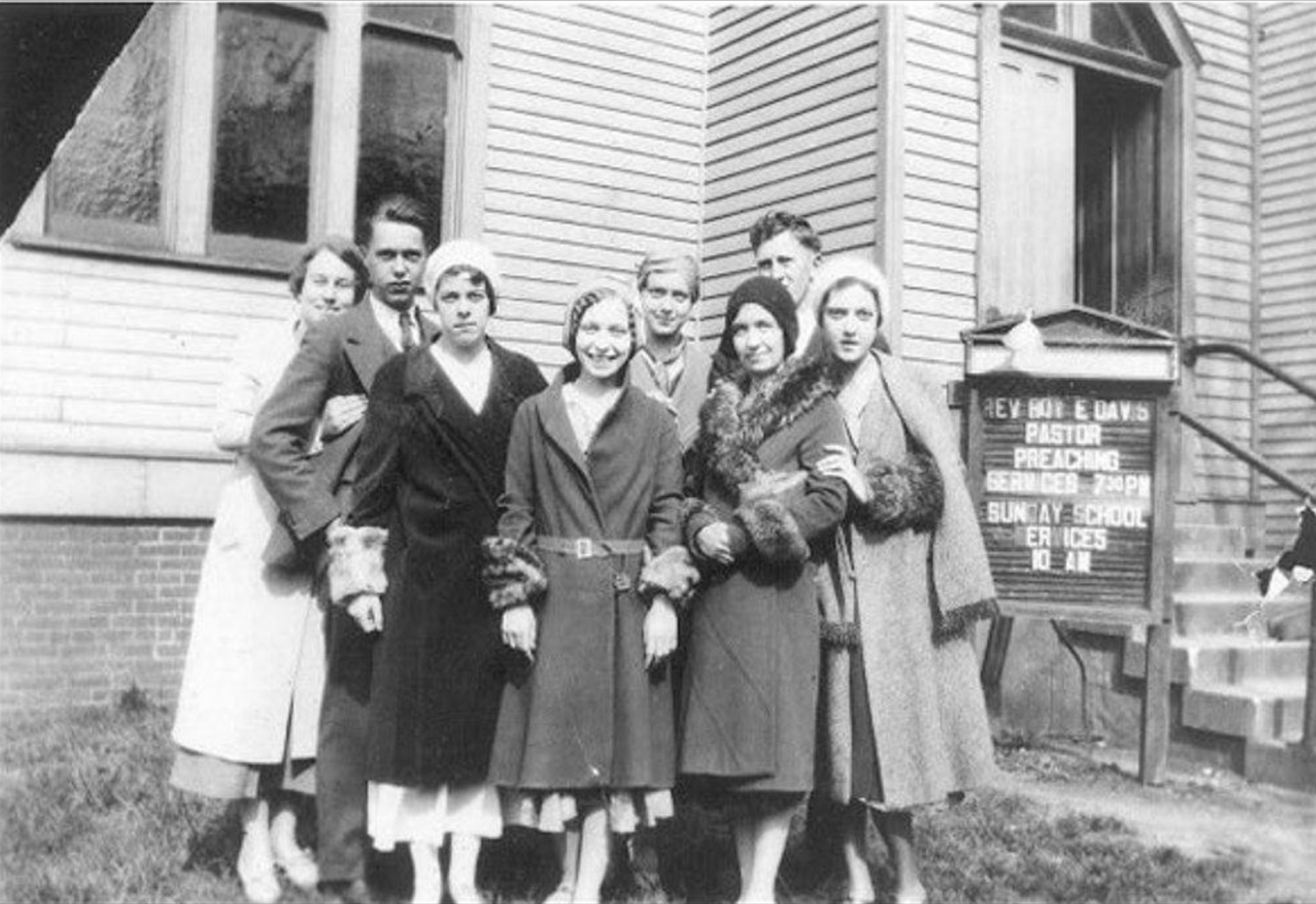
Roy E. Davis was the general overseer of the "Pentecostal Baptist Church of God",[1] a Pentecostal sect[2] that practiced "divine healing" and recruited members by allegedly drinking poison.[3] The national headquarters of the sect was at Jeffersonville, Indiana.[4] It was a Pentecostal assembly.[5] William Branham appears to have tried to conceal his involvement with the cult by being dishonest about the affiliation of the church led by Davis. According to the timeline given,[6] Branham claimed that Davis' Pentecostal church was "Missionary Baptist" (missionaries from the Southern Baptist Convention),[7] and that he was ordained into the Southern Baptist Convention. According to newspaper advertisements and testimony given by Roy Davis in Branham's The Voice of Healing publication, however, the sect was Pentecostal in 1933, the year Branham used. Roy E. Davis was banished from the Baptist Church by the Missionary Board on August 12, 1926,[8] placing Branham's ordination long before 1933.
Roy E. Davis was the general overseer of the "Pentecostal Baptist Church of God",[1] a Pentecostal sect[2] that practiced "divine healing" and recruited members by allegedly drinking poison.[3] The national headquarters of the sect was at Jeffersonville, Indiana.[4] It was a Pentecostal assembly.[5] William Branham appears to have tried to conceal his involvement with the cult by being dishonest about the affiliation of the church led by Davis. According to the timeline given,[6] Branham claimed that Davis' Pentecostal church was "Missionary Baptist" (missionaries from the Southern Baptist Convention),[7] and that he was ordained into the Southern Baptist Convention. According to newspaper advertisements and testimony given by Roy Davis in Branham's The Voice of Healing publication, however, the sect was Pentecostal in 1933, the year Branham used. Roy E. Davis was banished from the Baptist Church by the Missionary Board on August 12, 1926,[8] placing Branham's ordination long before 1933.
The name and formation of the sect appear to be a call to members of churches that either banished Roy E. Davis, Davis strongly disliked, or was appealing to. It included "Pentecostals", "Baptists", and "Church of God", and the Indiana version of Davis' sect had a strong Pentecostal affiliation. Davis described the church as a "Pentecostal assembly".[9] As such, Davis was very successful in convincing others to leave their church and join his assembly, a theme that William Branham used during the early versions of his stage persona. Before insinuating that he was the return of "Elijah the prophet", Branham used a "Moses" stage persona[10] and pleaded with people to leave their "cold formal" churches.[11]
Davis recruited for the sect by holding nationwide revivals featuring gospel singing,[12] using his radio act "Jack and Granny" to attract the crowds.[13] William Branham toured with Roy Davis during these recruitment campaigns.[14] Davis also recruited using his newspaper, the Pentecostal Baptist Witness, which was advertised as "a national weekly devoted to religion and science."[15] During these recruiting drives, Davis openly advertised his affiliation with the Ku Klux Klan.
IN CHURCH OF GOD REVIVAL, CLEVELAND, Tn. A revival service was started at the Church of God tabernacle here Sunday with Rev. Roy E. Davis, widely known evangelist doing the preaching. Rev. Davis has been associated with Rev. John Roach Stratton, well known Baptist divine of New York City and has been a lecturer for the Ku Klux Klan, and for the Fundamentalist Association.[16]
Roy E. Davis, an official spokesperson for the Ku Klux Klan and other white supremacy groups, eventual Imperial Wizard of the Ku Klux Klan, was not simply planting a church in Jeffersonville Indiana. William Branham did not simply take over a church when he took over Davis' congregation[17] to form the Billie Branham Pentecostal Tabernacle. Roy E. Davis had started a pentecostal cult.
The "Pentecostal Baptist Church" did not refer to a building. It referred to a sect of Pentecostalism. Roy E. Davis was the "overseer" of the National Headquarters of the Pentecostal Baptist Church in Jeffersonville Indiana.[18] Along with overseer, Davis was the editor of the "Pentecostal Baptist Witness".[19]
Davis formed the sect after working with Dr. John Roach Straton.[20] Straton was a member of a Southern fundamentalist white supremacist group called the "Supreme Kingdom", which was created by a former Ku Klux Klan member.[21] Straton's connections to white supremacy and his views on race and relationships with African Americans were exposed in 1927, however, during which time he attempted to distance himself from the Supreme Kingdom.[22] Before being exposed, however, Davis and Ku Klux Klan founder William Joseph Simons began building a new white supremacy organization, the Knights of the Flaming Sword.[23]
In 1953, William Branham used the present tense and the word "we", suggesting that he and Roy Davis were still a team working to establish the Pentecostal Baptist Church of God sect — covertly and unnamed — when describing Roy Davis allegedly drinking poison to win converts.[24] According to Branham, Davis allegedly drank sulfuric acid and the two kept "a notary public's statement on this".
Known locations of the sect and confirmed date of existence:
1928, August. Thirty-fifth and Avenue G, Chattanooga, Tennessee.
1929, January. Tenth and Cheatham Streets, Nashville, Tennessee.[25]
1929, July. Spring and Meridian Streets, Nashville, Tennessee.[26]
1930, Unknown. "West side of Adams Street, south of River Road, Louisville, Kentucky[27]
1930, Unknown. North Spring Street, Jeffersonville Indiana.[28]
1931, August. Maple and Chestnut Streets, Jeffersonville, Indiana.[29]
1931, December. 1016 Locus Street, Jeffersonville, Indiana (Home meetings at Roy Davis' house).[30]
1931, December. 328 Watt Street, Jeffersonville, Indiana.[31]
1934, July. Keel and Fourth Streets, Memphis, Tennessee.[32]
1935, October. Eighth and Graham Streets, Jeffersonville, Indiana. (Led by William Branham)[33]
1935, December. 1516 Spring Street, Jeffersonville, Indiana. (Led by Joseph D. Freeman)[34]