
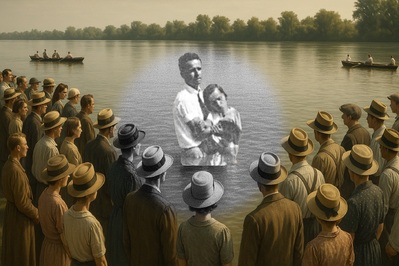
1933 Baptism: The Voice No One Heard
Dismantling William Branham’s famed 1933 Ohio River baptism story—showing that claims of a visible light, an audible commissioning voice, massive crowds, and nationwide newspaper coverage are contradicted by eyewitnesses, contemporary press records, and the documented history of his church and mentor, Roy E. Davis. It argues that the baptism narrative and the so-called 1933 prophecies were retrofitted into Branham’s biography as tools of authority, illustrating how myth-making and repetition, rather than verifiable evidence, became the foundation for prophetic belief in the Message movement.

1933 Prophecy of the Isms: Branham’s Changing End-Time Vision
William Branham did not publicly mention his supposed 1933 visions until 1953, when he claimed to have prophesied that Communism, Fascism, and Nazism would merge into a single system that would dominate the world and burn the Vatican—a narrative that closely echoes earlier fundamentalist apocalyptic literature and is flatly contradicted by subsequent history. As Communism failed to conquer Europe and eventually collapsed, Branham quietly revised his message, recasting Roman Catholicism rather than Communism as the final world power, presenting this reversal not as a correction of failed prophecy but as further divine revelation.
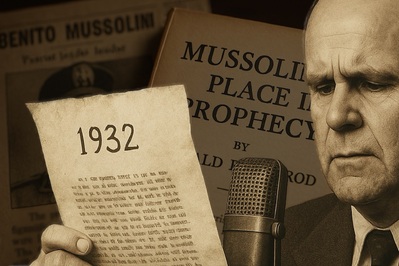
1933 Prophecies: A Self-Proclaimed Prophet
William Branham’s alleged 1933 prophecies show every sign of being constructed backwards: there is no contemporaneous 1933 documentation, his own references to the list are inconsistent (including a slip reading “1932” while admitting the prophecies were being revised), and several early items were borrowed from other writers like Gerald Winrod. Over the following decades the list expanded from “seven major events” to as many as eighteen wildly varied predictions—ranging from Mussolini’s fate to egg-shaped cars, a female U.S. ruler, “don’t eat eggs,” and “don’t live in a valley”—revealing a flexible, evolving narrative shaped by postwar fears and theological needs rather than a single, fixed prophetic vision.

1932: The Paper Trail Behind a Manufactured Prophecy
William Branham’s claim to a set of "1933 prophecies" is undermined by a 1960 sermon in which he theatrically reads from a paper he himself dates to 1932, exposing how the timeline of the alleged vision was flexible and retrospectively standardized. The later exhumation of his church’s cornerstone—where he claimed the original written prophecy was entombed—revealed no document at all, leaving only an empty cavity that some spiritualized as a miracle but which in practice underscores the lack of verifiable evidence behind his prophetic narrative.

The Egg-Shaped Car Prophecy That Was Already in the Newspapers
Claims about a 1933 prophecy predicting egg-shaped automobiles emerged publicly decades after engineers, scientists, and newspapers were already discussing and displaying aerodynamic vehicle designs. Extensive coverage, World’s Fair prototypes, and published predictions demonstrate that the “vision” closely followed widely known technological trends rather than anticipating them.
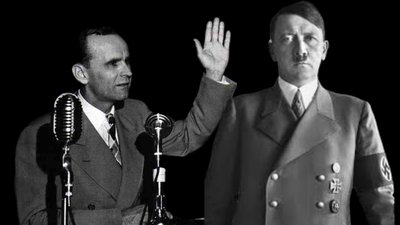
Adolf Hitler: Branham’s Evolving Prophecy Narrative from WWII to Armageddon
William Branham’s early stage persona portrayed Adolf Hitler as a still-living figure destined to help trigger the End Times, even suggesting that one of three world leaders—Hitler, Mussolini, or Stalin—would “send Jesus Christ to the earth again.” Over time, Branham revised his prophecies, shifting from claims that Franklin Roosevelt caused World War II or that he did not know which “ism” would dominate, to later assertions that Hitler started the war and that Communism alone would consume all world systems.
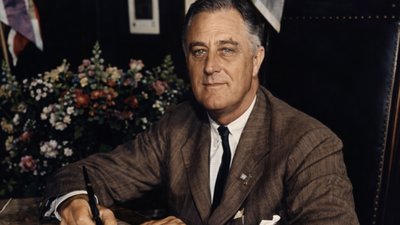
Franklin D. Roosevelt and William Branham’s Failed World War Prophecy
William Branham later claimed that a vision from 1932 or 1933 foretold Franklin D. Roosevelt leading the world into war, but his own recorded statements reveal shifting dates, expanding details, and retrospective framing. By comparing Branham’s evolving claims with the actual chronology of World War II, the narrative shows why the Roosevelt prophecy fails historical scrutiny.
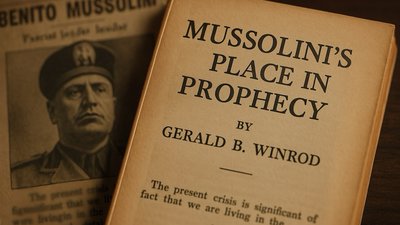
Benito Mussolini in Prophecy: How Fascism Fueled Identity Apocalypticism and Branham's 1933 Visions
William Branham’s later retellings of “1933 visions” about Mussolini, the “three isms,” and the Vatican’s destruction closely track themes already published and promoted within Christian Identity circles—especially Gerald B. Winrod’s 1933 prophetic framing of Mussolini. It then traces how those borrowed apocalyptic motifs were repackaged through Branham’s authority and carried forward into postwar revivalism, Latter Rain theology, and later Charismatic/NAR prophetic culture.
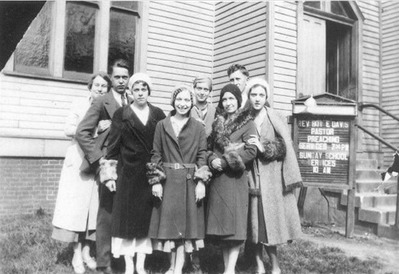
The 1934 Burning of the Church
The 1934 burning of Roy E. Davis' Pentecostal church is critical to understanding the difference between recorded history and William Branham's claim to have been an Old-Testament-style prophet who had a series of prophecies in 1933. It is the time marker recorded by history to document Branham's transition from an assistant pastor of Roy E. Davis' Pentecostal church to the head pastor of the Billie Branham Pentecostal Tabernacle, at which time these alleged 1933 Prophecies came according to some versions of his stage persona. William Branham read the year 1932 from his alleged list of prophecies and claimed that he had transitioned to become the pastor when the "divine commission" came, which cannot coexist with recorded history.

Egg Prophecy: The Prophecy That Vanished
William Branham later claimed that a divine warning not to eat eggs was part of his original 1933 prophecies, despite the absence of any historical, cultural, or theological basis for such a prohibition during that era. The claim’s late appearance, contradiction with Branham’s own lifestyle, and quiet removal from the canonical list reveal a clear example of narrative expansion and prophetic retconning.

Editing the Prophetic: How William Branham Controlled the Record
William Branham made deliberate use of lighting, recording controls, and post-production edits to maintain different versions of his public persona. Paused tapes, spliced recordings, and revised prophecies reveal a managed narrative that complicates claims of spontaneous or supernatural authority.
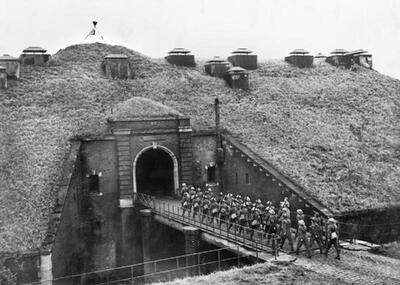
Maginot Line
In September of 1958, William Branham began claiming to have seen a vision, in his already established "1933 prophecies",[1] of the "German" building of the Maginot line. Branham often described this vision as being "a wall",[2] which is one of the primary reasons that researchers believe this prophecy to be faked rather than false. Not only did William Branham introduce this alleged prophecy over two decades after his alleged vision, many of the details of the Maginot Line for which it was "prophesied" are incorrect including its timeline and description.
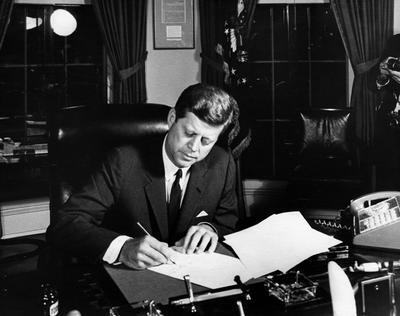
John F. Kennedy
John F Kennedy (1917-1963), was the 35th President of the United States from January 1961 until his assassination in November 1963. He entered office at the climax of the Cold War, and was a strong supporter of Civil Rights. His position on Integration of African Americans and Whites in the school system made him a target for white supremacy groups such as the Ku Klux Klan. William Branham spoke strongly against President Kennedy, referring to him as "Ahab" while referring the First Lady as "Jezebel".
William Branham’s Woman President Prophecy: The Myth of a 1933 Prophecy
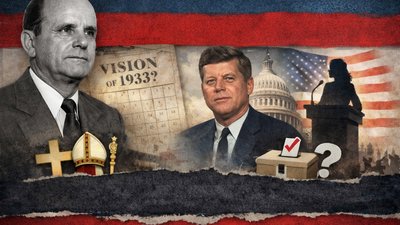
William Branham claimed that a 1933 vision foretold a woman becoming President of the United States, yet the prediction only appeared in his preaching decades later, after the idea was already common in American culture. As political events unfolded, the claim was repeatedly reinterpreted and reassigned, revealing a pattern of retrospective adjustment rather than a stable prophetic forecast.
Billie Branham Pentecostal Tabernacle: Myth of a 1933 Baptist Beginning
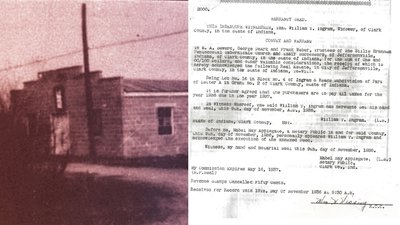
Deeds, advertisements, and location-based evidence place William Branham’s first organized congregation in 1936 rather than 1933, aligning the movement of meeting sites with a verifiable historical timeline. This chronology also situates Branham’s early ministry within Roy E. Davis’ sectarian Pentecostal network and highlights how later autobiographical claims reshaped these origins to support retrospective narratives such as the “1933 Prophecies.”
No records found.