
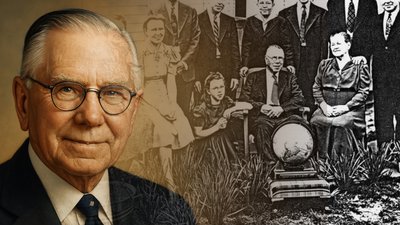
A. J. Tomlinson: Architect of a Theocratic Pentecostal Empire
Here is a clear, tight two-sentence summary of the entire passage: A. J. Tomlinson, a former Quaker turned Pentecostal leader, transformed the Church of God (Cleveland, TN) into a major Pentecostal denomination, but his authoritarian governance and financial controversies led to his 1923 removal and a lasting schism that reshaped the movement. The fallout opened the door for white supremacist influence through figures like Roy E. Davis, while Tomlinson’s son Homer later extended his father’s theocratic ambitions into politics—founding the Theocratic Party, declaring himself “King of the World,” and blending Pentecostalism with British Israelism and dominionist aspirations.
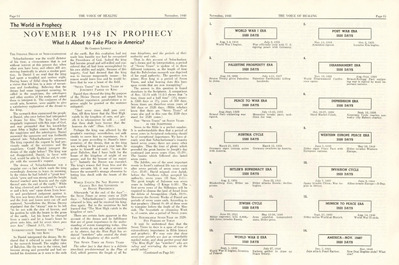
1948 Doomsday: Prophecy and Politics
After the birth of Latter Rain and the Latter Rain Revival, and as Branham's associates began to join into the Voice of Healing Revival, William Branham and his associate editors of the Voice of Healing Publication began promoting the idea that 1948 would be the year of destruction. A section of the publication entitled "The World In Prophecy" started informing readers of the "prophetic" and mathematic projections pointing to the End of Days using charts, graphs, numerologies, and specific passages from the Christian Bible without their surrounding Biblical context.
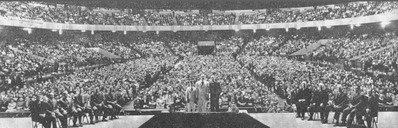
1947 Healing Ministry: Rebranding the "Prophet"
After the 1945 Healing Ministry began, William Branham changed the name of his church from "Billie Branham Pentecostal Tabernacle" to "Branham Tabernacle" and began to transition into the stage persona that would define his career. Branham started claiming to have been a Baptist minister reluctant to join the Pentecostal faith, which opened the door to many more speaking engagements. By the end of 1946, Branham had gained limited recognition as a "faith healer" and evangelist.
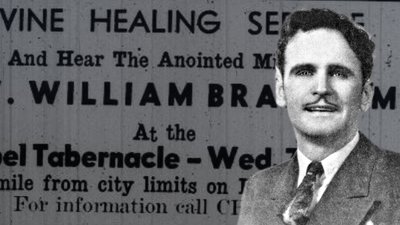
1946 Commission: Backdating the Alleged Gift of Healing
William Branham later claimed that an angel commissioned him on May 7, 1946 and bestowed on him the “gift of Divine Healing,” even tying this event to the (incorrect) date he said Israel became a nation, despite Israel’s actual declaration of statehood occurring in 1948. Yet archival evidence, early tracts, and contemporary reporting show Branham advertising healing as early as 1936 and place his supposed “gift” two years earlier than 1947, revealing serious contradictions between his stage persona, his followers’ timelines, and the historical record.
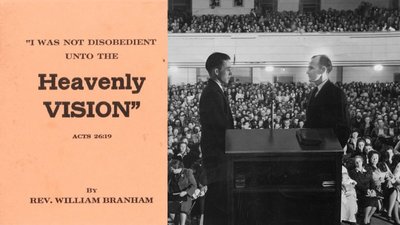
1945 Healing Revival: Branham's Stage Persona Reinvented
William Branham later claimed that his healing ministry began on May 6, 1946—the “very day” Israel became a nation—yet contemporary evidence shows he was advertising healing as early as 1936, Israel was not founded until 1948, and his reputation as a faith healer was already established by the mid-1940s. His earlier stage persona centered on a 1945 “vision” about losing control of Branham Tabernacle and white-robed followers, but this narrative was eventually displaced by the more convenient “1946 commission” story when his stage persona was later reimagined.

1937 Flood: The Myth of Branham's Pentecostal Conversion
The catastrophic Ohio River flood of January 1937 later became a centerpiece of William Branham’s “Life Story,” in which he claimed that God punished him for resisting Pentecostalism by taking the lives of his wife Hope and daughter Sharon during the disaster. However, historical records show that Branham had already been ordained into Pentecostal ministry and founded a Pentecostal church before the flood, and that Hope’s death from tuberculosis occurred months after the waters receded—exposing serious contradictions in his popular conversion narrative.
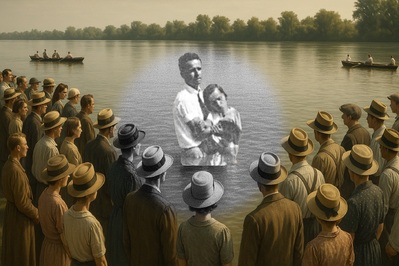
1933 Baptism: The Voice No One Heard
Dismantling William Branham’s famed 1933 Ohio River baptism story—showing that claims of a visible light, an audible commissioning voice, massive crowds, and nationwide newspaper coverage are contradicted by eyewitnesses, contemporary press records, and the documented history of his church and mentor, Roy E. Davis. It argues that the baptism narrative and the so-called 1933 prophecies were retrofitted into Branham’s biography as tools of authority, illustrating how myth-making and repetition, rather than verifiable evidence, became the foundation for prophetic belief in the Message movement.
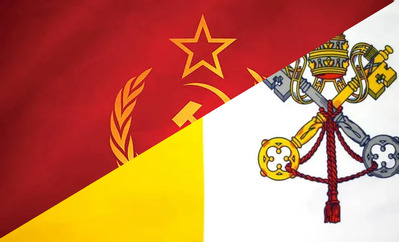
1933 Prophecy of the Isms: Branham’s Changing End-Time Vision
William Branham did not publicly mention his supposed 1933 visions until 1953, when he claimed to have prophesied that Communism, Fascism, and Nazism would merge into a single system that would dominate the world and burn the Vatican—a narrative that closely echoes earlier fundamentalist apocalyptic literature and is flatly contradicted by subsequent history. As Communism failed to conquer Europe and eventually collapsed, Branham quietly revised his message, recasting Roman Catholicism rather than Communism as the final world power, presenting this reversal not as a correction of failed prophecy but as further divine revelation.
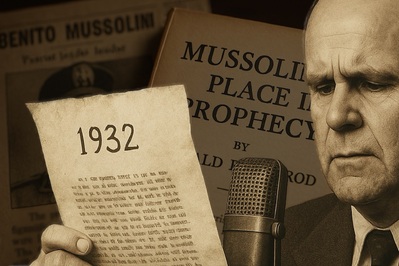
1933 Prophecies: A Self-Proclaimed Prophet
William Branham’s alleged 1933 prophecies show every sign of being constructed backwards: there is no contemporaneous 1933 documentation, his own references to the list are inconsistent (including a slip reading “1932” while admitting the prophecies were being revised), and several early items were borrowed from other writers like Gerald Winrod. Over the following decades the list expanded from “seven major events” to as many as eighteen wildly varied predictions—ranging from Mussolini’s fate to egg-shaped cars, a female U.S. ruler, “don’t eat eggs,” and “don’t live in a valley”—revealing a flexible, evolving narrative shaped by postwar fears and theological needs rather than a single, fixed prophetic vision.

1907: Branham's Actual Birth Year
William Branham’s widely repeated 1909 birth year is a historically inaccurate date that emerged from his later sermons and theological self-mythologizing rather than from any legal documentation. Contemporary records—including multiple census entries, newspaper accounts, and early public documents—consistently demonstrate that he was born in 1907, a fact overshadowed over time by the prophetic significance Branham attached to the later date.

1932: The Paper Trail Behind a Manufactured Prophecy
William Branham’s claim to a set of "1933 prophecies" is undermined by a 1960 sermon in which he theatrically reads from a paper he himself dates to 1932, exposing how the timeline of the alleged vision was flexible and retrospectively standardized. The later exhumation of his church’s cornerstone—where he claimed the original written prophecy was entombed—revealed no document at all, leaving only an empty cavity that some spiritualized as a miracle but which in practice underscores the lack of verifiable evidence behind his prophetic narrative.
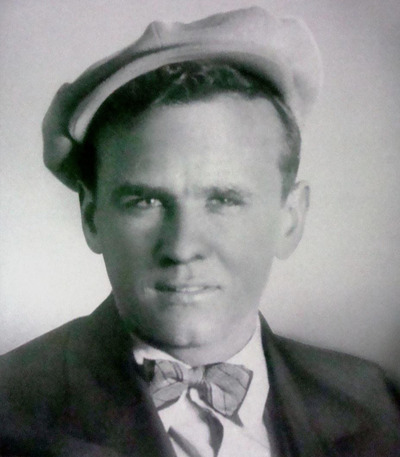
William Branham
William Marrion Branham (A.K.A. William Marvin[1] Branham, 1907[2]-1965) was a Pentecostal [3] minister from Jeffersonville, Indiana, credited by some as initiating the Post WWII Healing Revival.[4] The first of ten children of Charles and Ella Branham, Branham claimed to have been born in Cumberland County, KY [5] and reared in the booming Southern Indiana casino town directly across the river from Louisville, KY. He was also an "Eljiah" doomsday prophet, [6] predicting several years that he claimed to be the End of Days while claiming to be the return of Jesus Christ.[7] His destructive, extremist, religious cult following is collectively called "The Message" [8] and is a splinter group of the "Pentecostal Baptist Church of God" sect founded by Roy E. Davis[9] while Davis was recruiting for the Ku Klux Klan and the Knights of the Flaming Sword.[10] The sect was connected to Dr. Caleb A. Ridley, Imperial Kludd[11] (the highest-ranking religious chaplain) of the Ku Klux Klan.[12] Branham popularized the Christian Identity doctrines of Wesley A. Swift,[13] rebranding it as the "Serpent's Seed" doctrine.[14] Branham appears to have entered the healing revivals as a way to evade criminal prosecution after a change of identity, which included new first and middle names, new birth years, and changes to the ages of his siblings.
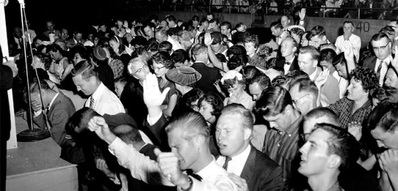
Pentecostalism
Pentecostalism is a sect of Charismatic Christianity that emerged in the early 1900s in the United States. Though most Pentecostals refer to the Biblical Day of Pentecost as their origin, most historians would agree that modern Pentecostalism was largely influenced by more recent holiness sects and that the 1906 Azusa Street Revival in Los Angeles was the birthplace of the religion.

Hope Branham
Homosexuality
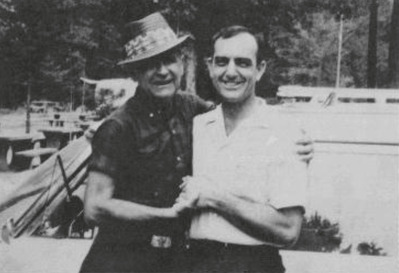
Though William Branham preached against homosexuality, his close associate Lee Vayle alleged that some of Branham's other close associates were homosexual. According to Vayle, Gene Goad, Leo Mercier, and Frary von Blomberg were homosexual, which is partially confirmed in the California Supreme Court trial of Keith Loker. William Branham displayed public signs of affection with these and other men, either by holding hands or laying his head upon their crotch.
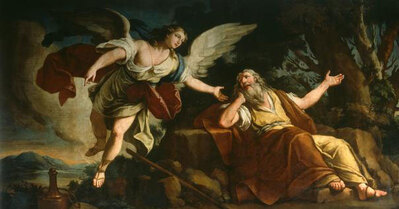
The Elijah Prophet Myth: William Branham, Restoration Theology, and Control
William Branham’s claim to embody the spirit of Elijah developed gradually through restorationist theology, culminating in an end-time messenger doctrine that redefined biblical authority and spiritual legitimacy. Rooted in ideas drawn from British Israelism and echoed in Christian Identity thought, this framework produced profound theological errors and fostered authoritarian control, gender policing, and suppression of dissent.
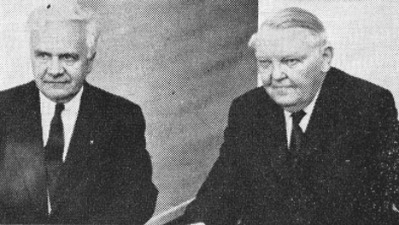
Frary von Blomberg
Of the campaign managers involved with William Branham and the Latter Rain revivals, the most interesting by far was William T. Frary, otherwise known as the German Baron William Theobald Frary von Blomberg. Von Blomberg was a Boston publicity agent who grew to overnight fame in 1933. In November 1933, his friend and sponsor, the elderly Baroness Adelheid von Blomberg of Germany, publicly adopted Frary in order to preserve the family name. Von Blomberg was the co-president of the World Fellowship of Religions, along with Sants Kirpal Singh ji, Maharaj of New Delhi. Like Tatos Kardashian, Baron von Blomberg sponsored William Branham's "faith healing" tours. Von Blomberg was also on the Board of Trustees for Bob Jones University.[1] Before working with Branham and the Latter Rain evangelists, Von Blomberg was under investigation by the United States Government for immoral activities.[2]
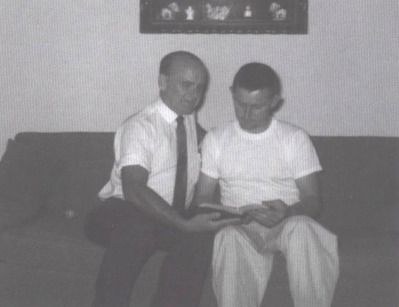
Holding Hands
Some researchers have noticed that photos of William Branham with close companions display unusual signs of affection for heterosexual men. On many occasions, William Branham is pictured holding hands, affectionately, with others. One particular photo captured William Branham lying with his head upon another man's crotch.

The Egg-Shaped Car Prophecy That Was Already in the Newspapers
Claims about a 1933 prophecy predicting egg-shaped automobiles emerged publicly decades after engineers, scientists, and newspapers were already discussing and displaying aerodynamic vehicle designs. Extensive coverage, World’s Fair prototypes, and published predictions demonstrate that the “vision” closely followed widely known technological trends rather than anticipating them.

From Branham's Healing Revival to Armed Cult: The Dark Legacy of Colonia Dignidad
Colonia Dignidad was not an isolated aberration but the product of apocalyptic fear, authoritarian control, and religious absolutism exported through William Branham’s Message movement. By tracing the shared roots connecting Branham, Jim Jones, and Paul Schäfer, the narrative shows how prophetic claims and revivalist rhetoric became tools for psychological domination, abuse, and violence.
The Sarah Branham Investigation Part 7: The "Message" In Germany
This episode focuses upon an unusual section of Sarah Branham's letter, "Take It With You". While writing the letter, Sarah paused the flow of thought to inject a very unusual section about "Brother Frank" from Germany. According to Sarah, she had private conversations with this "Brother Frank", and explicitly mentioned two money trails back into the United States. She said that "Brother Frank" was "so generously" giving money to both "the family" and "the mission purposes". Then she proceeded to describe the luxurious lifestyles of "Message" cult leaders in the United States.
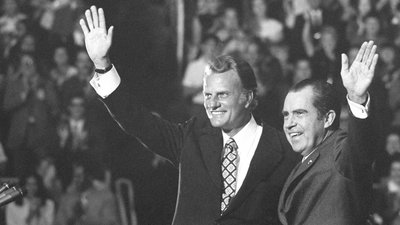
Billy Graham: From Youth for Christ to National Power
Billy Graham’s city-wide crusade model—built on interdenominational cooperation, centralized planning, and campaign-style evangelism—helped normalize a scalable parachurch ecosystem while also becoming a symbolic benchmark that adjacent revival networks (including figures like Branham and environments like Peoples Temple promotions) could invoke for legitimacy. Your excerpt then traces Graham’s visible proximity to Cold War political power through declassified references and public civic spectacle, and concludes by contrasting his public reputation on race with later-documented private antisemitic remarks and their fallout.
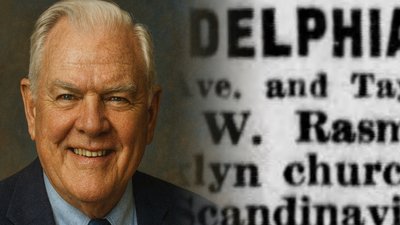
A. W. Rasmussen: Independent Assemblies of God to Latter Rain
A. W. Rasmussen emerged as a key Pentecostal leader whose deep friendship with William Branham and early embrace of the Latter Rain revival helped spread Branham’s influence across North America. His organizational leadership, promotion of Latter Rain ministers, and close partnership with Branham positioned him at the center of a movement that energized many Pentecostals but ultimately contributed to major divisions within the denomination.
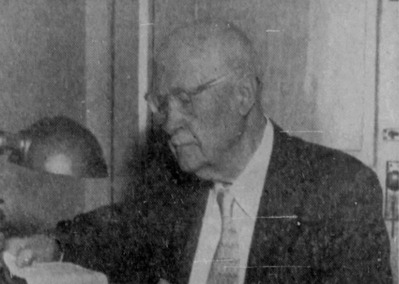
Mordecai Ham
Mordecai Ham was a controversial Baptist evangelist within the fundamentalist and revivalist movement of the early 20th century. Known for his fiery preaching style and unwavering commitment to fundamentalist Baptist beliefs, Ham was part of a wave of evangelists who sought to "awaken" America to Christian repentance through dramatic revival meetings. Among his alleged hundreds of thousands of converts during his ministry, none were as notable as Billy Graham, who converted at a Ham revival in 1934.[1] Ham advertised himself as a "New Testament Prophet,"[2] though his critics provided substantial evidence to claim that he was a false prophet.[3]
No records found.