
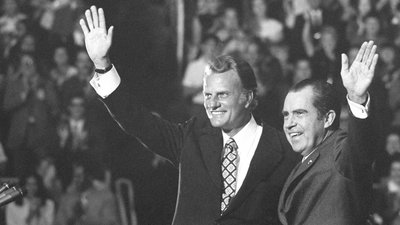
Billy Graham: From Youth for Christ to National Power
Billy Graham’s city-wide crusade model—built on interdenominational cooperation, centralized planning, and campaign-style evangelism—helped normalize a scalable parachurch ecosystem while also becoming a symbolic benchmark that adjacent revival networks (including figures like Branham and environments like Peoples Temple promotions) could invoke for legitimacy. Your excerpt then traces Graham’s visible proximity to Cold War political power through declassified references and public civic spectacle, and concludes by contrasting his public reputation on race with later-documented private antisemitic remarks and their fallout.
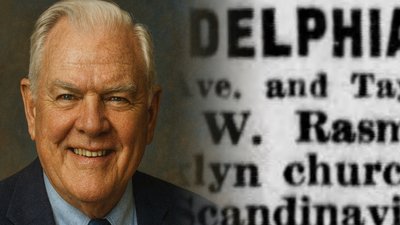
A. W. Rasmussen: Independent Assemblies of God to Latter Rain
A. W. Rasmussen emerged as a key Pentecostal leader whose deep friendship with William Branham and early embrace of the Latter Rain revival helped spread Branham’s influence across North America. His organizational leadership, promotion of Latter Rain ministers, and close partnership with Branham positioned him at the center of a movement that energized many Pentecostals but ultimately contributed to major divisions within the denomination.
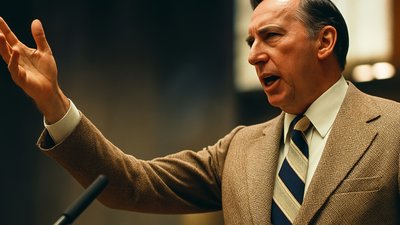
Derek Prince and the Roots of Deliverance Theology
Derek Prince played a formative role in shaping modern Charismatic theology through his teachings on deliverance, spiritual warfare, and prayer, while maintaining close ties to influential networks surrounding William Branham and the Full Gospel Business Men’s Fellowship. His legacy—cemented through the Shepherding Movement and overlapping with Latter Rain and prosperity teachings—helped lay the groundwork for the authoritarian apostolic structures later embraced by the New Apostolic Reformation.
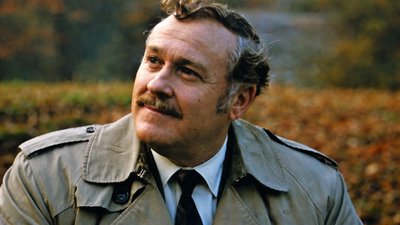
Clair Hutchins: Latter Rain Power Network to Cross and the Switchblade
Clair Hutchins was not a peripheral revival figure but a formal insider within the Latter Rain movement, serving as musical director and assistant pastor at Joseph Mattsson-Boze’s Philadelphia Church in Chicago while operating across Youth for Christ, independent Pentecostal networks, and senior pastorates. His career illustrates how Latter Rain authority structures translated into durable institutions through music, centralized leadership, ordination networks, and later media evangelism via the World Film Crusade.
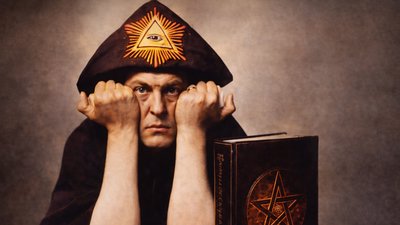
Aleister Crowley: From Thelema to Latter Rain
Aleister Crowley’s Thelemic teachings on celestial and “light” bodies, progressive revelation, and spirit communication significantly shaped Western esotericism, and many of these themes filtered—directly or indirectly—into the Latter Rain movement through figures like William Branham. Both Crowley and Branham drew on older occult and mystical concepts such as astral bodies, heavenly watchers, and angelic guidance, resulting in striking doctrinal parallels between Thelema and mid-century Pentecostal mysticism.

Axl Rose and the Latter Rain: Childhood Trauma in a Postwar Pentecostal Subculture
Axl Rose’s formative years in an Indiana Pentecostal church shaped by the Latter Rain movement and William Branham’s “Message” cult exposed him to severe physical, emotional, and sexual abuse under a rigid, authoritarian form of religiosity. That traumatic religious environment left enduring psychological scars that fueled his rejection of organized religion and profoundly influenced his artistic identity, themes, and lyrics.
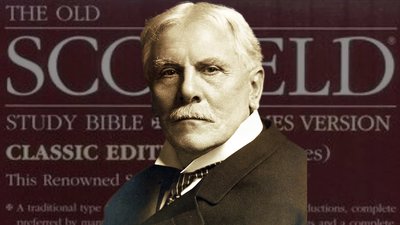
C. I. Scofield: From Forgery Charges to the Scofield Reference Bible
C. I. Scofield, best known for the influential Scofield Reference Bible, rose to prominence after a career marked by political corruption, financial fraud, and criminal convictions for forgery. His later theological authority, heavily indebted to John Nelson Darby’s dispensationalism, profoundly shaped Fundamentalist, Pentecostal, and Latter Rain movements, including ideas used to legitimize modern prophetic and angelic claims.
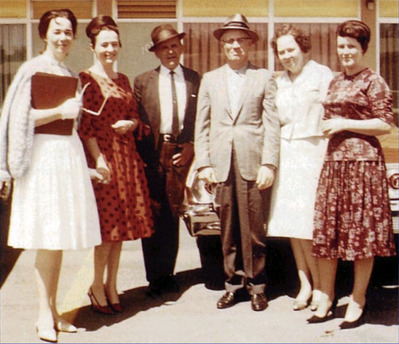
Don Price and the Machinery Behind Branham-Era Revivalism
Don Price served as a central but largely overlooked figure within the Branham-era revival system, operating under Jack Moore at Life Tabernacle as an administrator, campaign manager, and missionary supervisor. His career reveals how revival movements depended not only on celebrity preachers but on tightly controlled institutional structures that sustained influence, funding, and expansion.
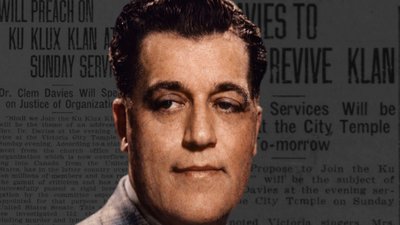
Clem Davies: The White Supremacist Preacher Behind Revivalist Networks
Clem Davies was a transnational revivalist figure whose ministry fused white supremacy, British-Israelism, and apocalyptic prophecy with mass revival techniques decades before the rise of postwar healing movements. His networks, teachings, and organizational methods formed an ideological and structural pipeline that carried racialized theology into later Pentecostal, Latter Rain, and charismatic revival contexts.
Anglo-Saxonism and Its Influence on Early Pentecostal and Latter Rain Movements
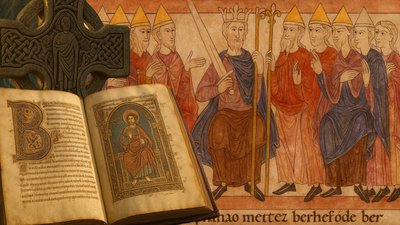
Anglo-Saxonism, rooted in British Israelism and later adapted into American white supremacist theology, influenced key figures who helped shape both the Christian Identity movement and segments of mid-century Pentecostalism. Through leaders such as Wesley Swift, Gordon Lindsay, and George Hawtin, elements of this racialized ideology permeated revival networks, leaving a lasting imprint on parts of the Latter Rain and healing
How Pentecostalism Helped Build Apartheid: The Hidden Latter Rain Connection
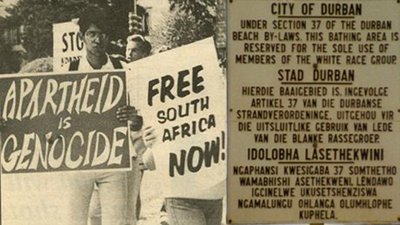
Apartheid was a religious and political system of racial segregation in South and current Nambia from 1948 to the early 1990s. The system enabled the white minority in South Africa to politically, socially, and economically dominate while discriminating against the black-skinned majority. While many factors contributed to apartheid, evidence suggests that the Latter Rain Movement played a key role in its creation.
1953 Voice of Healing Convention
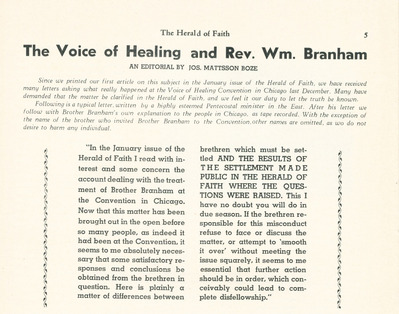
In 1953, many members of William Branham's campaign team and partners in the revival discovered serious issues with Branham, his teaching, and presumably the fictional elements of his stage persona. During a Baxter-Branham event advertised in Connorsville, IN,[1] partner, campaign manager,[2] and long-time supporter Ern Baxter refused to show at the event.[3] Branham described it as a difference of opinion,[4] while Baxter described it as false teaching that bore rotten fruit.[5]
Brotherhood Healing Crusade: Joseph Mattsson-Boze, William Branham, and a Rival Revival Network
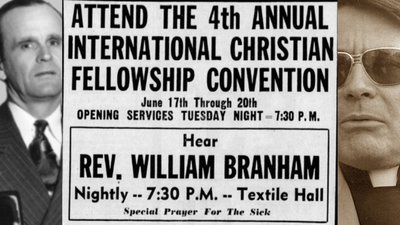
In the mid-1950s, William Branham’s rupture with his campaign leadership and the Voice of Healing intersected with Jim Jones’ formation of Peoples Temple, producing a short-lived alliance centered on the Brotherhood Healing Crusade and related Christian Fellowship Conventions. The naming strategies, publications, and personnel involved reveal how revivalist rivalries, doctrinal disputes, and organizational schisms shaped Jones’ early trajectory and Branham’s post-Voice of Healing network.
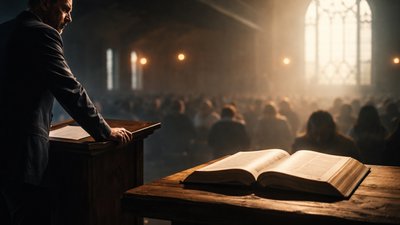
How William Branham and Latter Rain Rewrote the Five-Fold Ministry
This work examines the biblical foundation of the so-called five-fold ministry and traces how restorationist movements transformed ministry gifts into hierarchical authority structures. By following the doctrine from Ephesians 4 through Latter Rain theology, William Branham, and modern charismatic networks, it demonstrates how authoritarian control and spiritual abuse emerged as consistent fruit.
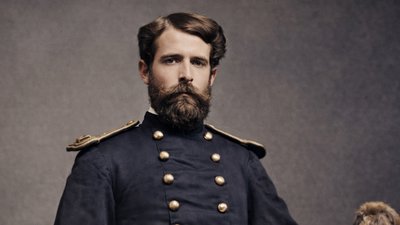
C. A. L. Totten and the American Rise of British Israelism
Charles Adiel Lewis Totten was a Yale military science professor turned apocalyptic theorist whose writings helped establish British Israelism in the United States and popularized mathematically calculated end-times prophecy. His fusion of pyramidology, numerology, and imperial theology influenced later doomsday movements and shaped ideas that flowed into early Pentecostalism and Christian Identity thought.
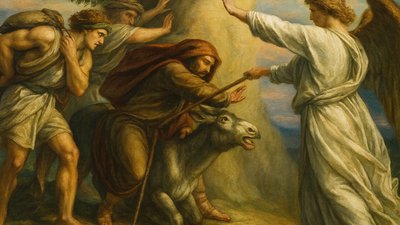
From Balaam to the New Apostolic Reformation: The Normalization of Prophetic Error
William Branham repeatedly used Balaam as a theological model to argue that genuine prophetic anointing and supernatural accuracy can coexist with doctrinal error, moral compromise, and destructive teaching, a framework he applied to the Latter Rain, the postwar Healing Revival, and later Charismatic and NAR movements. While this Balaam typology allowed Branham to critique revival excesses without denying supernatural experience, it also reshaped the biblical narrative in ways that insulated prophetic authority from accountability and helped normalize permissive theology under the language of unity, gifting, and success.
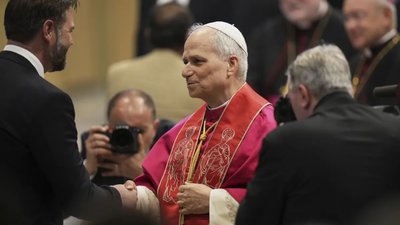
Rome as the Enemy: How Klan Ideology Shaped Revivalist Anti-Catholicism
Anti-Catholic ideology in the United States developed from nineteenth- and early twentieth-century nativism into organized movements such as the Ku Klux Klan, where Catholicism was framed as a foreign and authoritarian threat to American identity. Those narratives were later spiritualized within healing revivals and certain charismatic networks, allowing older patterns of religious hostility to persist under the language of prophecy, discernment, and spiritual warfare.
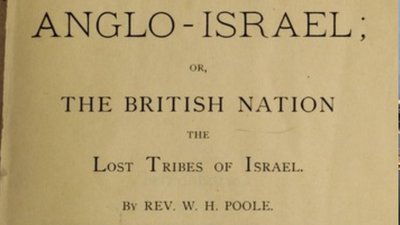
British Israelism and Its Hidden Influence on Early Pentecostal Theology
British Israelism emerged as a nineteenth-century pseudoarchaeological theology that reimagined Anglo-Saxon nations as the covenant heirs of biblical Israel. Through revival networks and healing movements, its themes of prophetic destiny and eschatology influenced early Pentecostal leaders and later provided a foundation for more radical doctrines adopted by figures such as William Branham.
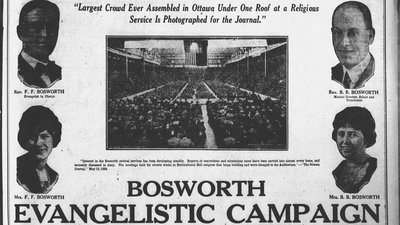
Bosworth Brothers Campaigns: The Business of Revival
F. F. and B. B. Bosworth helped transform early twentieth-century revivalism into a polished, large-scale public program that blended music, disciplined preaching, and highly publicized healing services, often buoyed by unusually favorable newspaper coverage. Their campaigns grew from multi-day Alliance meetings into "mammoth tent" spectacles and month-long series, but the movement’s credibility faced sharper scrutiny when widely reported healings—especially the James Buck episode in Altoona—raised questions about claims, reporting, and accountability.
No records found.