
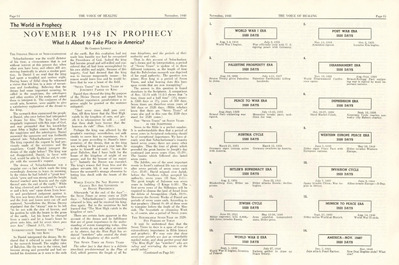
1948 Doomsday: Prophecy and Politics
After the birth of Latter Rain and the Latter Rain Revival, and as Branham's associates began to join into the Voice of Healing Revival, William Branham and his associate editors of the Voice of Healing Publication began promoting the idea that 1948 would be the year of destruction. A section of the publication entitled "The World In Prophecy" started informing readers of the "prophetic" and mathematic projections pointing to the End of Days using charts, graphs, numerologies, and specific passages from the Christian Bible without their surrounding Biblical context.
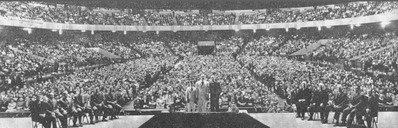
1947 Healing Ministry: Rebranding the "Prophet"
After the 1945 Healing Ministry began, William Branham changed the name of his church from "Billie Branham Pentecostal Tabernacle" to "Branham Tabernacle" and began to transition into the stage persona that would define his career. Branham started claiming to have been a Baptist minister reluctant to join the Pentecostal faith, which opened the door to many more speaking engagements. By the end of 1946, Branham had gained limited recognition as a "faith healer" and evangelist.
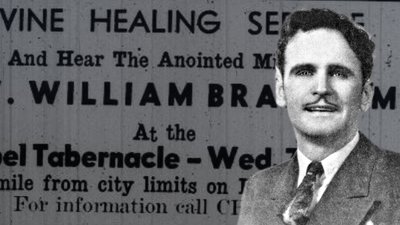
1946 Commission: Backdating the Alleged Gift of Healing
William Branham later claimed that an angel commissioned him on May 7, 1946 and bestowed on him the “gift of Divine Healing,” even tying this event to the (incorrect) date he said Israel became a nation, despite Israel’s actual declaration of statehood occurring in 1948. Yet archival evidence, early tracts, and contemporary reporting show Branham advertising healing as early as 1936 and place his supposed “gift” two years earlier than 1947, revealing serious contradictions between his stage persona, his followers’ timelines, and the historical record.
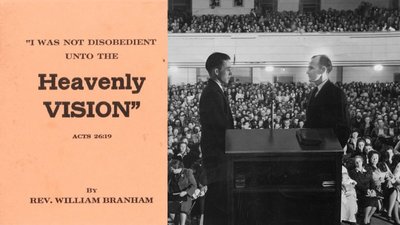
1945 Healing Revival: Branham's Stage Persona Reinvented
William Branham later claimed that his healing ministry began on May 6, 1946—the “very day” Israel became a nation—yet contemporary evidence shows he was advertising healing as early as 1936, Israel was not founded until 1948, and his reputation as a faith healer was already established by the mid-1940s. His earlier stage persona centered on a 1945 “vision” about losing control of Branham Tabernacle and white-robed followers, but this narrative was eventually displaced by the more convenient “1946 commission” story when his stage persona was later reimagined.
1937 Flood: The Myth of Branham's Pentecostal Conversion
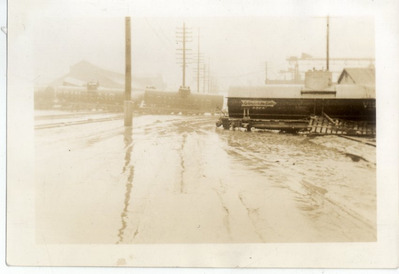
The catastrophic Ohio River flood of January 1937 later became a centerpiece of William Branham’s “Life Story,” in which he claimed that God punished him for resisting Pentecostalism by taking the lives of his wife Hope and daughter Sharon during the disaster. However, historical records show that Branham had already been ordained into Pentecostal ministry and founded a Pentecostal church before the flood, and that Hope’s death from tuberculosis occurred months after the waters receded—exposing serious contradictions in his popular conversion narrative.
1933 Baptism: The Voice No One Heard
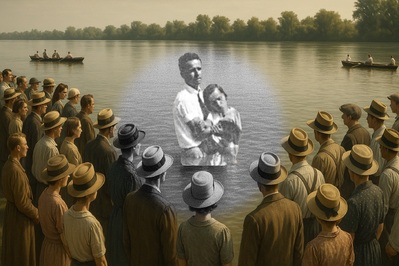
Dismantling William Branham’s famed 1933 Ohio River baptism story—showing that claims of a visible light, an audible commissioning voice, massive crowds, and nationwide newspaper coverage are contradicted by eyewitnesses, contemporary press records, and the documented history of his church and mentor, Roy E. Davis. It argues that the baptism narrative and the so-called 1933 prophecies were retrofitted into Branham’s biography as tools of authority, illustrating how myth-making and repetition, rather than verifiable evidence, became the foundation for prophetic belief in the Message movement.

1933 Prophecy of the Isms: Branham’s Changing End-Time Vision
William Branham did not publicly mention his supposed 1933 visions until 1953, when he claimed to have prophesied that Communism, Fascism, and Nazism would merge into a single system that would dominate the world and burn the Vatican—a narrative that closely echoes earlier fundamentalist apocalyptic literature and is flatly contradicted by subsequent history. As Communism failed to conquer Europe and eventually collapsed, Branham quietly revised his message, recasting Roman Catholicism rather than Communism as the final world power, presenting this reversal not as a correction of failed prophecy but as further divine revelation.
1933 Prophecies: A Self-Proclaimed Prophet
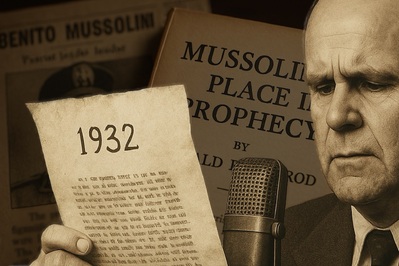
William Branham’s alleged 1933 prophecies show every sign of being constructed backwards: there is no contemporaneous 1933 documentation, his own references to the list are inconsistent (including a slip reading “1932” while admitting the prophecies were being revised), and several early items were borrowed from other writers like Gerald Winrod. Over the following decades the list expanded from “seven major events” to as many as eighteen wildly varied predictions—ranging from Mussolini’s fate to egg-shaped cars, a female U.S. ruler, “don’t eat eggs,” and “don’t live in a valley”—revealing a flexible, evolving narrative shaped by postwar fears and theological needs rather than a single, fixed prophetic vision.

1907: Branham's Actual Birth Year
William Branham’s widely repeated 1909 birth year is a historically inaccurate date that emerged from his later sermons and theological self-mythologizing rather than from any legal documentation. Contemporary records—including multiple census entries, newspaper accounts, and early public documents—consistently demonstrate that he was born in 1907, a fact overshadowed over time by the prophetic significance Branham attached to the later date.

1932: The Paper Trail Behind a Manufactured Prophecy
William Branham’s claim to a set of "1933 prophecies" is undermined by a 1960 sermon in which he theatrically reads from a paper he himself dates to 1932, exposing how the timeline of the alleged vision was flexible and retrospectively standardized. The later exhumation of his church’s cornerstone—where he claimed the original written prophecy was entombed—revealed no document at all, leaving only an empty cavity that some spiritualized as a miracle but which in practice underscores the lack of verifiable evidence behind his prophetic narrative.
The Elijah Prophet Myth: William Branham, Restoration Theology, and Control
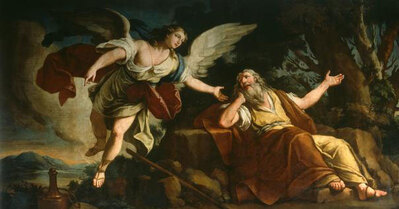
William Branham’s claim to embody the spirit of Elijah developed gradually through restorationist theology, culminating in an end-time messenger doctrine that redefined biblical authority and spiritual legitimacy. Rooted in ideas drawn from British Israelism and echoed in Christian Identity thought, this framework produced profound theological errors and fostered authoritarian control, gender policing, and suppression of dissent.

The Egg-Shaped Car Prophecy That Was Already in the Newspapers
Claims about a 1933 prophecy predicting egg-shaped automobiles emerged publicly decades after engineers, scientists, and newspapers were already discussing and displaying aerodynamic vehicle designs. Extensive coverage, World’s Fair prototypes, and published predictions demonstrate that the “vision” closely followed widely known technological trends rather than anticipating them.

From Branham's Healing Revival to Armed Cult: The Dark Legacy of Colonia Dignidad
Colonia Dignidad was not an isolated aberration but the product of apocalyptic fear, authoritarian control, and religious absolutism exported through William Branham’s Message movement. By tracing the shared roots connecting Branham, Jim Jones, and Paul Schäfer, the narrative shows how prophetic claims and revivalist rhetoric became tools for psychological domination, abuse, and violence.
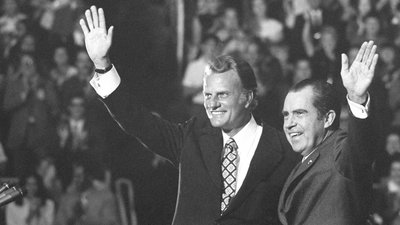
Billy Graham: From Youth for Christ to National Power
Billy Graham’s city-wide crusade model—built on interdenominational cooperation, centralized planning, and campaign-style evangelism—helped normalize a scalable parachurch ecosystem while also becoming a symbolic benchmark that adjacent revival networks (including figures like Branham and environments like Peoples Temple promotions) could invoke for legitimacy. Your excerpt then traces Graham’s visible proximity to Cold War political power through declassified references and public civic spectacle, and concludes by contrasting his public reputation on race with later-documented private antisemitic remarks and their fallout.
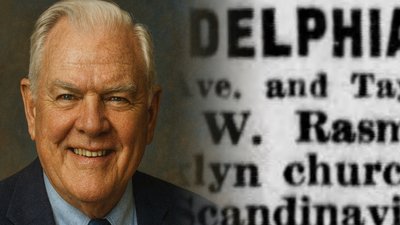
A. W. Rasmussen: Independent Assemblies of God to Latter Rain
A. W. Rasmussen emerged as a key Pentecostal leader whose deep friendship with William Branham and early embrace of the Latter Rain revival helped spread Branham’s influence across North America. His organizational leadership, promotion of Latter Rain ministers, and close partnership with Branham positioned him at the center of a movement that energized many Pentecostals but ultimately contributed to major divisions within the denomination.
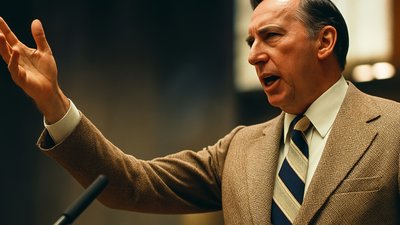
Derek Prince and the Roots of Deliverance Theology
Derek Prince played a formative role in shaping modern Charismatic theology through his teachings on deliverance, spiritual warfare, and prayer, while maintaining close ties to influential networks surrounding William Branham and the Full Gospel Business Men’s Fellowship. His legacy—cemented through the Shepherding Movement and overlapping with Latter Rain and prosperity teachings—helped lay the groundwork for the authoritarian apostolic structures later embraced by the New Apostolic Reformation.
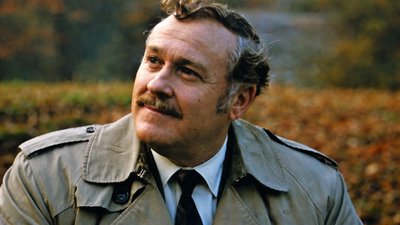
Clair Hutchins: Latter Rain Power Network to Cross and the Switchblade
Clair Hutchins was not a peripheral revival figure but a formal insider within the Latter Rain movement, serving as musical director and assistant pastor at Joseph Mattsson-Boze’s Philadelphia Church in Chicago while operating across Youth for Christ, independent Pentecostal networks, and senior pastorates. His career illustrates how Latter Rain authority structures translated into durable institutions through music, centralized leadership, ordination networks, and later media evangelism via the World Film Crusade.
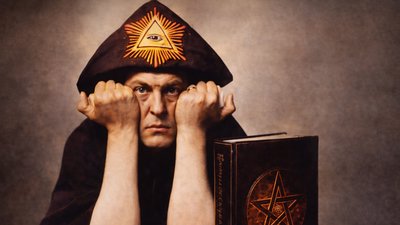
Aleister Crowley: From Thelema to Latter Rain
Aleister Crowley’s Thelemic teachings on celestial and “light” bodies, progressive revelation, and spirit communication significantly shaped Western esotericism, and many of these themes filtered—directly or indirectly—into the Latter Rain movement through figures like William Branham. Both Crowley and Branham drew on older occult and mystical concepts such as astral bodies, heavenly watchers, and angelic guidance, resulting in striking doctrinal parallels between Thelema and mid-century Pentecostal mysticism.
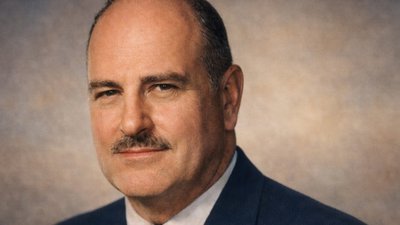
Gordon Winrod: From Defenders of the Faith to States’ Rights Politics
Gordon Winrod did not emerge from the fringes but from a religious ecosystem that had already normalized antisemitic and racialized theology through revivalist platforms and institutional protection. By tracing the connections between Gerald B. Winrod, Aimee Semple McPherson, Gordon Lindsay, and the healing revival infrastructure, this research demonstrates how extremist ideology migrated seamlessly from prophecy preaching into organized political activism.
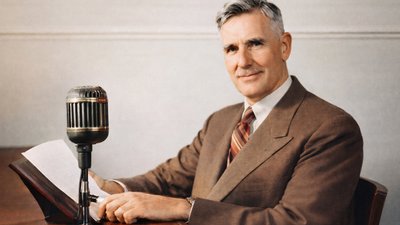
Charles Fuller and the Political Foundations of Modern Evangelical Media
Charles Fuller emerged as a powerful radio evangelist whose ministry blended revivalism, political activism, and prophetic rhetoric during a period of intense religious and cultural upheaval in the United States. His associations with figures such as Gerald B. Winrod, Paul Rader, and William Branham, along with the founding of Fuller Theological Seminary, positioned him as a key transitional figure linking early fundamentalism to later charismatic and Third Wave movements.
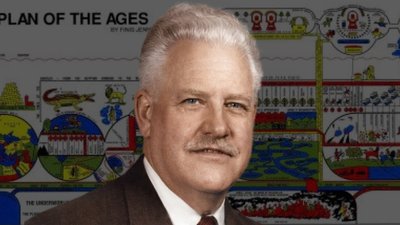
The Hidden Influence of Finis Dake on Word-Faith and Charismatic Leaders
Finis Jennings Dake was a highly influential Pentecostal teacher whose Annotated Reference Bible shaped the theology of later Charismatic and Word-Faith leaders. His rejection of eternal Sonship, promotion of a pre-Adamic race, dispensational speculation, and racial segregation reveal theological and ethical errors that closely paralleled and influenced William Branham and related movements.
David Berg and William Branham: The Prophetic Roots of the Children of God
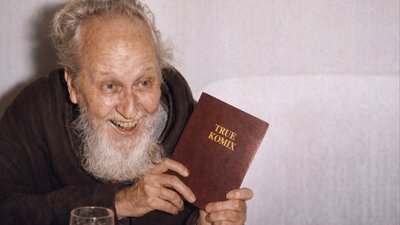
David Berg, founder of the Children of God cult, repeatedly credited William Branham and the Latter Rain movement as decisive influences on his theology, prophetic worldview, and rejection of denominational Christianity. This analysis traces how Branham’s prophecies, eschatology, angelology, and racial doctrines were absorbed, adapted, and radicalized within Berg’s movement, contributing to its apocalyptic ideology and abusive practices.
Albert E. Farrar: Policeman to Pentecostal
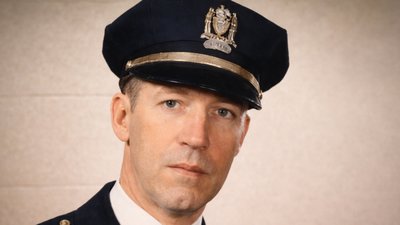
Albert E. Farrar, a long-serving police captain in Tacoma, Washington[1], emerged as an unexpected yet influential figure in mid-century Pentecostal evangelism[2]. His religious conversion, though not precisely dated, was widely publicized in revivalist circles throughout the 1940s and 1950s[3]. Known to many in the Pacific Northwest as a no-nonsense lawman[4], Farrar became a staple testimonial figure in Pentecostal publications and advertisements[5], often introduced as the “Converted Tacoma Policeman”[6]. His appearances at revival meetings—such as those held by W. J. Ern Baxter at the Evangelistic Tabernacle[7]—were framed to signal divine transformation, presenting Farrar as a man of both worldly authority and spiritual renewal[8]. The narrative surrounding his faith journey reinforced the idea that even the most hardened public servants could experience radical salvation and become vessels for moral leadership.

Axl Rose and the Latter Rain: Childhood Trauma in a Postwar Pentecostal Subculture
Axl Rose’s formative years in an Indiana Pentecostal church shaped by the Latter Rain movement and William Branham’s “Message” cult exposed him to severe physical, emotional, and sexual abuse under a rigid, authoritarian form of religiosity. That traumatic religious environment left enduring psychological scars that fueled his rejection of organized religion and profoundly influenced his artistic identity, themes, and lyrics.
No records found.