
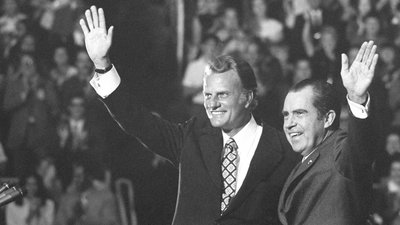
Billy Graham: From Youth for Christ to National Power
Billy Graham’s city-wide crusade model—built on interdenominational cooperation, centralized planning, and campaign-style evangelism—helped normalize a scalable parachurch ecosystem while also becoming a symbolic benchmark that adjacent revival networks (including figures like Branham and environments like Peoples Temple promotions) could invoke for legitimacy. Your excerpt then traces Graham’s visible proximity to Cold War political power through declassified references and public civic spectacle, and concludes by contrasting his public reputation on race with later-documented private antisemitic remarks and their fallout.
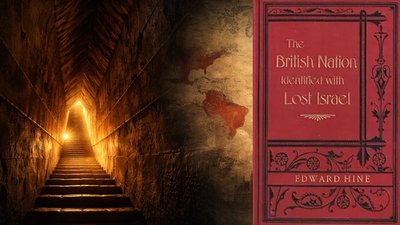
Edward Hine and the Secret Racial Roots of British Israelism
Edward Hine was a central figure in transforming British Israelism from a fringe theological theory into a racialized ideological system. His teachings blended pseudo-science, prophecy, and imperial politics, laying foundations that later influenced extremist identity movements.
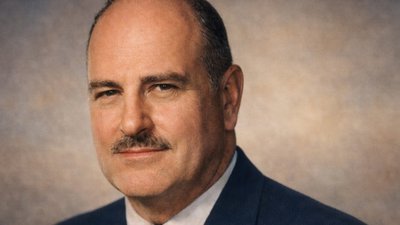
Gordon Winrod: From Defenders of the Faith to States’ Rights Politics
Gordon Winrod did not emerge from the fringes but from a religious ecosystem that had already normalized antisemitic and racialized theology through revivalist platforms and institutional protection. By tracing the connections between Gerald B. Winrod, Aimee Semple McPherson, Gordon Lindsay, and the healing revival infrastructure, this research demonstrates how extremist ideology migrated seamlessly from prophecy preaching into organized political activism.
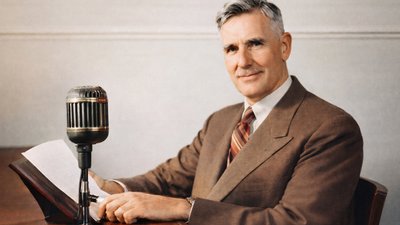
Charles Fuller and the Political Foundations of Modern Evangelical Media
Charles Fuller emerged as a powerful radio evangelist whose ministry blended revivalism, political activism, and prophetic rhetoric during a period of intense religious and cultural upheaval in the United States. His associations with figures such as Gerald B. Winrod, Paul Rader, and William Branham, along with the founding of Fuller Theological Seminary, positioned him as a key transitional figure linking early fundamentalism to later charismatic and Third Wave movements.
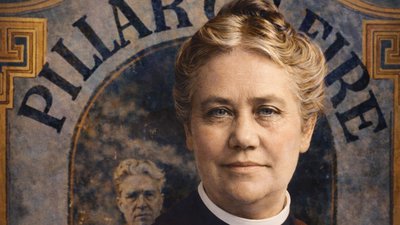
Alma White, the Holy Jumpers, and the Racial Politics Behind Early Holiness Rituals
The Pillar of Fire gained increasing public scrutiny in 1926 when newspapers labeled the “Holy Jumpers” a cult after 22-year-old Ruth Marshall joined the sect and refused to return to her family. Reporters emphasized her intense devotion, noting that her “eyes burn[ed] with a religious zeal,” which reinforced concerns about the group’s influence and controversial practices.
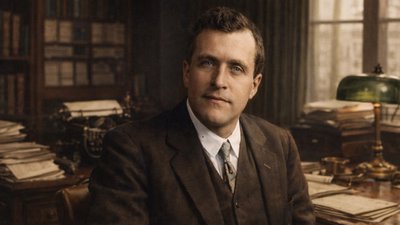
Caleb A. Ridley: The Klan Chaplain Linked to William Branham and Roy E. Davis
Caleb A. Ridley, an Imperial Kludd of the 1915 Ku Klux Klan, played a significant role in early twentieth-century religious and political networks that intersected with Roy E. Davis and William Branham. His participation in revivals, prohibition activism, and Klan organizing sheds new light on the racial and ideological context surrounding the formative years of Branham’s ministry.
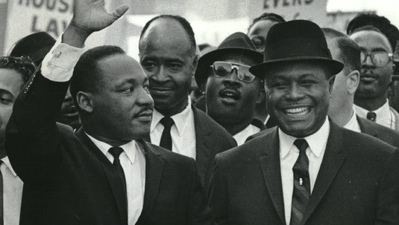
C. L. Franklin: Civil Rights to Branham's Stolen Sermon
Rev. C. L. Franklin’s famous sermon “The Eagle Stirreth Her Nest,” rooted in the African American Baptist tradition and popularized through recordings in the 1950s, became a defining message of spiritual maturity and struggle long before William Branham reused its title and imagery. Branham’s later adaptation not only ignored its historical and cultural origins but also built upon a demonstrably incorrect reading of Leviticus, turning the eagle metaphor into a central pillar of his cult theology.
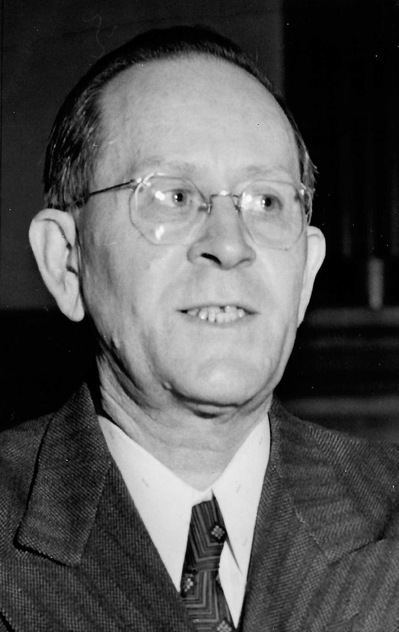
Roy E. Davis
Rev. Roy Elonza. Davis, Sr. was a lifelong leader of multiple white supremacy groups. He worked directly under William Joseph Simmons as the second-in-command of the Ku Klux Klan after it was rebirthed in Atlanta.[1] Davis helped write the constitution and by-laws of the Klan [2] and was an ambassador in Washington for the Klan.[3] When Simmons was ousted from the Klan, Davis joined him to form the Knights of the Flaming Sword and recruited the largest number of people into the white supremacy group.[4] Davis was the man who baptized William Branham,[5] ordained Branham in the Pentecostal faith,[6] mentored him,[7] and toured with Branham in the snake-handling, poison-drinking sects of Pentecostalism in the South.[8]
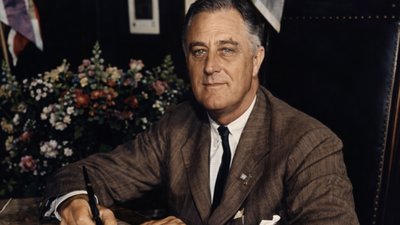
Franklin D. Roosevelt and William Branham’s Failed World War Prophecy
William Branham later claimed that a vision from 1932 or 1933 foretold Franklin D. Roosevelt leading the world into war, but his own recorded statements reveal shifting dates, expanding details, and retrospective framing. By comparing Branham’s evolving claims with the actual chronology of World War II, the narrative shows why the Roosevelt prophecy fails historical scrutiny.
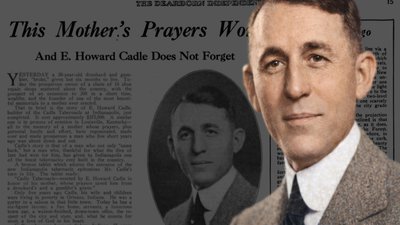
E. Howard Cadle: Revivalist, Power Broker, and the Church That Became Klan Headquarters
E. Howard Cadle rose from gambling and saloon culture to national religious prominence through wealth, revivalism, and the construction of the massive Cadle Tabernacle in Indianapolis. This study traces how that building became a center for political power, Ku Klux Klan activity, and later revival mythology, revealing how religious infrastructure can be repurposed to legitimize ideology, authority, and collective memory.
Dan S. Davis: How the Davis Brothers, the Klan, and Pentecostal Revival Shaped William Branham
William Branham’s early ministry did not emerge in isolation but developed within a tightly connected network of Pentecostal churches, revival infrastructure, and influential figures linked to both organized religion and extremist movements. By tracing the roles of Dan S. Davis, Roy E. Davis, and Caleb Ridley, this study documents how institutional control, shared worship spaces, and overlapping political-religious networks created the environment that produced Branham.
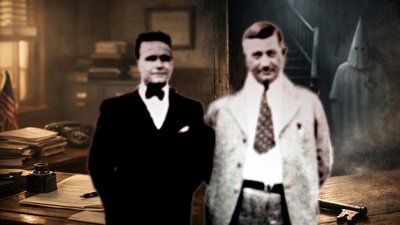
Charles Brumbach: William Branham’s Father-in-Law and the Ku Klux Klan
Charles Brumbach, William Branham’s father-in-law, occupied a position of local political influence while maintaining documented access to Ku Klux Klan infrastructure in Jeffersonville during the 1920s. A comparison of contemporary records with William Branham’s repeated personal accounts demonstrates how elements of the Brumbach household were altered or omitted to sustain a narrative of moral stability and spiritual legitimacy.
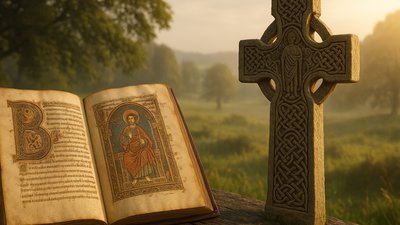
Anglo Saxon Christian World: The Vancouver Movement and the Making of Christian Identity
Anglo-Saxonism and its North American expression in the Anglo-Saxon Christian World fused British Israelism, apocalyptic rhetoric, militarism, and white supremacist ideology to construct a theologically sanctioned vision of a divinely chosen Anglo-Saxon race. Through figures such as J. G. Wright, Clem Davies, Gordon Lindsay, and Herbert W. Armstrong, the movement became an influential conduit linking early Christian Identity, the Latter Rain revival, and emerging forms of televangelism.
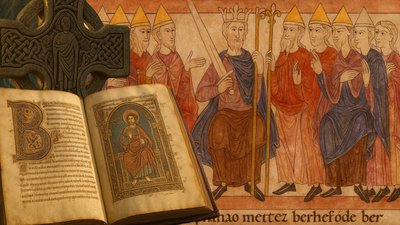
Anglo-Saxonism and Its Influence on Early Pentecostal and Latter Rain Movements
Anglo-Saxonism, rooted in British Israelism and later adapted into American white supremacist theology, influenced key figures who helped shape both the Christian Identity movement and segments of mid-century Pentecostalism. Through leaders such as Wesley Swift, Gordon Lindsay, and George Hawtin, elements of this racialized ideology permeated revival networks, leaving a lasting imprint on parts of the Latter Rain and healing
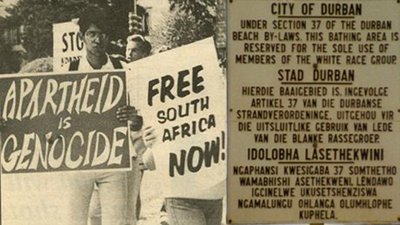
How Pentecostalism Helped Build Apartheid: The Hidden Latter Rain Connection
Apartheid was a religious and political system of racial segregation in South and current Nambia from 1948 to the early 1990s. The system enabled the white minority in South Africa to politically, socially, and economically dominate while discriminating against the black-skinned majority. While many factors contributed to apartheid, evidence suggests that the Latter Rain Movement played a key role in its creation.
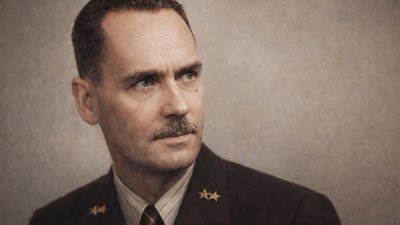
Conrad Gaard: The Forgotten Architect Behind Branham’s Pyramid and Zodiac Theology
Conrad Gaard functioned as a critical but largely unrecognized bridge between British-Israel theology, pyramidology, zodiac symbolism, and the organizational networks that later shaped William Branham’s ministry. By tracing Gaard’s lectures, institutional leadership, and ideological ties to figures such as Gordon Lindsay, Wesley Swift, and Gerald L. K. Smith, this study demonstrates that key elements of Branham’s prophetic framework were inherited rather than uniquely revealed.
How the Assemblies of God Shaped Modern Charismatic Christianity
The Assemblies of God played a formative yet often paradoxical role in shaping global Pentecostalism, functioning both as a doctrinal stabilizer and as an unintentional conduit for revivalist streams that later fed into movements such as Latter Rain, the Charismatic Renewal, and the New Apostolic Reformation. Its attempts to regulate healing revivals, prophetic ministries, and restorationist currents never fully contained them, allowing these impulses to circulate through regional networks and influential leaders—ultimately contributing to the theological and organizational architecture of modern charismatic Christianity.
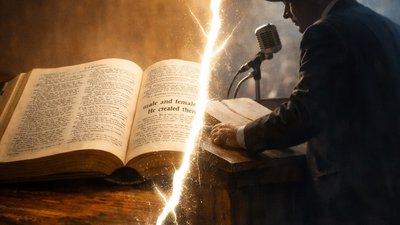
William Branham’s Creation Theology: How Heresy, Racism, and Misogyny Were Rebranded as Revelation
William Branham’s creation theology departed sharply from Scripture by redefining the image of God, denying the divine creation of women, and introducing racialized identity doctrines rooted in extra-biblical revelation. This examination contrasts Branham’s teachings with the biblical account of creation, sin, and redemption, demonstrating how his theology distorted Christian doctrine and produced lasting spiritual and social harm.
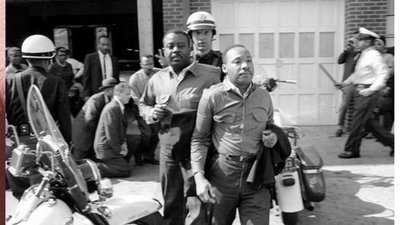
Birmingham 1963 Gaston Motel Bombing: Was Branham Present?
In May 1963, the A. G. Gaston Motel in Birmingham was bombed amid public Klan threats and prior warnings to authorities, and the resulting injuries and outrage helped spark the Birmingham unrest that followed. The piece then examines William Branham’s claim to have witnessed the riot and highlights how his post-riot comments echoed segregationist and Klan-aligned narratives about schooling and interracial marriage.
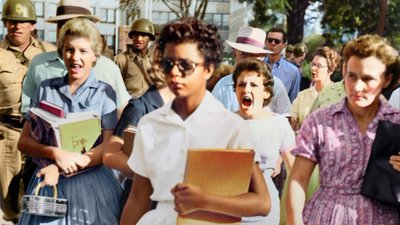
The Healing Revival and the Civil Rights Crisis: William Branham, the Klan, and White Supremacy
Postwar American revivalism developed alongside fierce resistance to racial integration, with leading figures openly opposing civil rights through theological and prophetic language. Sermons, public statements, newspaper reporting, and federal investigations reveal how white supremacist ideology, Christian Identity theology, and apocalyptic race-war expectations became intertwined with healing revival authority.
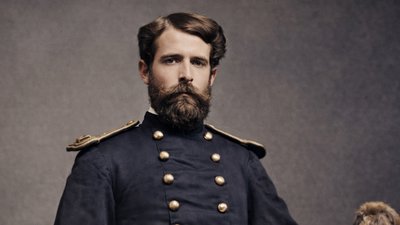
C. A. L. Totten and the American Rise of British Israelism
Charles Adiel Lewis Totten was a Yale military science professor turned apocalyptic theorist whose writings helped establish British Israelism in the United States and popularized mathematically calculated end-times prophecy. His fusion of pyramidology, numerology, and imperial theology influenced later doomsday movements and shaped ideas that flowed into early Pentecostalism and Christian Identity thought.
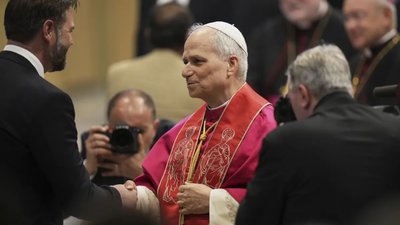
Rome as the Enemy: How Klan Ideology Shaped Revivalist Anti-Catholicism
Anti-Catholic ideology in the United States developed from nineteenth- and early twentieth-century nativism into organized movements such as the Ku Klux Klan, where Catholicism was framed as a foreign and authoritarian threat to American identity. Those narratives were later spiritualized within healing revivals and certain charismatic networks, allowing older patterns of religious hostility to persist under the language of prophecy, discernment, and spiritual warfare.
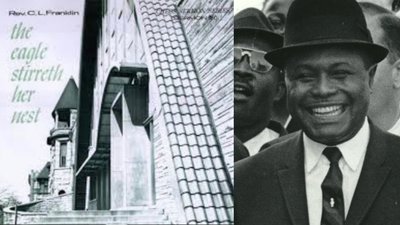
The Eagle Stirrith Her Nest”: C. L. Franklin, African American Prophetic Preaching, and William Branham’s Appropriation of a Tradition
C. L. Franklin’s celebrated sermon “The Eagle Stirrith Her Nest,” rooted in a long African American homiletical and civil-rights tradition, became a defining expression of communal resilience and theological depth. William Branham later appropriated the sermon without attribution, altering its meaning to reinforce his own authority and sectarian identity while misrepresenting its biblical and cultural foundations.
No records found.